Before the accidental invention of the rubber eraser, why did everyone use moist bread to fix pencil mistakes
Imagine reaching for a crustless slice of bread instead of a rubber eraser every time you made a typo. Discover the bizarre, crumb-filled history of how the bakery once ruled the writing world—and the lucky accident that finally changed everything.

Too Long; Didn't Read
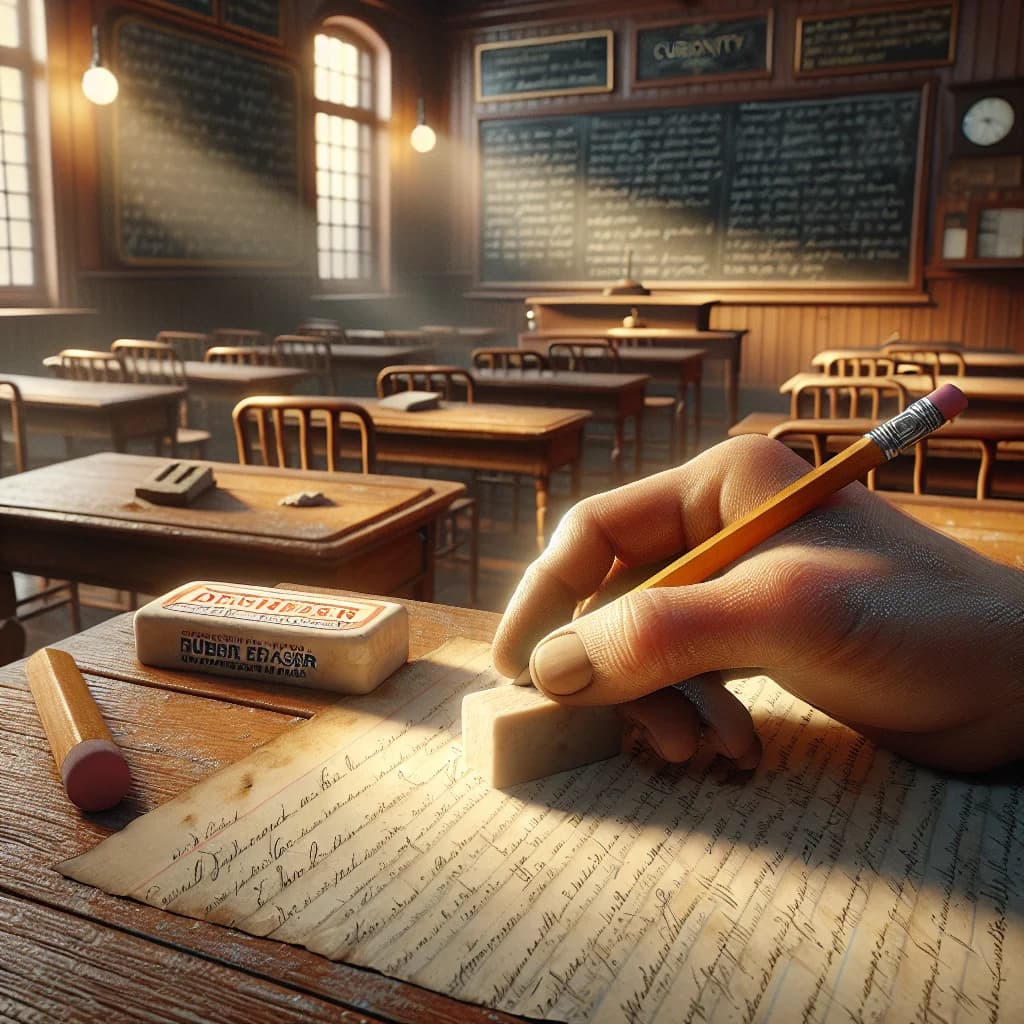
Before the 1770 discovery of rubber erasers, writers used rolled-up balls of moist, crustless bread to lift graphite from paper. The bread’s tacky texture effectively absorbed lead particles without damaging the page, serving as the primary correction tool for centuries despite its tendency to rot and mold.
Crusts and Corrections: Before the accidental invention of the rubber eraser, why did everyone use moist bread to fix pencil mistakes?
Imagine sitting in a 17th-century study, carefully drafting a manuscript with a graphite lead, only to make a glaring error. Today, you would instinctively reach for a small block of pink rubber. However, for centuries, the world’s most essential editing tool wasn’t found in a stationery kit, but in the pantry. Before the accidental invention of the rubber eraser, why did everyone use moist bread to fix pencil mistakes? While it sounds like a culinary oddity, the use of bread was a sophisticated solution to a common problem. This post explores the mechanics of "bread erasers," their historical dominance, and the serendipitous discovery that eventually relegated the sliced loaf to the toaster rather than the writing desk.
The Science of the Sourdough Solution
To understand why bread was the primary tool for correction, one must understand how graphite interacts with paper. Unlike ink, which soaks into fibers, graphite consists of layers of carbon atoms that sit on the surface of the paper. Removing it requires a substance that is more "sticky" or absorbent than the paper itself.
Moist, crustless bread was uniquely suited for this task due to its physical properties:
- Adhesion: The gluten structure in bread provides a mild tackiness that lifts graphite particles away from the page without tearing the paper fibers.
- Absorbency: As a porous material, bread traps the lifted carbon within its "crumb," preventing the graphite from simply smearing across the surface.
- Malleability: Writers would take the center of a fresh loaf, moisten it slightly if necessary, and roll it into a small ball or "pill." This allowed for precision when erasing small details.
According to historical accounts of artists from the Renaissance through the Enlightenment, this method was highly effective for charcoal and graphite, though it was notoriously useless against the permanent iron gall inks of the era.
The Practical Challenges of a Perishable Eraser
While bread was effective, it was far from a perfect tool. Its primary drawback was its organic nature. Because the "eraser" was essentially food, it suffered from several significant limitations:
- Perishability: A bread eraser had a very short shelf life. If left out, it would dry up and become abrasive; if kept moist for too long, it would succumb to mold.
- Pest Attraction: Writers often found that their correction tools attracted mice or insects to their desks.
- Residue: Even the most careful user would often leave behind tiny crumbs that could rot or grease stains if the bread contained high levels of fat or oil.
Despite these frustrations, there was no viable alternative for nearly two hundred years after the graphite pencil became a common writing instrument in the mid-1500s.
1770: The Accidental Discovery of Rubber
The transition from the bakery to the rubber tree happened by pure chance. In 1770, an English engineer named Edward Nairne was reportedly reaching for his ball of bread to fix a mistake. By accident, he picked up a piece of "caoutchouc"—a raw vegetable gum derived from South American trees. To his surprise, he found that this elastic material erased the pencil marks far more efficiently than bread ever had.
Nairne began selling these "India rubbers" for the then-staggering price of three shillings per half-inch cube. Shortly thereafter, the noted chemist Joseph Priestley—famous for discovering oxygen—remarked on the material’s ability to "rub out" marks, which is how the substance earned its common English name: rubber.
Conclusion
The history of the eraser serves as a fascinating reminder of how human ingenuity utilizes the resources at hand. Before the accidental invention of the rubber eraser, why did everyone use moist bread to fix pencil mistakes? Quite simply, because bread possessed the exact structural and adhesive properties required to lift carbon from parchment. While Edward Nairne’s 18th-century mistake eventually led to the high-tech polymers we use today, the humble loaf of bread remained the writer’s best friend for centuries.
Understanding this history gives us a greater appreciation for the everyday objects on our desks. The next time you use a rubber eraser, remember that for most of recorded history, a clean page required a fresh loaf of bread and a little bit of patience. For those interested in the evolution of everyday tools, exploring the history of stationery offers a unique window into the practical side of human progress.