
UsefulBS
Straight facts. Answers to questions you never knew you had.





Featured Articles

How to Find the Right Discord Server (and Why Most People Give Up on the Search)
Discord is huge, but its built-in discovery is limited. Search engines and curated directories like DiscordListing.com fill the gap by letting you browse, filter, and review servers by topic. The right community usually has clear rules, active moderation, real conversation rather than spam, and a topic narrow enough that you actually have something in common with the people there.


Why was the exercise treadmill originally designed as a grueling nineteenth-century device to punish prisoners?
The treadmill was invented in 1818 by British engineer William Cubitt as a torturous form of hard labor for prisoners. Designed to curb idleness and reform convicts, it forced them to climb massive rotating cylinders to grind grain or pump water. The grueling device was eventually banned for its cruelty before being repurposed decades later as modern fitness equipment.

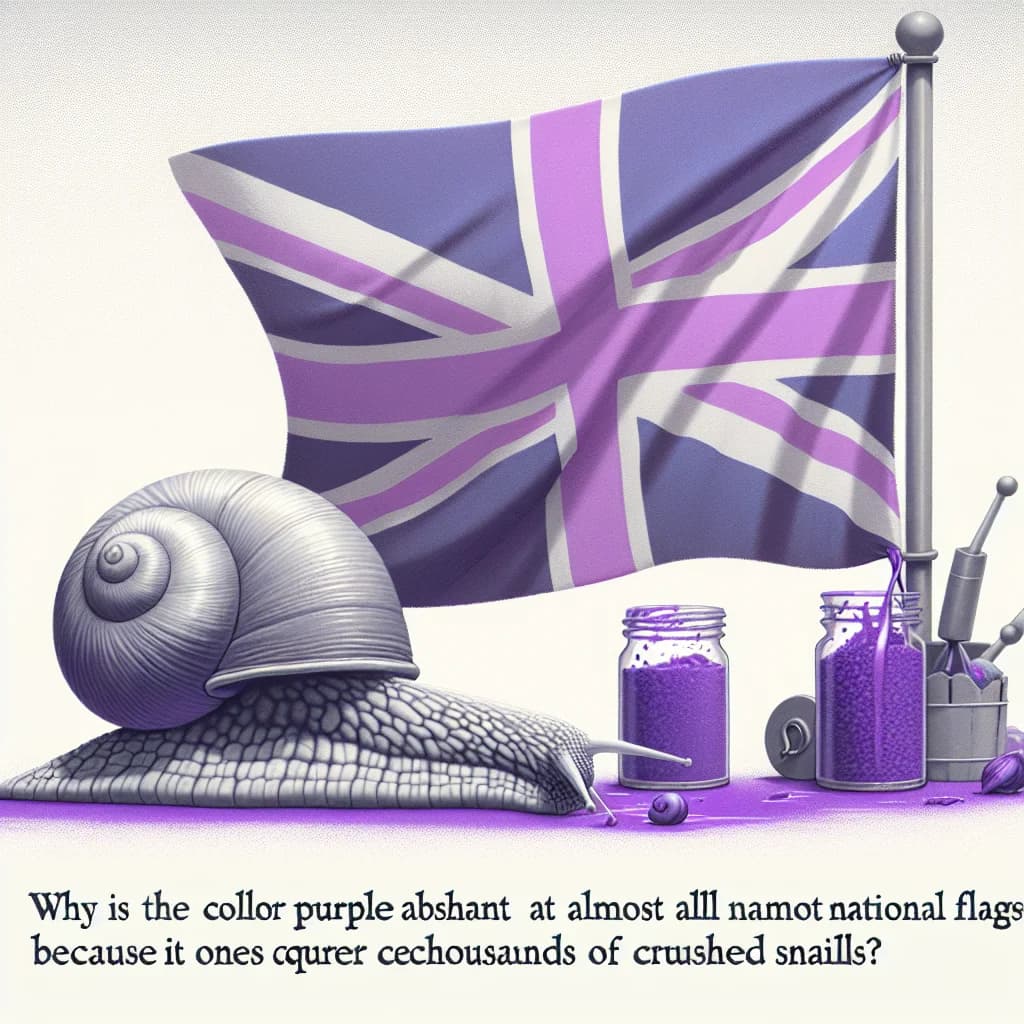
Why is the color purple absent from almost all national flags because it once required thousands of crushed snails?
Purple is absent from most national flags because it was historically too expensive to produce. Until the mid-1800s, the dye required harvesting thousands of rare sea snails for a tiny amount of pigment, making it a luxury reserved for royalty and far too costly for mass-produced flags.
Stay Updated
Subscribe to our newsletter to receive the latest articles and updates.
Recent Articles

Why are Pringles chips specifically shaped as hyperbolic paraboloids to allow for perfect stacking and prevent breakage?
Pringles are engineered as hyperbolic paraboloids to ensure seamless stacking and maximize structural integrity. This mathematical design evenly distributes stress to prevent cracking and provides aerodynamic stability during high-speed manufacturing, keeping the chips intact from the factory to the can.

Why did the inventors of bubble wrap first attempt to sell their creation as textured three-dimensional wallpaper?
In 1957, inventors Alfred Fielding and Marc Chavannes originally marketed bubble wrap as 3D textured wallpaper to tap into mid-century home decor trends. After the product failed to sell for interior design or as greenhouse insulation, it was successfully repurposed as the protective packaging material used today.

Why was the inventor of the Frisbee cremated and his ashes pressed into a commemorative flying disc?
Walter Steady Ed Headrick, the man who perfected the Frisbee and invented disc golf, chose to have his ashes molded into commemorative discs to fulfill his wish of continuing to fly after death and to support a disc golf museum.

Why did Europeans once consume powdered Egyptian mummies as a medicinal treatment for headaches and bruising?
From the 12th to the 17th centuries, Europeans ingested ground mummy remains due to a linguistic misunderstanding regarding bitumen, a natural substance believed to have healing properties. Known as mumia, this substance was frequently used in the ancient embalming process, leading physicians to mistakenly believe that the corpses themselves possessed curative powers for ailments like headaches and bruising. This confusion sparked a centuries-long trade in human remains for medicinal use.