
How can a seemingly calm lake suddenly erupt in a giant, deadly gas cloud
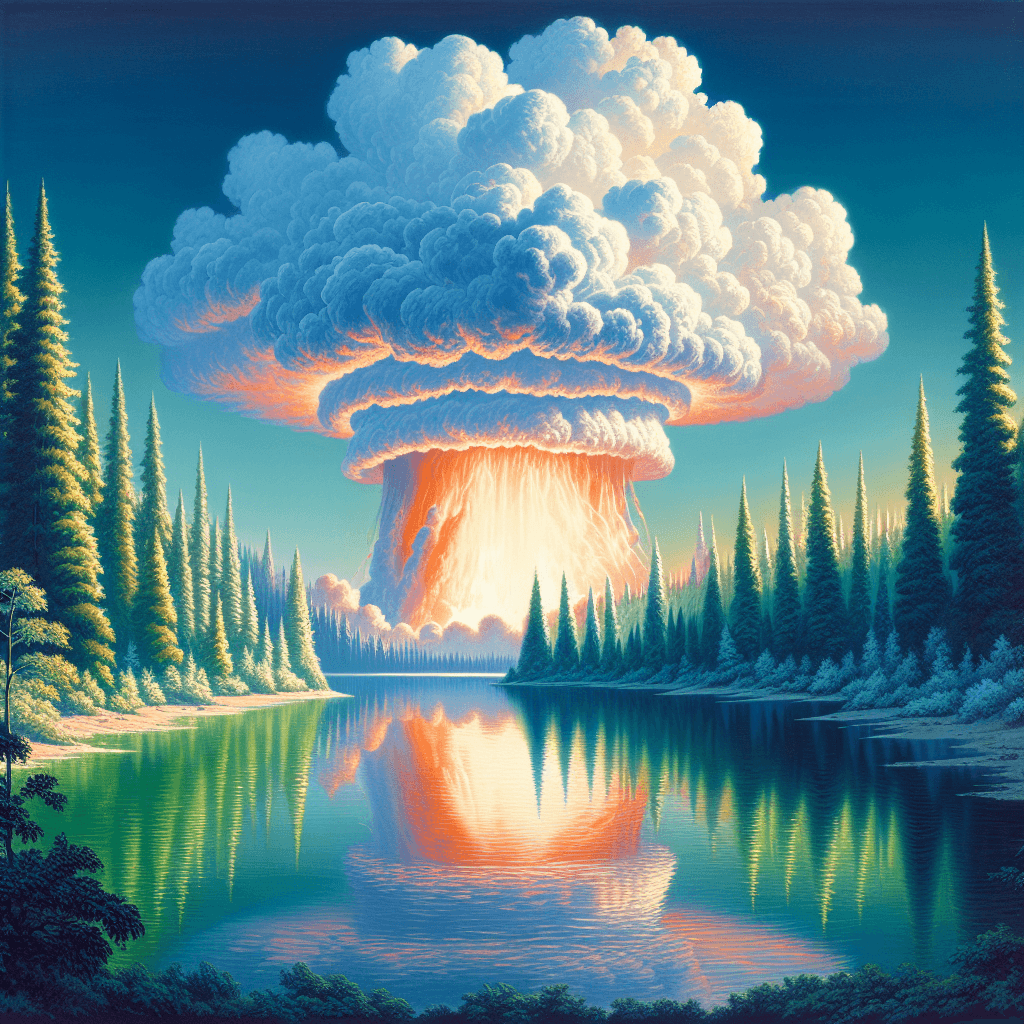
Beneath a seemingly tranquil surface, some lakes hide a lethal, ticking time bomb of dissolved gas. Discover the terrifying phenomenon that can cause these waters to erupt into a silent, suffocating killer without a moment's notice.

Too Long; Didn't Read
TLDR: In rare volcanic lakes, carbon dioxide from below gets trapped and concentrated in the deep, cold water. A trigger like a landslide or earthquake can disrupt these layers, causing the gas to erupt violently, creating a massive, ground-hugging cloud that suffocates all life nearby.
Title: The Silent Killer: How Can a Seemingly Calm Lake Suddenly Erupt in a Giant, Deadly Gas Cloud?
Introduction
Imagine a tranquil, picturesque lake nestled in a volcanic crater. Its surface is calm, reflecting the sky above. But beneath this serene facade, a silent and deadly force is building. This isn't the plot of a disaster movie; it's a rare and terrifying natural phenomenon known as a limnic eruption. In 1986, this exact scenario played out at Lake Nyos in Cameroon, releasing a massive cloud of gas that silently killed over 1,700 people and thousands of livestock in the surrounding valleys. This catastrophic event left scientists and the world asking a chilling question. This blog post will demystify the science behind these "exploding lakes," explaining the precise conditions that allow a body of water to transform into a silent killer.
What is a Limnic Eruption?
A limnic eruption, also known as a "lake overturn," is a rare natural disaster in which dissolved carbon dioxide (CO2) suddenly erupts from deep lake waters. This event forms a massive gas cloud capable of suffocating wildlife, livestock, and humans.
For a lake to become a potential threat, it needs a unique combination of three specific factors:
- A deep, stable body of water: The lake must be deep enough to hold a significant volume of water under high pressure.
- A source of CO2: The lake must be located near volcanic activity, where CO2 from the Earth's mantle seeps up through the lakebed.
- Permanent stratification: The lake water must be sharply divided into layers that do not mix, a condition known as being "meromictic." This prevents the gas-rich bottom water from circulating to the surface and releasing its CO2 gradually.
The Science of a Killer Lake: A Step-by-Step Breakdown
The process of a limnic eruption is much like shaking a bottle of soda and then suddenly opening it. Here’s how the deadly pressure builds and is ultimately unleashed.
Step 1: The Gas Builds
Over hundreds or even thousands of years, CO2 gas from magma chambers deep underground seeps into the coldest, densest water at the bottom of the lake (the hypolimnion). The immense pressure from the water above allows vast quantities of CO2 to dissolve, far more than would be possible at the surface. The lake essentially becomes a ticking time bomb, saturated with invisible gas.
Step 2: The Trigger Event
The gas-rich water can remain stable for centuries. However, it only takes one disturbance to upset this delicate balance. A trigger can be anything that forces the deep water to rise or disrupts the lake's layers, such as:
- An earthquake
- A volcanic eruption beneath the lake
- A landslide into the water
- Even exceptionally heavy rainfall that changes the density of the surface layer
Step 3: The Catastrophic Eruption
When the trigger occurs, it pushes the deep, CO2-saturated water upward. As this water rises, the pressure decreases, and the dissolved CO2 can no longer stay in solution. It violently erupts into bubbles, creating a chain reaction. This initial eruption displaces more deep water, causing it to rise and release its gas, leading to a massive, explosive degassing of the entire lake. This violent upwelling of water can also create a large wave, or tsunami, on the lake's surface.
The Silent, Invisible Killer
The danger doesn't stop with the eruption itself. The resulting cloud is primarily composed of CO2, which is about 1.5 times denser than air. Because of this, the gas cloud doesn't dissipate into the atmosphere. Instead, it billows over the lake's rim and flows down into the surrounding valleys, hugging the ground like a river of invisible air.
As it moves, it displaces the breathable oxygen. Being colorless and odorless, it provides no warning. Victims, like those at Lake Nyos, simply fall unconscious and suffocate within minutes. The only two limnic eruptions ever recorded, at Lake Monoun (1984) and Lake Nyos (1986), tragically demonstrated the lethal efficiency of this phenomenon.
Can We Tame an Exploding Lake?
Fortunately, science has provided a solution. After the Lake Nyos disaster, engineers developed a system to safely release the trapped gas. Large pipes were sunk into the deep waters of both Lake Nyos and nearby Lake Monoun. These pipes act like giant straws, siphoning the gas-rich water to the surface. As the water rises through the pipe, the reduced pressure allows the CO2 to bubble out harmlessly and continuously, preventing it from ever reaching a critical, explosive concentration again.
Conclusion
A limnic eruption is a stark reminder of the powerful and sometimes hidden forces at play in our natural world. It requires a perfect storm of geological conditions: a deep lake, a volcanic gas source, and stable water layers. While these "killer lakes" are incredibly rare, the tragic events in Cameroon have provided invaluable lessons. By understanding the science behind how a calm lake can suddenly erupt, researchers have successfully engineered solutions to mitigate the threat. The degassing projects at Lake Nyos and Lake Monoun stand as a remarkable achievement, showcasing how human ingenuity can be used to prevent a recurrence of one of nature's most silent and deadly disasters.


