How can a single sheet of newspaper stop you from breaking a ruler
Discover the invisible force that turns a flimsy sheet of newspaper into an unbreakable shield, pitting the crushing weight of our entire atmosphere against your full strength.

Too Long; Didn't Read
TLDR: It's not the newspaper's weight but the immense force of air pressure pushing down on its large surface area. Hitting the ruler quickly creates a low-pressure area underneath, so the atmospheric pressure on top pins the paper down with enough force to snap the ruler.
Blog Post Title: The Unbreakable Ruler Trick: How Can a Single Sheet of Newspaper Stop You From Breaking a Ruler?
Introduction
Have you ever witnessed a magic trick that turned out to be pure, mind-bending science? Imagine this: you place a thin, wooden ruler on the edge of a table and prepare to break it with a swift karate chop. It should be easy, right? But what if I told you that a single, unfolded sheet of newspaper laid over the ruler could make it almost impossible to break, or at least cause the ruler to snap before the paper even lifts? This isn't a trick of the hand; it's a classic physics demonstration that reveals a powerful, invisible force we live in every single day. This post will demystify this surprising phenomenon, explaining how the immense and often-underestimated power of air pressure is the true star of the show.
The Science Behind the "Magic"
This experiment brilliantly illustrates the concept of atmospheric pressure. While it may seem like the flimsy newspaper is the hero, it's actually just a tool to harness the incredible weight of the air all around us.
The Setup: A Simple but Powerful Demonstration
To understand the principle, let's walk through the experiment. If you want to try this at home (with adult supervision!), the steps are simple:
- The Control: Place a standard ruler on the edge of a sturdy table, with about one-third of it hanging over the edge.
- The First Strike: Give the overhanging end of the ruler a quick, sharp hit. Unsurprisingly, the ruler will fly off the table with little effort.
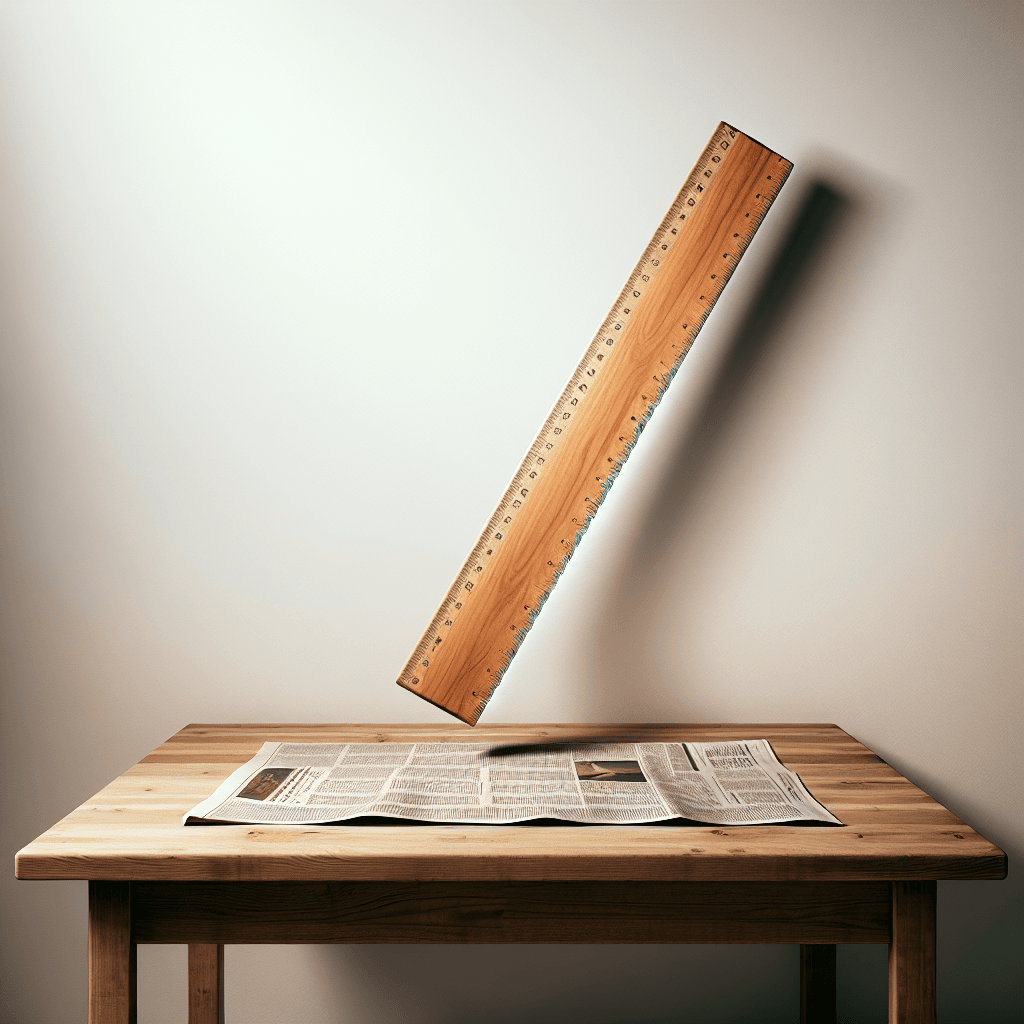
- The Experiment: Now, place the ruler back in the same position. Take a single, large sheet of newspaper and open it up completely. Lay it over the part of the ruler that is on the table, smoothing it out to remove as much air from underneath as possible.
- The Second Strike: Hit the overhanging end of the ruler with the same force as before. This time, instead of flying off, the ruler will likely stay put, or even snap in two, while the newspaper barely moves.
So, what changed? The only new variable was the newspaper. But how can something so light and fragile create such powerful resistance?
The Secret Ingredient: Unveiling Air Pressure
The answer is air pressure. We live at the bottom of an "ocean" of air called the atmosphere, and the weight of all that air is constantly pressing down on everything from all directions. At sea level, this pressure is approximately 14.7 pounds per square inch (psi). We don't feel this immense force because it pushes on us equally from all sides, and the pressure inside our bodies pushes outward to balance it.
The newspaper's role is to maximize the surface area over which this pressure can act.
How It All Works Together
When you lay the flat sheet of newspaper over the ruler, you create a large surface area. A typical broadsheet newspaper page might have an area of over 300 square inches. If we multiply that area by the atmospheric pressure (14.7 psi), the total force pressing down on that newspaper is staggering—potentially over 4,000 pounds!
- Without the newspaper: When you strike the ruler, the only force you are fighting against is the ruler's small weight. The air can easily and quickly rush into the space created as the ruler lifts.
- With the newspaper: When you strike the ruler, you are attempting to lift not just the ruler but the entire sheet of newspaper in a fraction of a second. To do this, you must overcome the thousands of pounds of atmospheric force holding it down.
Essentially, you are trying to create a vacuum under the newspaper faster than the surrounding air can fill it. The air pressure above the paper provides so much resistance that the force of your strike is concentrated on the ruler's breaking point. The ruler itself isn't strong enough to withstand that localized force, so it snaps before it can lift the newspaper and fight against the weight of the atmosphere.
Conclusion
The "unbreakable" ruler experiment is a perfect example of science feeling like magic. It’s not the paper’s strength but its ability to harness a powerful, invisible force that produces the surprising result. By dramatically increasing the surface area, the flimsy newspaper allows the immense weight of the atmosphere to hold the ruler firmly in place. This simple yet profound demonstration gives us a tangible way to appreciate the powerful physical forces that are constantly at play in the world around us. So, the next time you see a newspaper, remember that it holds the potential to demonstrate a force equivalent to the weight of a small car.