
How could a simple wooden stick once serve as an official credit card
Before plastic and digital wallets, the most official line of credit was a simple wooden stick, split down the middle to create a record of debt so secure it was used by governments for centuries.

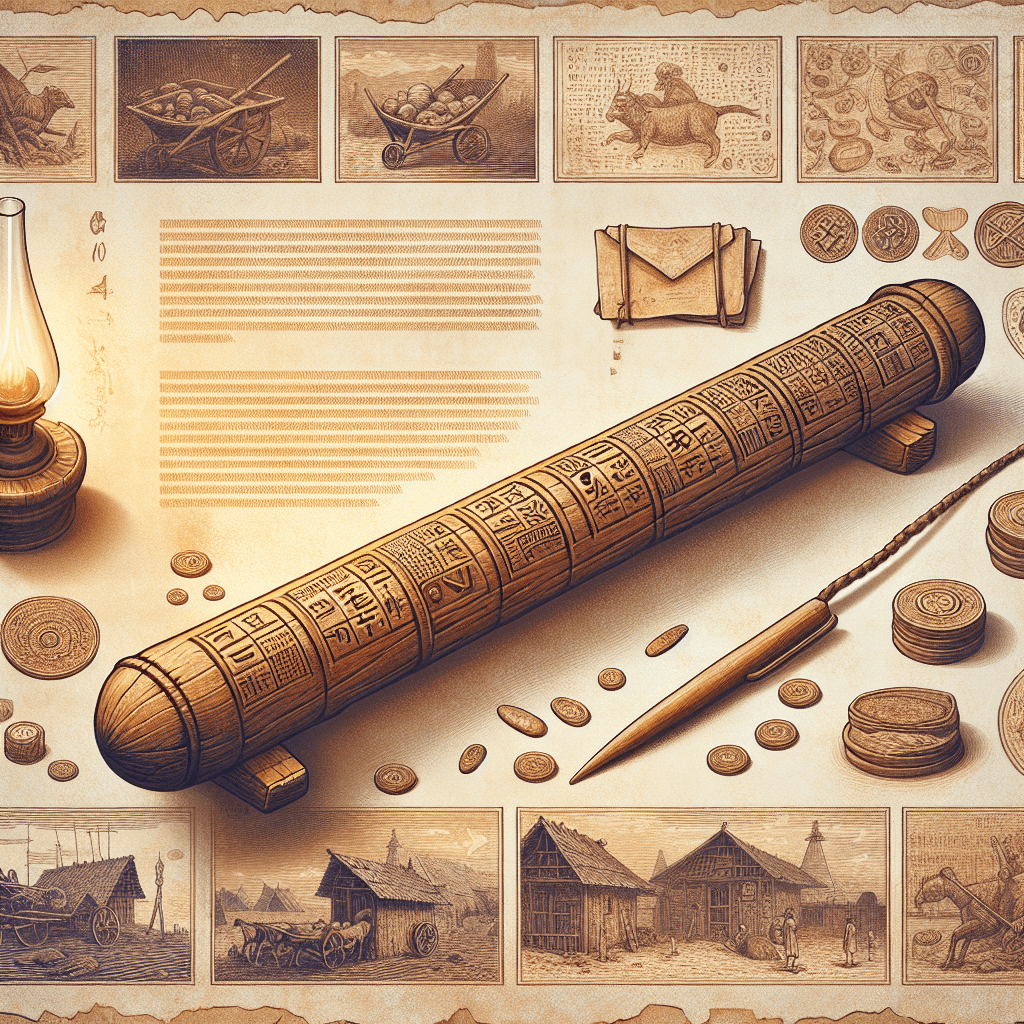
Too Long; Didn't Read
A stick was notched to represent a debt, then split in half lengthwise. The creditor and debtor each kept a piece. To prove the debt, the two unique halves had to match perfectly, creating a simple, tamper-proof record of credit.
Blog Post Title: Before Plastic: How Could a Simple Wooden Stick Once Serve as an Official Credit Card?
Introduction
Before the tap-and-go convenience of plastic cards and digital wallets, how did people manage debt and credit? You might imagine ledgers and coins, but one of the most successful and long-lasting financial tools was far simpler: a humble piece of wood. It sounds like something from a fantasy novel, but for over 700 years, a notched wooden stick served as an official, tamper-proof record of debt, functioning much like a modern credit card or government bond. This ancient tool, known as a tally stick, was a surprisingly sophisticated piece of financial technology. This post will explore the ingenious design of the tally stick and reveal how this simple object became a cornerstone of the English economy for centuries.
What Was a Tally Stick?
At its core, a tally stick was a physical record of a transaction or debt. Typically carved from a piece of hazelwood, the stick would be marked with a series of notches to represent the amount of money involved. The value of each notch was determined by its size and shape—a large notch might signify £100, a smaller one £1, and a simple scratch a single penny.
Once the amount was recorded, the stick's true genius was revealed. It was split lengthwise down the middle, through the notches.
- The Stock: The longer half was given to the creditor (the person who was owed money).
- The Foil: The shorter half was given to the debtor (the person who owed the money).
The creditor held the "stock," which is the origin of the financial term "stockholder." The two halves served as a perfect, identical receipt for both parties involved in the transaction.
An Ancient Form of Anti-Fraud Technology
The brilliance of the tally stick system lay in its security. How could you be sure no one would add a few extra notches to their half to alter the debt? The answer lies in the natural properties of the wood. When the stick was split, the irregular grain and the unique way the wood separated created two halves that would fit together perfectly in only one way.
Any attempt to alter one half of the stick—by carving an extra notch, for instance—would be immediately obvious. The new notch wouldn't have a matching counterpart on the other piece, and the wood grain around the forgery wouldn't align. When it came time to settle the debt, the two halves were brought together, or "tallied," to confirm the amount. If they matched perfectly, the debt was verified. This made the tally stick an almost foolproof, tamper-resistant record long before the invention of watermarks or security holograms.
From Debt Receipt to Government Currency
The tally stick evolved beyond a simple IOU when it was adopted by the English Crown. Starting in the 12th century, the English Exchequer used tally sticks as a primary instrument of government finance. Instead of paying soldiers or suppliers with heavy, scarce metal coins, the government would issue them a tally stick representing the amount owed by the Crown.
This government-issued IOU was essentially a promise of future payment. But it didn't stop there. A soldier who received a tally stick for his service could then use that same stick to pay a merchant for goods. The merchant would accept it because they knew the stick was a valid claim against the Crown. Better yet, the merchant could use that tally stick to pay their own taxes.
In this way, the tally stick became a transferable form of credit that circulated freely throughout the economy. It was a government-backed financial instrument that functioned like an early form of paper money or a zero-coupon bond, all based on the trustworthiness of a split piece of wood. This system was so effective that it remained an official part of British finance until 1826.
Conclusion
The tally stick stands as a powerful testament to human ingenuity. What began as a simple method for recording debt evolved into a sophisticated tool for government finance and a circulating form of credit, predating modern banking systems by centuries. Its design incorporated an elegant and nearly unbreakable security feature based on the natural uniqueness of wood grain. While we now rely on encrypted data and silicon chips, the core principle remains the same: the need for a secure and trustworthy way to manage credit and value. The next time you tap your credit card, remember its ancient wooden ancestor—a simple stick that once powered an entire empire.


