
How did people open canned food for nearly fifty years before the can opener was invented
Imagine buying a meal you couldn’t actually open without a hammer, a chisel, or even a soldier's bayonet. Discover the surprisingly brutal methods people used to survive the fifty-year gap between the invention of the can and the tool made to open it.

Too Long; Didn't Read
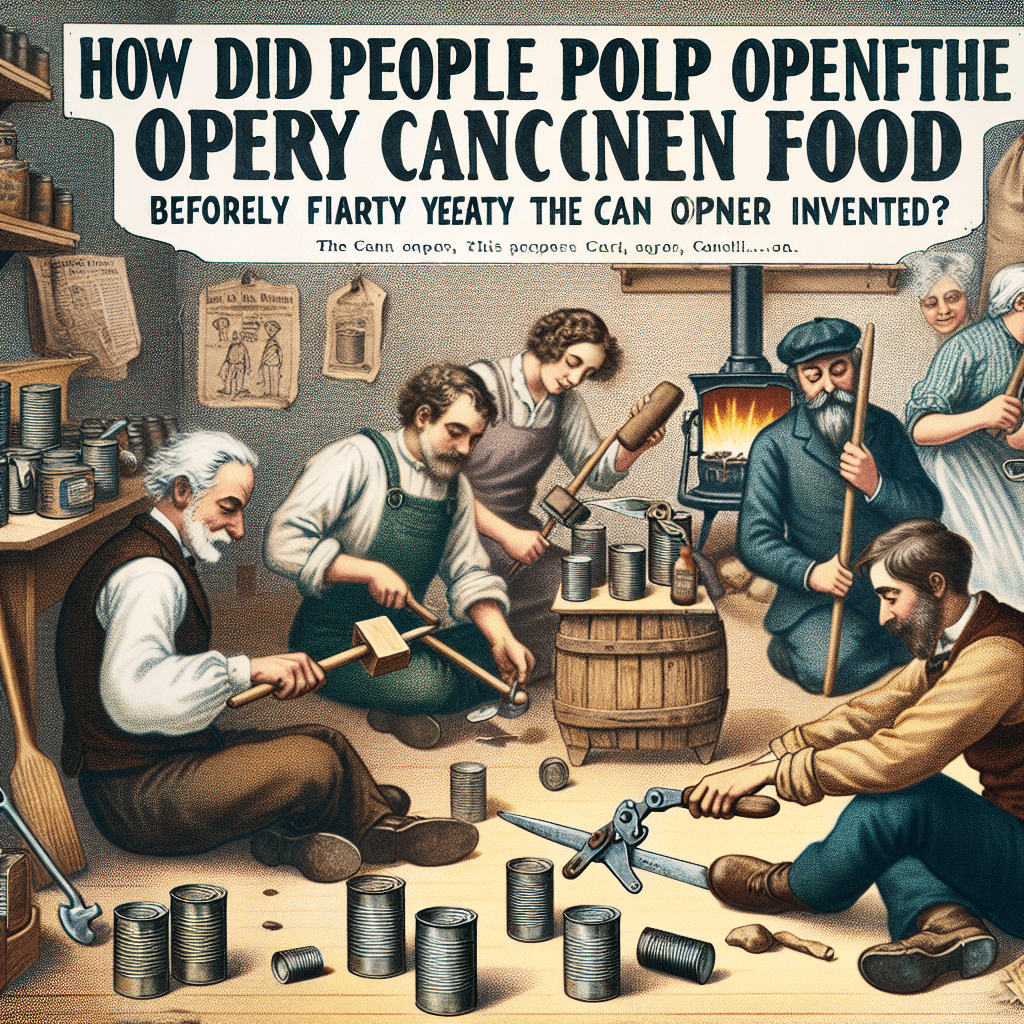
Before the can opener was invented nearly 50 years after canned food, people used brute force tools like hammers, chisels, knives, and bayonets to smash open the heavy iron containers.
Hammer, Chisel, and Hunger: How did people open canned food for nearly fifty years before the can opener was invented?
Imagine being a soldier on the front lines in the early 19th century. You are exhausted, starving, and finally handed a tin of beef. There is only one problem: the container is made of thick, heavy iron, and the specialized tool required to open it comfortably will not be invented for another forty-eight years. This was the frustrating reality for millions of people during the mid-1800s. While we often view innovation as a singular "eureka" moment, the history of food preservation reveals a massive gap between the invention of the container and the invention of the key. Exploring the question—How did people open canned food for nearly fifty years before the can opener was invented?—uncovers a fascinating era of brute force, industrial necessity, and survivalist ingenuity.
The Birth of the Tin Can: Preservation Without Access
The story begins in the early 1800s during the Napoleonic Wars. The French government offered a 12,000-franc prize to anyone who could develop a method to preserve food for their traveling armies. In 1809, confectioner Nicolas Appert succeeded by sealing food in glass jars and boiling them. However, glass was fragile and impractical for the battlefield.
By 1810, British merchant Peter Durand patented the use of tin-plated wrought iron canisters. These early "tins" were far removed from the thin, lightweight aluminum cans we see today. They were heavy, handcrafted vessels, often weighing more than the food inside. According to historical records from the Science Museum in London, these early cans were sometimes as thick as 3/16 of an inch. Because the packaging was so robust, the concept of a "convenient" opening mechanism was an afterthought; the primary goal was purely to ensure the food survived years of storage and rough transit.
Tools of the Trade: Brute Force Methods
Because the dedicated can opener did not exist until 1858, people had to rely on existing household and military tools to access their meals. The process was neither delicate nor safe. Here are the primary methods used during that fifty-year gap:
- Hammer and Chisel: This was the most common "official" method. Users would place a heavy chisel on the lid and strike it repeatedly with a hammer to puncture the iron.
- Bayonets and Hunting Knives: Soldiers and explorers often used their standard-issue weaponry to hack through the metal. This frequently resulted in broken knife tips and jagged, dangerous edges.
- Rocks and Hard Surfaces: In desperate situations, travelers would smash the cans against sharp rocks until the seal failed.
- Firearms: Though rare and messy, there are anecdotal accounts of soldiers attempting to shoot cans open as a last resort.
Early cans even came with explicit instructions printed on the labels. One brand of roasted veal, produced for a Northwest Passage expedition in 1824, carried the blunt directive: "Cut round the top near the outer edge with a chisel and hammer."
Why the Delay? The Evolution of Metallurgy
It may seem baffling that it took nearly half a century to invent a simple mechanical opener. However, the delay was largely due to the materials used in manufacturing. In the early 19th century, cans were made of heavy iron. A modern rotating can opener would have simply snapped against the thick wrought iron of 1820.
As the industrial revolution progressed, canning technology shifted from hand-soldered iron to thinner, more flexible steel. It wasn’t until the mid-1850s that cans became thin enough for a hand-held tool to be effective. In 1858, Ezra Warner of Connecticut patented the first dedicated can opener—a "lever-type" device that featured a sharp blade driven into the lid and moved around the rim. Even then, the tool was considered too dangerous for home use and was mostly operated by grocers before customers took their food home.
Conclusion
The 48-year gap between the invention of the tin can and its corresponding opener serves as a powerful reminder that innovation rarely moves in a straight line. By answering the question—How did people open canned food for nearly fifty years before the can opener was invented?—we see a period where survival depended on hammers, chisels, and sheer persistence. This era highlights how the evolution of packaging materials directly dictated the tools we use today.
The next time you effortlessly use a pull-tab or a modern electric opener, consider the rugged history of the tin can. It wasn't always a matter of convenience; for decades, eating dinner was an act of industrial labor. To learn more about the curious history of everyday objects, exploring museum archives on the Industrial Revolution offers a wealth of surprising insights into how we mastered the modern world.


