
How do parrots talk without having vocal cords
It's one of nature's greatest tricks: parrots can perfectly mimic human speech without any vocal cords. Discover the astonishing anatomical secret that makes their uncanny talent possible.

Too Long; Didn't Read
TLDR: Parrots lack vocal cords and instead use a special organ in their chest called a syrinx to produce sound. They then use their thick tongues and beaks to shape these sounds into words, mimicking human speech.
The Syrinx Secret: How Do Parrots Talk Without Having Vocal Cords?
Have you ever been startled or delighted by a parrot perfectly mimicking a phone ringing or calling out a cheerful "Hello!"? These vibrant birds are famous for their uncanny ability to imitate human speech, leading many to wonder how they accomplish such a feat. The most common assumption is that they must have vocal cords, just like us. However, the truth is far more fascinating. Parrots lack vocal cords entirely. So, how do they produce such a wide array of complex sounds? This post will unravel the anatomical and neurological secrets behind a parrot's remarkable ability to "talk."
The Sound Source: It's All in the Syrinx
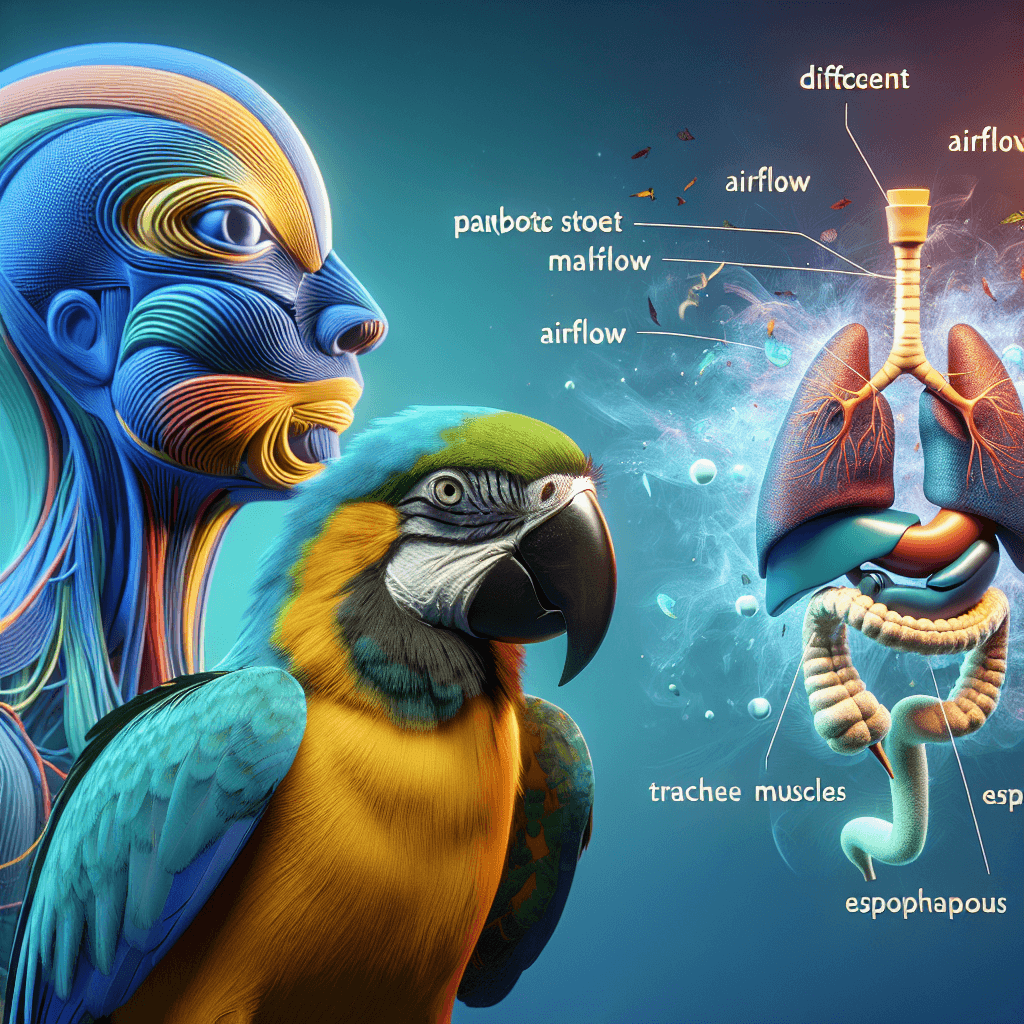
The primary difference between how humans and birds produce sound lies in their anatomy. Humans generate sound using the larynx, or voice box, located at the top of the trachea (windpipe). Within the larynx are vocal cords—folds of tissue that vibrate as air from the lungs passes over them.
Birds, including parrots, have a completely different vocal organ called the syrinx.
- Location: Unlike the larynx, the syrinx is located much deeper in the bird's chest, at the base of the trachea where it splits into the two bronchial tubes leading to the lungs.
- Structure: This unique, two-sided organ consists of intricate muscles and vibrating membranes. Because it has two independent sides, a parrot can produce two different sounds simultaneously, allowing for incredibly complex calls and harmonies.
- Function: As a parrot exhales, it pushes air from its lungs across the membranes of the syrinx. By precisely controlling the muscles around the syrinx, the bird can alter the tension of these membranes, changing the pitch, volume, and quality of the sound produced. This is the raw material for their vocalizations.
From Sound to Speech: The Art of Shaping Words
Producing a raw sound with the syrinx is only the first step. The real magic of mimicry happens when a parrot meticulously shapes that sound into a recognizable word. This is where a parrot’s other physical attributes and incredible brainpower come into play.
The Role of the Tongue and Beak
Think about how you form words. You use your tongue, lips, and teeth to manipulate the sound coming from your vocal cords. A parrot does something remarkably similar. It uses its large, thick, and incredibly agile tongue to modify the sound waves traveling up its trachea. By changing the shape and position of its tongue and rapidly opening and closing its beak, it can articulate different vowels and consonants, effectively sculpting raw sound into clear mimicry. This fine motor control is a key reason why parrots are such skilled imitators compared to other birds.
The Brainpower Behind the Beak
Perhaps the most crucial element is what happens inside the parrot's brain. Parrots are one of the few animal groups, alongside hummingbirds, songbirds, and some mammals like humans and dolphins, that are vocal learners. This means they aren't born with a fixed set of calls; they learn their vocalizations by listening to and imitating others.
Neurobiological research, including studies by Duke University's Dr. Erich Jarvis, has revealed that parrot brains have specialized structures dedicated to this skill. They possess a "song system" with distinct core and shell regions. The shell region, which is unique to parrots, is believed to be crucial for their advanced vocal mimicry. This complex neural wiring allows them to listen to a sound, deconstruct it, and then coordinate the muscles of their syrinx and tongue to reproduce it accurately.
But Do They Understand What They're Saying?
This is the million-dollar question. For most pet parrots, talking is a form of social mimicry—they repeat sounds to fit in with their "flock" (which, in a home, is their human family). However, some cases suggest a deeper level of cognition. The most famous example is Alex, an African Grey parrot studied by Dr. Irene Pepperberg. Alex demonstrated the ability to identify objects, colors, and shapes by name and even seemed to grasp abstract concepts like "same" and "different." While Alex was exceptional, his abilities show that at least some parrots can move beyond simple mimicry to contextual understanding.
Conclusion
The next time you hear a parrot speak, you can appreciate the intricate biological symphony at play. It's not a simple trick of vocal cords but a complex coordination of a specialized vocal organ—the syrinx—and precise manipulations of the tongue and beak. This physical skill is powered by a highly sophisticated brain wired for vocal learning, allowing these birds to listen, process, and reproduce the sounds of our world with stunning accuracy. The parrot's ability to talk is a powerful reminder of the incredible diversity and complexity of intelligence and communication in the animal kingdom.


