
How does a TV remote control the TV using a beam of invisible light
Ever wondered about the invisible conversation happening between your remote and your TV? We're decoding the secret language of light that makes your screen obey your every command.

Too Long; Didn't Read
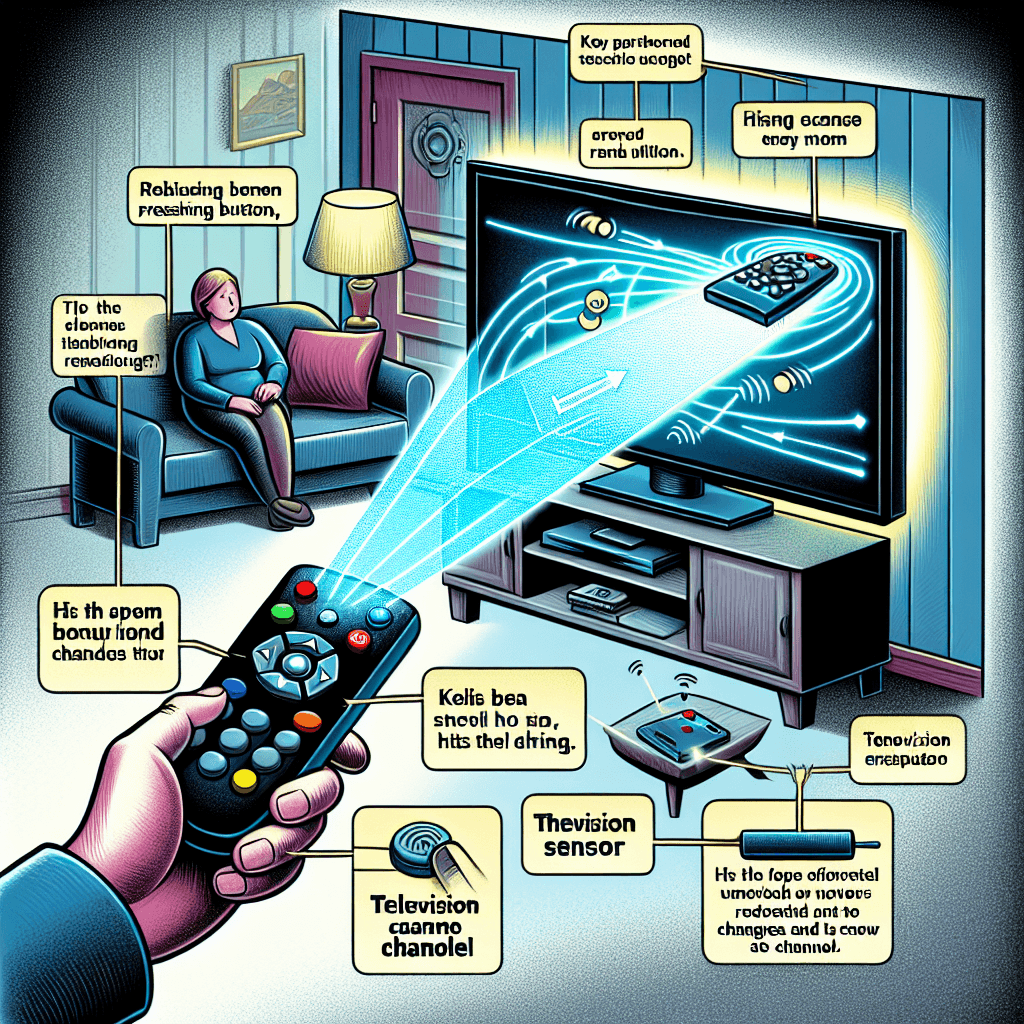
TLDR: Your remote uses an invisible infrared light beam. Pressing a button makes an LED blink in a unique binary code pattern. A sensor on your TV reads this light pattern and performs the corresponding command, like changing the channel or volume.
Invisible Power: How Does a TV Remote Control the TV Using a Beam of Invisible Light?
Ever pointed your remote at the TV, clicked a button, and watched the channel magically change? It’s a daily action we perform without a second thought. But have you ever paused to wonder what’s actually happening in that split second? It isn’t magic, but a fascinating and elegant application of physics. That small plastic device in your hand is a sophisticated transmitter, sending a precisely coded message to your television using a medium we can’t even see. This blog post will pull back the curtain on this everyday marvel, explaining exactly how your TV remote controls the TV using a beam of invisible light, turning your simple button press into a command your television can understand and obey.
The Invisible Messenger: Infrared Light
The secret to your remote’s power lies in a type of light that is invisible to the human eye: infrared (IR) light. Infrared light is part of the electromagnetic spectrum, just like the colors we see in a rainbow, radio waves, and X-rays. The only difference is its wavelength. IR light has a longer wavelength than red light, placing it just beyond the visible spectrum for humans.
While we can't see it, we interact with infrared energy all the time. The warmth you feel from the sun or a hot stove is a form of infrared radiation. Your TV remote uses a much lower-power version of this energy not for heat, but to carry information.
From Button Press to Light Pulse: A Look Inside Your Remote
When you press a button on your remote, you kickstart a rapid, high-tech chain of events. Here’s a step-by-step breakdown of how your command is converted into a light-based signal:
- The Press: When you press the "Volume Up" button, it pushes down on a rubber membrane, completing a specific electrical circuit on the circuit board beneath it.
- The Code: This action sends a signal to the remote's integrated circuit, or microchip. The microchip instantly recognizes which button was pressed and generates a unique binary code—a sequence of 1s and 0s—that represents the "Volume Up" command. Every single button on your remote has its own distinct binary code.
- The Transmission: The microchip sends this binary code to a small infrared light-emitting diode (LED) located at the front of the remote. This IR LED acts as the transmitter.
- The Pulse: The LED translates the binary code into a series of rapid light pulses. For instance, a "1" might be represented by a longer pulse of IR light, and a "0" by a shorter one. These pulses flash incredibly fast, forming a unique pattern for the specific command you issued.
Catching the Signal: How Your TV Decodes the Message
The conversation is only half complete. The TV now has to receive and understand this invisible message. Located on the front of your television, usually behind a small, dark red plastic panel, is an infrared receiver.
This receiver contains a photodiode (or phototransistor), which is a semiconductor designed to detect light. When the flashing pattern of IR light from your remote hits this sensor, it converts the light pulses back into an identical electrical signal of 1s and 0s. This electrical signal is then sent to the television’s main microprocessor. The microprocessor decodes the binary pattern, recognizes it as the command for "Volume Up," and instantly instructs the TV’s audio circuitry to increase the sound. This entire process, from your thumb pressing a button to the volume changing, happens in a fraction of a second.
Line-of-Sight and Its Limitations
Because the remote uses light to communicate, it requires a direct "line-of-sight" to the TV's receiver. This is why the remote won't work if a pillow, a person, or a piece of furniture is blocking the path. The IR light beam travels in a straight line and cannot pass through solid objects. Sometimes, you can get away with pointing the remote at a nearby wall, as the IR beam can reflect off the surface and still reach the TV's receiver, but a direct path is always most effective. This is a key difference from newer remote technologies like Bluetooth or Wi-Fi, which use radio waves that can easily pass through walls.
Conclusion
The humble TV remote is a perfect example of complex technology made simple for everyday use. What feels like a simple action is actually a rapid-fire conversation conducted in a language of invisible light. By converting a button press into a unique binary code, transmitting it as a pattern of infrared light pulses, and having a receiver decode it, this system allows for seamless control over our entertainment. So, the next time you effortlessly switch to your favorite show, take a moment to appreciate the invisible, high-speed beam of information flying across your living room, making it all possible.


