
What creates the sharp crack when you quickly snap a towel
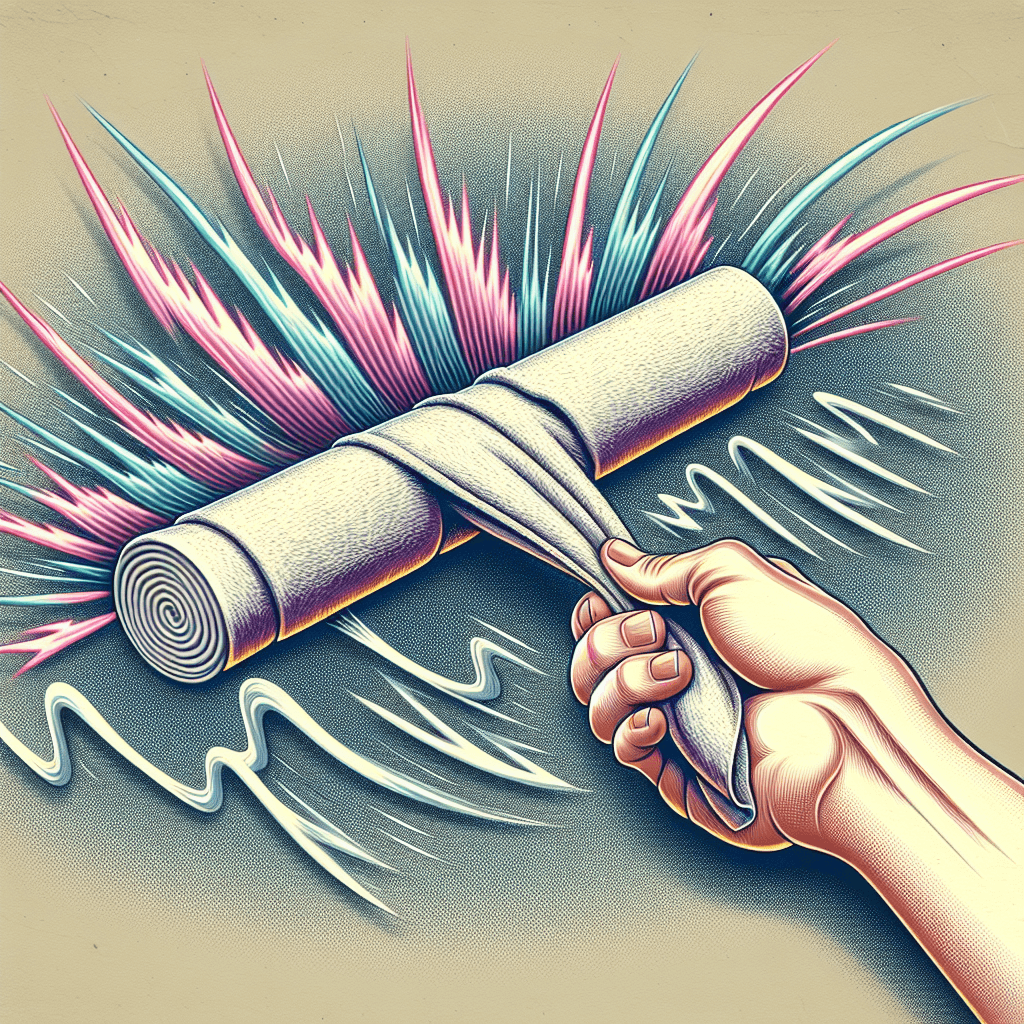
That sharp, startling crack isn't the sound of fabric hitting fabric—it's a miniature sonic boom created as the tip of the towel breaks the sound barrier.

Too Long; Didn't Read
TLDR: The crack is a tiny sonic boom. When you snap a towel, the wave you create makes the tip travel faster than the speed of sound.
The Science of a Snap: What Creates the Sharp Crack When You Quickly Snap a Towel?
We’ve all heard it—the startlingly loud CRACK of a towel snapped in a locker room or by the pool. It’s a sound so sharp and explosive it seems disproportionate to the simple action of flicking a piece of cloth. Many people assume the noise comes from the towel hitting itself or another surface, but the truth is far more fascinating and rooted in some serious physics. That sharp crack is not an impact sound; it’s the sound of the towel’s tip breaking the sound barrier. This blog post will unravel the science behind this everyday phenomenon, explaining exactly how a simple flick of the wrist can create a miniature sonic boom.
The Journey of a Wave
The process begins the moment you initiate the snap. By holding one end of the towel and creating a U-shaped loop, you set the stage. When you whip your arm forward, you send a wave of energy traveling down the length of the fabric.
Think of it like a ripple moving across a pond. Your arm motion is the initial disturbance, and this disturbance propagates as a wave through the medium—in this case, the towel. However, a towel is not a uniform medium. The wave starts in the wider, heavier part of the towel you're holding and travels towards the thin, lightweight tip at the other end. As the wave moves along the towel, its energy becomes concentrated into a progressively smaller and lighter section of the material. This causes the loop to tighten and accelerate dramatically.
Breaking the Sound Barrier in Your Hand
This rapid acceleration is the key to the entire event. The tip of the towel is propelled forward at an incredible speed. For a brief moment, the very end of the towel moves so fast that it exceeds the speed of sound, which is approximately 767 miles per hour (1,234 km/h) at sea level.
When an object travels faster than the speed of sound, it is moving faster than the sound waves it's creating. These sound waves can't get out of the way in time and instead pile up in front of the object, compressing into a single, high-pressure shockwave. When this shockwave passes by our ears, we perceive it as a sudden, loud "crack" or "boom." This is a sonic boom.
The phenomenon is identical to the crack of a bullwhip, which was the first man-made object to break the sound barrier. High-speed camera footage has confirmed that the tip of a snapping towel indeed achieves supersonic speeds, creating its own tiny sonic boom.
What Makes a "Good" Snap?
Not all snaps are created equal. The loudness and sharpness of the crack depend on several factors:
- Technique: A smooth, fluid motion that effectively transfers energy from your arm into the towel is crucial. A jerky movement will dissipate the energy before the wave can properly accelerate.
- The Loop: A well-formed U-shaped loop is essential for concentrating the energy effectively as it travels toward the tip.
- Towel Properties: A towel that is slightly damp can be more effective. The added mass from the water helps carry the wave's momentum, but a soaking wet towel is too heavy and slow to achieve the necessary speed.
More Than Just a Prank
So, the next time you witness the sharp crack of a snapped towel, you'll know you're not just hearing a sound—you're observing a fascinating display of physics. That simple piece of cloth, with the right technique, is a miniature supersonic machine. The crack is a testament to how fundamental principles of wave mechanics and energy transfer can manifest in the most unexpected and everyday situations. It’s a powerful reminder that incredible science is happening all around us, even in something as simple as a flick of the wrist.


