
What did ropes have to do with telling someone to sleep tight
We've all wished someone to 'sleep tight,' but this common phrase has nothing to do with being tucked in and everything to do with the ropes that once held a bed together.

Too Long; Didn't Read
TLDR: The phrase sleep tight possibly comes from old beds that used a rope lattice to support the mattress. Tightening these ropes made the bed firmer and more comfortable to sleep on.
Unraveling a Mystery: What Did Ropes Have to Do with Telling Someone to "Sleep Tight"?
We’ve all said it or heard it: "Sleep tight, don't let the bedbugs bite." While the warning about bedbugs is unpleasantly literal, the origin of "sleep tight" is shrouded in a fascinating debate. For decades, a popular theory has tied the phrase directly to the beds our ancestors slept on—beds that relied on a network of ropes instead of a modern box spring. This explanation is wonderfully tangible and offers a direct link to the past. This post will delve into the compelling story of rope beds, explore their connection to getting a good night's rest, and examine whether this popular tale is historical fact or clever folklore.
A Glimpse into Historical Beds
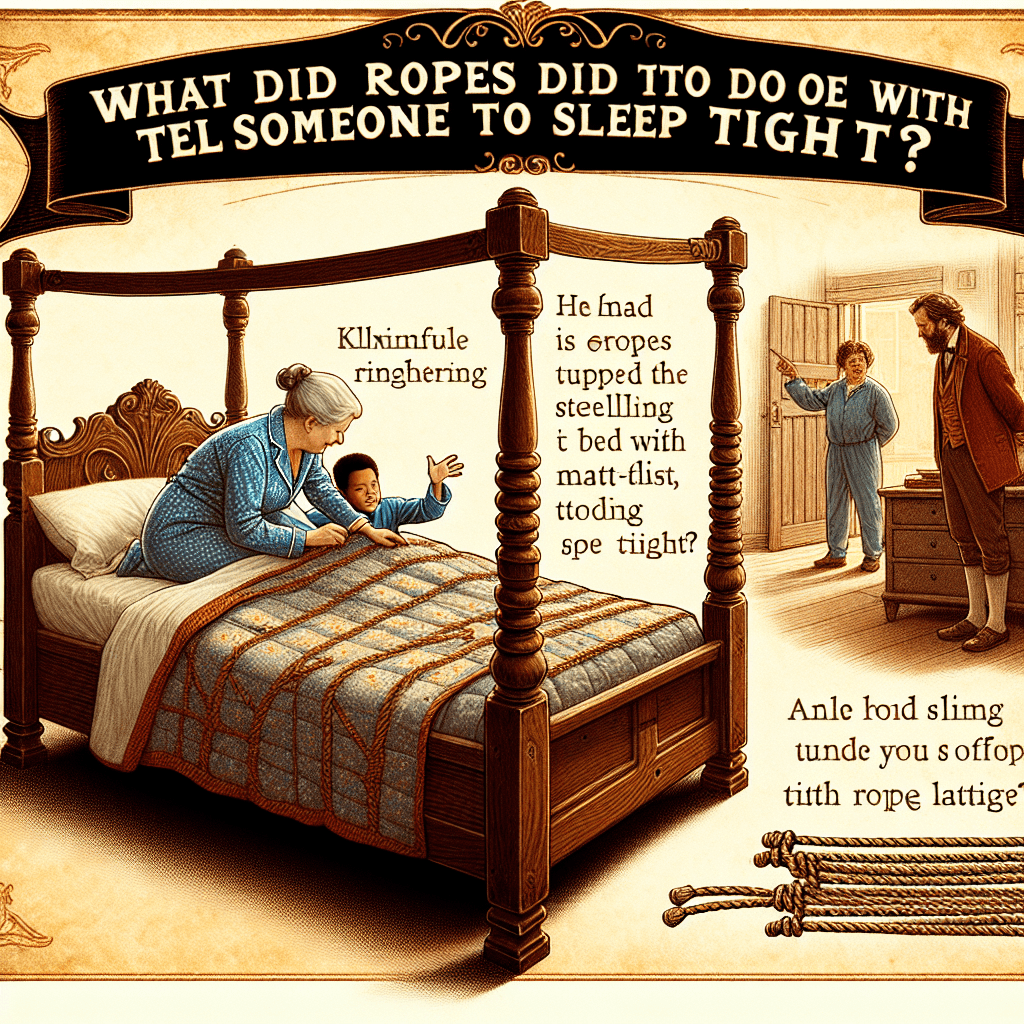
Long before memory foam and pocket-sprung mattresses, a typical bed from the 16th through the 19th centuries was a much simpler affair. It consisted of a basic wooden frame, often with four posts. But what did people sleep on? The "box spring" of the era was a lattice of strong ropes, usually made of hemp, threaded through holes drilled along the wooden side rails of the bed frame.
Stretched across this rope grid was a mattress, which was little more than a large fabric sack, known as a palliasse or bed tick. This sack was stuffed with whatever material was available and affordable, such as:
- Straw or hay for the common person
- Feathers or down for the wealthy
- Corn husks or horsehair
This rope foundation was the sole support system, making its condition crucial for comfort.
The Crucial Role of the Ropes
Imagine lying on a hammock. When it’s pulled taut, it’s supportive. When it’s slack, you sink into an uncomfortable U-shape. A rope bed worked on a similar principle. With daily use and the weight of one or more sleepers, the ropes would inevitably stretch and sag. A bed with slack ropes would create a deep, uncomfortable trench in the middle of the mattress, leading to a restless night and an aching back.
For a person to get a sound, comfortable, and supportive sleep, the rope foundation had to be firm and level. In other words, the ropes needed to be tight.
The Ritual of Tightening the Ropes
To combat the dreaded sag, the ropes had to be tightened regularly. This wasn't done by hand; the tension required a specialized tool. A "bed key," "bed wrench," or "rope wrench"—a T-shaped wooden or metal lever—was used to grip the rope and provide the leverage needed to pull it taut. The user would work their way around the bed frame, tightening each section of the rope until the entire web was firm and resilient.
This maintenance was essential for a good night’s sleep. According to this popular theory, the phrase "sleep tight" originated as a literal wish for someone to have a firm, comfortable bed with recently tightened ropes, setting them up for a restful night.
Fact or Persuasive Folk Etymology?
While the rope bed story is logical, charming, and widely circulated, many linguists and etymologists remain unconvinced. They categorize it as "folk etymology"—a plausible story that sounds true but lacks direct historical proof.
The primary counterargument is based on the historical meaning of the word "tight."
- Linguistic Evidence: Long before the phrase "sleep tight" was first recorded in the 1860s, the adverb "tightly" (often shortened to "tight") already meant "soundly," "firmly," or "securely." People were told to "sit tight" or "hold on tight," which meant to do so securely, not in a physically constricting way.
- Lack of Direct Citation: There are no known historical documents, diaries, or letters from the era that explicitly link the phrase "sleep tight" to the act of tightening bed ropes.
Most experts believe the phrase simply meant "sleep soundly." However, this doesn't diminish the rope bed theory's appeal. It emerged during a time when rope beds were still in use, so the two concepts likely became intertwined in the popular imagination, creating a story that has endured far longer than the beds themselves.
Conclusion
So, what did ropes have to do with telling someone to sleep tight? The most accurate answer is that they inspired a wonderfully vivid and enduring piece of folklore. While the direct linguistic origin of "sleep tight" almost certainly points to the established meaning of "tight" as "soundly" or "securely," the story of rope beds provides a tangible and memorable explanation that connects us to the daily lives of our ancestors. Whether it’s strict fact or charming fiction, the tale ensures that the next time you wish someone a good night, you’ll have a much richer appreciation for the simple comfort of a firm, supportive bed.


