
What is that small, pointy bump found on the top of some people's ears
That small, pointy bump on the ear isn't just a random quirk; it’s a fascinating, 'elf-like' trait that whispers a secret about our deep evolutionary past.

Too Long; Didn't Read
TLDR: The small, pointy bump on some ears is called Darwin's Tubercle. It is a harmless and common genetic trait, believed to be an evolutionary leftover from when our ancestors had pointier ears.
Darwin's Tubercle: What Is That Small, Pointy Bump on the Top of Some People's Ears?
Have you ever looked closely in the mirror and noticed a small, pointy bump along the upper rim of your ear? Or perhaps you’ve seen it on a friend or family member. This subtle little nodule is a common and completely harmless feature, but it carries a fascinating story that connects us to our deep evolutionary past. It's a tiny physical quirk that has intrigued scientists and anatomists for centuries. This post will unravel the mystery behind this feature, explaining what it is, why some people have it, and what it tells us about human evolution. Get ready to explore the curious case of Darwin's Tubercle.
What Exactly Is This Ear Bump?
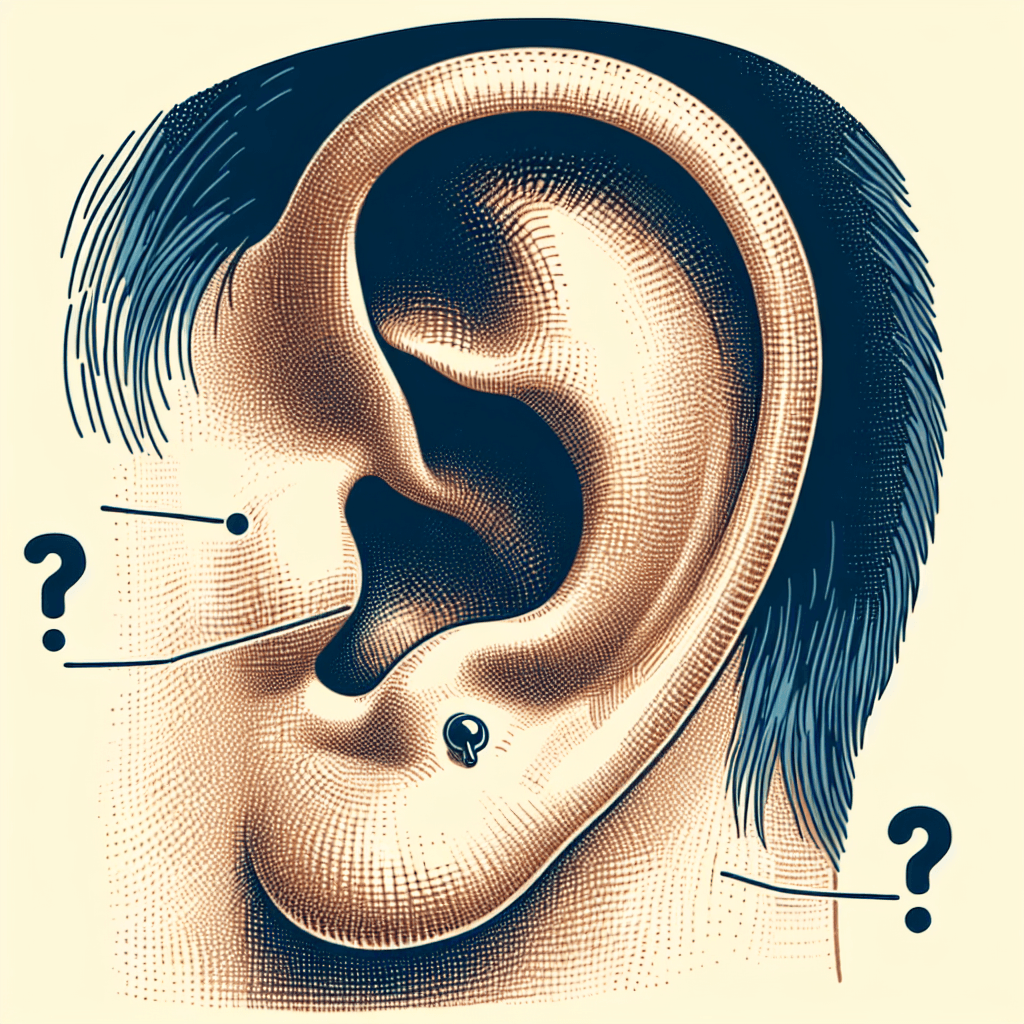
That small thickening of cartilage found on the upper part of the helix (the outer rim) of the ear is known formally as Darwin's Tubercle, or the auricular tubercle. It is a congenital feature, meaning it's present from birth and is simply a variation in the normal anatomy of the human ear.
Key characteristics of Darwin's Tubercle include:
- Location: It typically appears on the junction of the upper and middle thirds of the ear's outer rim.
- Appearance: It can range from a subtle thickening to a more pronounced, pointy nodule.
- Occurrence: It can be present on one or both ears and varies in prominence from person to person.
It’s crucial to understand that this bump is not a medical condition. It is completely benign, does not affect hearing, and has no associated health risks. It is simply one of the many small ways human bodies can differ from one another.
The Evolutionary Link: Why "Darwin's Tubercle"?
The feature gets its name from Charles Darwin, who discussed it in his 1871 book, The Descent of Man. Darwin identified the tubercle as a vestigial trait—a structure that has lost its original ancestral function over the course of evolution.
The prevailing scientific theory is that Darwin's Tubercle is a remnant of a larger, more pointed ear structure common in many of our primate ancestors and other mammals. In animals like cats, dogs, and monkeys, a pointed ear tip, known as the "Woolnerian tip," helps to funnel and focus sound, allowing them to better detect predators or prey. The muscles attached to this part of the ear also allow for greater mobility, enabling them to pivot their ears toward a sound source.
While humans have lost the ability to move their ears with such precision (our auricular muscles are also largely vestigial), this small bump is believed to be the last evolutionary echo of that once-functional point. It's a fascinating physical marker of our shared ancestry with other mammals.
How Common Is This Pointy Bump?
Darwin's Tubercle is more common than you might think. While exact figures vary between populations, studies suggest that it is present in approximately 10% to 20% of people. Its inheritance is thought to be genetic, often cited as an autosomal dominant trait with incomplete penetrance, which means that even if you inherit the gene for it, the trait may not physically manifest.
It's a simple, harmless quirk passed down through generations, serving as a quiet reminder of the intricate and often surprising path of human evolution.
Should You Be Worried?
Absolutely not. Darwin's Tubercle is a normal anatomical variant and is no cause for concern. It is not a sign of any underlying health issue.
However, it's always wise to be aware of any new or changing features on your body. If you notice a bump on your ear that is new, painful, growing, or changing in color or texture, it's important to consult a healthcare professional. Other conditions, such as cysts, keloids, or skin cancers, can occur on the ear and should be properly diagnosed by a doctor. Darwin's Tubercle, on the other hand, will have been present since birth and remains stable throughout your life.
A Tiny Piece of History on Your Ear
In conclusion, that small, pointy bump on the top of some ears is a fascinating feature known as Darwin's Tubercle. It is not a flaw or a medical issue but rather a completely harmless vestige of our evolutionary history. This tiny nodule connects modern humans to our primate ancestors, reminding us that our bodies are living records of a long and complex journey. So, the next time you spot this feature on yourself or someone else, you can appreciate it for what it is: a subtle yet profound link to the animal kingdom and the story of how we came to be.


