What is the real reason ice is so incredibly slippery
Forget the old theory about pressure melting the ice beneath your feet. The truth is far stranger, involving a bizarre surface layer that's neither solid nor liquid.

Too Long; Didn't Read
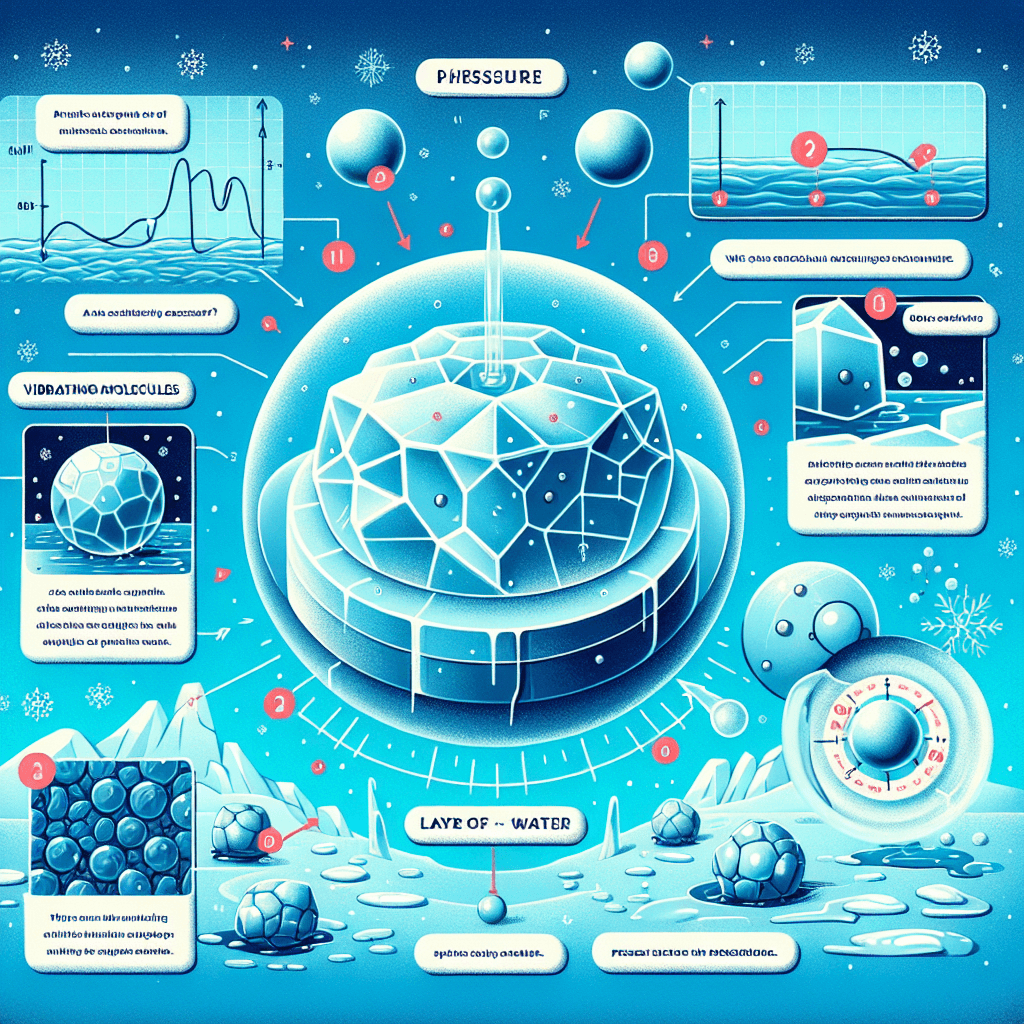
TLDR: It is not pressure or friction melting the ice that makes it slippery. The surface of ice, even well below freezing, is naturally covered in a super thin, liquid-like layer of mobile molecules that acts as a lubricant.
The Slippery Truth: What is the Real Reason Ice is So Incredibly Slippery?
We’ve all been there. One moment you’re walking confidently across a wintry landscape, and the next, your feet are flailing as you try to defy gravity. The culprit? A seemingly harmless patch of ice. For centuries, the question of why this solid form of water is so uniquely treacherous has puzzled everyone from casual observers to brilliant scientists. While many of us grew up hearing a simple explanation involving pressure, the real story is far more complex and fascinating. This post will slide into the science, debunking old myths and revealing the modern understanding of what makes ice so incredibly slippery.
The Pressure Cooker Myth: Why Pressure Melting Isn't the Whole Story
For a long time, the most common explanation for ice's slipperiness was "pressure melting." The theory goes like this: when you stand on ice, the pressure exerted by your weight (concentrated through your shoes or a skate blade) lowers the melting point of the ice directly beneath you. This creates a thin, lubricating layer of water, which is what you slip on.
It’s an elegant idea, but it doesn’t hold up under scrutiny. Scientists have calculated that the pressure from a typical person's body weight only lowers the ice's melting point by a tiny fraction of a degree. This might explain some slipperiness right around 0°C (32°F), but it fails to account for why ice is still dangerously slick at much colder temperatures, like -20°C (-4°F), where the required pressure would be immense and simply unattainable by a person or even a figure skater. While pressure plays a role, it’s a minor character in this slippery drama.
Heating Things Up: The Role of Friction
A more robust theory that gained traction is "frictional heating." This concept suggests that as an object—like the sole of your shoe or a skate blade—moves across the ice, the friction between the two surfaces generates heat. This heat is just enough to melt a microscopic layer of the ice, creating the film of water that allows for a smooth, low-friction glide.
This explanation is a significant part of the puzzle, especially when it comes to activities like ice skating or curling. The rapid movement of a skate blade generates considerable frictional heat, which is why skaters can glide so effortlessly. However, this theory also has a limitation: it doesn't fully explain why ice is slippery even when you are standing perfectly still. You can lose your footing before you’ve even taken a step, which means friction isn't the initial cause.
The Real Culprit: The Mysterious "Quasi-Liquid Layer"
The most accurate and widely accepted explanation today centers on a mind-bending concept: the surface of ice is naturally wet. Even at temperatures far below freezing, the outermost layer of ice isn’t a perfectly stable, solid crystal. Instead, it exists in a "quasi-liquid" or "pre-melted" state.
This idea was first proposed by the brilliant physicist Michael Faraday way back in the 1850s. He observed that two ice cubes pressed together would instantly freeze into one solid block—a phenomenon only possible if their surfaces were already somewhat liquid.
Why does this happen?
- Unstable Molecules: Inside the ice crystal, each water molecule is neatly locked in place, bonded to four other molecules.
- Surface Tension: On the surface, however, the molecules have nothing above them to bond with. This lack of complete bonding makes them less stable and allows them to vibrate and move around much more freely, behaving like molecules in a liquid.
Modern scientific tools, such as atomic force microscopy, have confirmed Faraday’s theory. Researchers at institutions like the Max Planck Institute have directly observed this mobile, disordered layer, which is only a few molecules thick but is present on ice at temperatures as low as -38°C (-36°F). This inherent liquid-like layer provides the initial slipperiness, even before pressure or friction come into play.
So, the slipperiness of ice is a team effort. The quasi-liquid layer is always there, ready to send you sliding. When you add movement, the heat from friction melts more ice, enhancing the lubricating effect and making the surface even more slick.
Conclusion
The next time you cautiously step onto an icy sidewalk, you can appreciate the complex physics at play. The real reason ice is so slippery isn't just about pressure or friction, though they contribute. The primary cause is the strange and fascinating nature of water itself—specifically, the permanently "quasi-liquid" layer that coats its frozen surface. This thin, mobile film of molecules is always present, providing that initial, perilous lack of grip. It’s a powerful reminder that even the most common phenomena in our world can hide profound scientific secrets, waiting to be understood.