
What makes grain dust in a silo as explosive as gunpowder
It takes just five specific conditions to turn seemingly harmless dust into a catastrophic bomb. Discover the terrifying science that gives a single spark in a silo the explosive power of gunpowder.

Too Long; Didn't Read
TLDR: Tiny grain dust particles suspended in the air have a massive surface area. In a confined space like a silo, a single spark can ignite them all at once, causing a rapid, powerful explosion.
From Farm to Fireball: What Makes Grain Dust in a Silo as Explosive as Gunpowder?
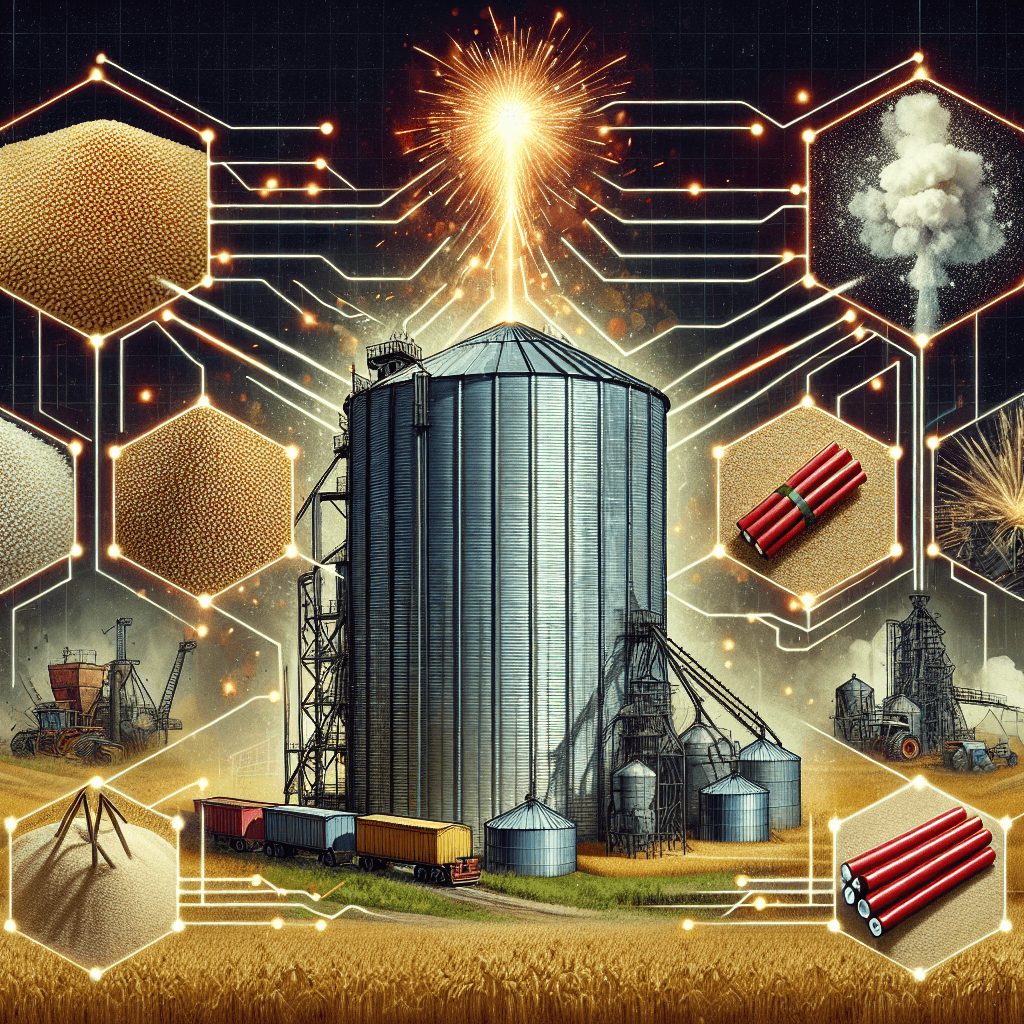
A towering grain silo stands as a symbol of agricultural abundance, a quiet giant holding the world's harvest. Yet, within its walls, the seemingly harmless dust from corn, wheat, or soybeans can transform into a force as destructive as gunpowder. This isn't an exaggeration; it's a stark reality of physics and chemistry. A single spark in the wrong conditions can turn a peaceful silo into a catastrophic bomb. But how can something as ordinary as dust become so violently explosive? This post will dissect the science behind this hidden danger, exploring the precise ingredients needed to unleash the explosive power of grain dust.
The Science of a Speck: Surface Area is Key
The fundamental difference between a pile of grain and a cloud of explosive dust comes down to one critical factor: surface area. Imagine trying to light a solid log with a match. It takes time for the flame to take hold and for the wood to burn. Now, imagine grinding that same log into fine sawdust and tossing it into the air over a flame. The result is an instantaneous, roaring fireball.
This is because the dust particles have an incredibly high surface-area-to-volume ratio. Each tiny speck is surrounded by oxygen, the critical ingredient for fire. When an ignition source is introduced, the combustion reaction doesn't happen slowly on one surface; it happens almost simultaneously across the surfaces of trillions of particles. This ultra-rapid combustion is, by definition, an explosion. The energy is released so quickly that it generates a powerful, high-pressure wave, which is what causes the devastating damage.
The Recipe for Disaster: The Dust Explosion Pentagon
For a dust cloud to ignite and explode, five specific conditions must be met simultaneously. Safety experts refer to this as the "Dust Explosion Pentagon." If any one of these five elements is removed, an explosion cannot occur.
- 1. Fuel: This is the combustible dust itself. Nearly any organic material can become explosive when ground into a fine powder, including flour, sugar, and especially the grain dust found in a silo.
- 2. Oxygen: This is readily available in the air. The typical oxygen concentration in the atmosphere is more than enough to support a powerful explosion.
- 3. Dispersion: The dust must be suspended in the air to form a cloud. A pile of dust on the floor might smolder, but it won't explode. Activities like loading, unloading, or conveying grain can easily kick up enough dust to create a dangerously dispersed cloud.
- 4. Ignition Source: The fuel, oxygen, and dispersion need a trigger. Ignition sources in a silo can be numerous and often unexpected, such as a spark from metal equipment striking a concrete wall, an overheated motor bearing, static electricity, or improper welding.
- 5. Confinement: This is the element that turns a rapid fire into a devastating explosion. The enclosed structure of a silo or grain elevator traps the pressure created by the rapid combustion. With nowhere to escape, the pressure builds exponentially until it exceeds the structural integrity of the silo, causing it to rupture violently.
The Domino Effect: Primary and Secondary Explosions
What makes grain silo explosions particularly catastrophic is often a chain reaction. The event typically starts with a small, primary explosion in an area where the dust cloud has reached an optimal concentration. While damaging, this initial blast is often not the main event.
The true devastation comes from the secondary explosion. The shockwave from the primary explosion travels through the facility, dislodging layers of accumulated dust from rafters, equipment, and walls. This action instantly creates a much larger and more widespread combustible dust cloud. The flame front from the initial blast then ignites this massive new cloud, resulting in a secondary explosion of far greater power—one capable of leveling entire structures.
Conclusion
The explosive nature of grain dust is not due to any unique chemical property but rather a perfect storm of physical conditions. The immense surface area of the dust particles allows for near-instantaneous combustion when mixed with air and a spark. When this reaction is contained within a structure like a silo, the resulting pressure buildup has the force of a bomb. Understanding the five elements of the Dust Explosion Pentagon is not just an academic exercise; it is the foundation of industrial safety protocols that save lives. By controlling dust, eliminating ignition sources, and ensuring proper ventilation, the agricultural industry works to tame this hidden danger and prevent the harvest from becoming a hazard.


