
What makes road markings shine so brightly in your car's headlights at night
It's not the paint that makes road markings blaze in your headlights, but a brilliant trick involving millions of microscopic glass beads designed to throw light directly back at your eyes.

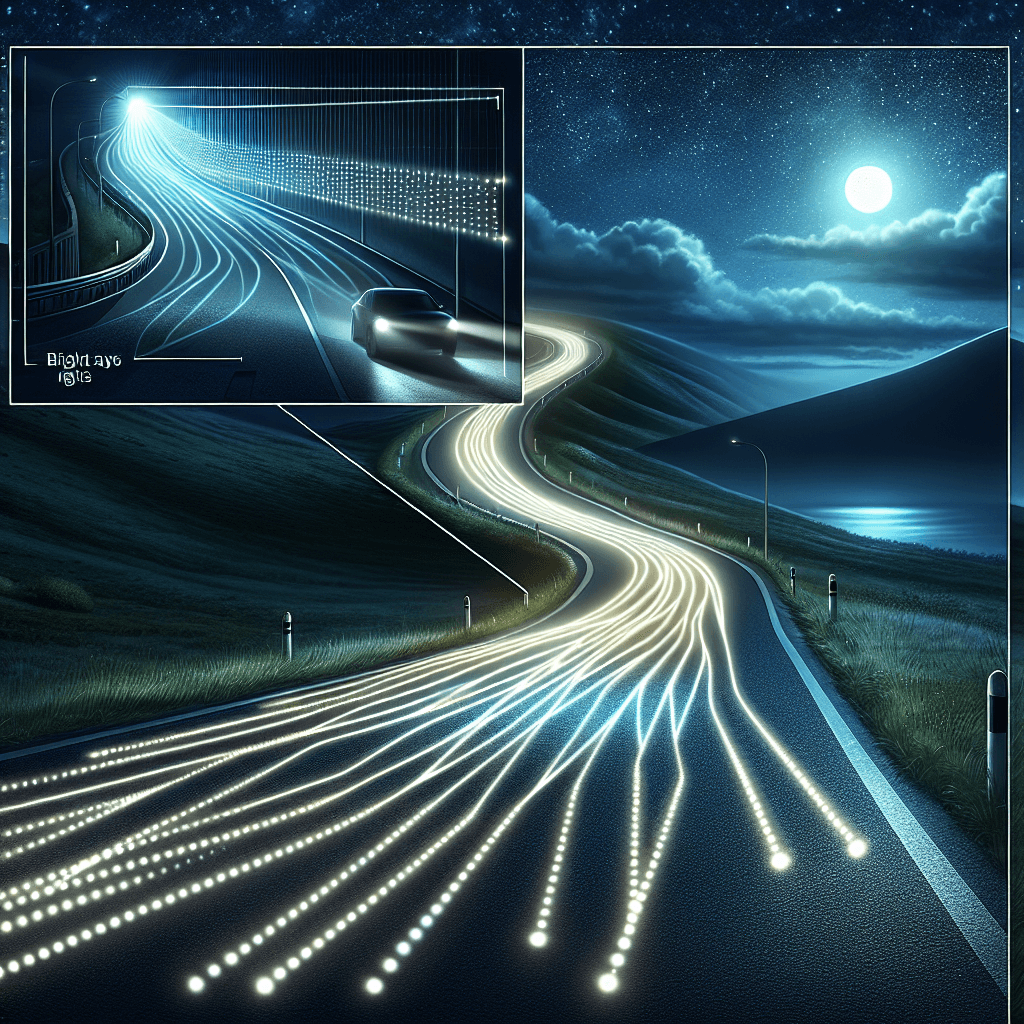
Too Long; Didn't Read
TLDR: Road markings contain millions of tiny glass beads that act like mirrors, reflecting your car's headlights directly back to your eyes, which makes the lines appear to glow.
Illuminating the Road: What Makes Road Markings Shine So Brightly in Your Car's Headlights at Night?
Have you ever driven down a dark road at night and marveled at how the painted lines seem to glow with an almost magical intensity? That white or yellow stripe, barely visible moments before, suddenly leaps into focus, perfectly outlining your lane. This isn't magic, and the paint isn't powered by electricity. It's a brilliant and crucial application of physics designed to keep you safe. The phenomenon responsible for this life-saving glow is known as retroreflection, a simple yet ingenious technology embedded directly into the roads we travel every day. This post will pull back the curtain on the science of retroreflection and explain exactly what makes those road markings shine so brightly.
The Secret Isn't in the Paint, It's in the Beads
While the durable paint provides the color and foundation for road markings, it isn't the source of the nighttime shine. The real heroes of this story are millions of microscopic glass beads.
These tiny, perfectly spherical beads, often no larger than a grain of sand, are the key ingredient for making markings visible after dark. During the application process, these "microspheres" are either pre-mixed directly into the paint or dropped onto the surface of the wet paint line. When the paint dries, the beads become permanently embedded, with a portion of each sphere exposed to the air and passing traffic. They sit there, almost invisible during the day, waiting to perform their light-bending duties as soon as your headlights sweep across them.
How Retroreflection Works: A Tiny Light-Bending Trick
To understand why these beads are so effective, we need to look at the science of retroreflection. Unlike a mirror, which bounces light away at an angle (specular reflection), or a matte surface like a wall, which scatters light in every direction (diffuse reflection), a retroreflective surface captures light and returns it directly to its source.
Here’s a step-by-step breakdown of what happens in a fraction of a second when your car's headlight beam hits a glass bead on the road:
- Light Enters the Bead: A ray of light from your headlight strikes the front surface of an exposed glass bead.
- Light Bends (Refracts): As the light passes from the air into the denser glass, the bead's curved surface acts like a lens, bending the light and focusing it toward the back of the sphere.
- Light Bounces Back: The light ray strikes the back inner surface of the bead, which is coated with the road marking paint. This paint acts as a reflective background, bouncing the light directly back toward the front.
- Light Exits the Bead: The reflected light travels back through the bead. As it exits the front surface, it is bent again, precisely directing the concentrated beam of light back along its original path—straight to your car and your eyes.
This process happens simultaneously across millions of beads, creating the bright, focused glow that makes the lines appear to light up from within.
The Importance of Quality and Application
Not all road markings perform equally, and their effectiveness depends on several critical factors:
- Bead Quality: The "refractive index" of the glass is crucial. A higher index means the glass can bend light more sharply, resulting in a more efficient and brighter light return.
- Bead Embedment: For optimal performance, the beads must be embedded to the right depth—typically about 60% of their diameter. If they are buried too deep in the paint, your headlights can't reach them. If they sit too high, they can be easily knocked loose by traffic.
- Durability and Conditions: Over time, traffic abrades the beads and dirt can obscure them. Furthermore, traditional markings often lose their retroreflectivity on rainy nights. The water covering the beads disrupts the light-bending process. To combat this, transportation departments now use larger, more durable beads and "structured" markings with raised profiles that allow water to drain away, ensuring visibility even in wet weather.
A Brilliant Solution for a Safer Journey
So, the next time you're driving at night, take a moment to appreciate the humble road marking. What appears to be a simple line of paint is actually a sophisticated safety system. It’s a testament to how a deep understanding of physics, combined with simple materials like glass and paint, can create a technology that guides us, defines our path, and plays a vital role in preventing accidents. The bright glow isn't magic—it's the silent, brilliant work of millions of tiny glass beads, expertly engineered to light our way home safely.


