
What makes some flowers switch from smelling sweet to smelling like rotting meat
Discover the gruesome survival tactic that forces a beautiful flower to abandon its sweet perfume and mimic the stench of a decaying corpse to lure in its prey.

Too Long; Didn't Read
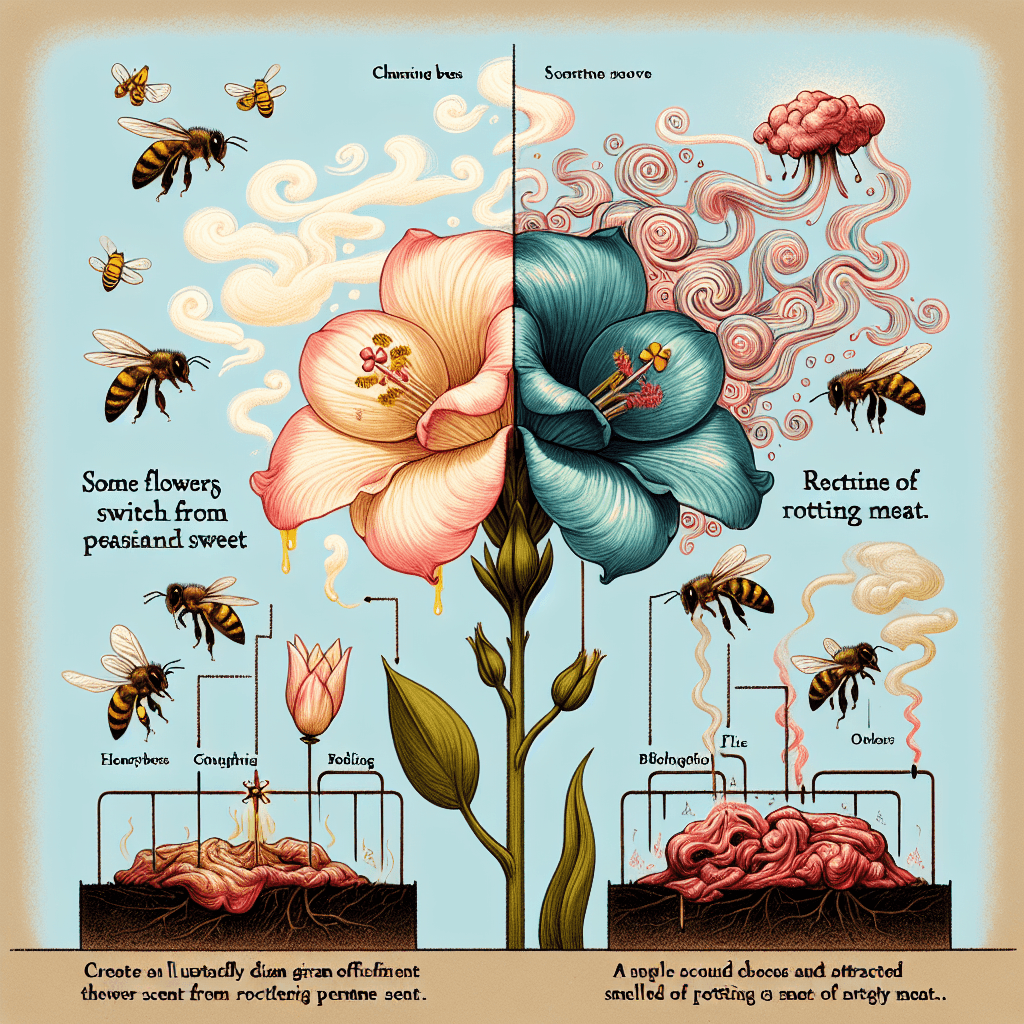
TLDR: Flowers evolve their scent to attract the most effective local pollinators. Sweet smells target bees and butterflies, while a rotting meat stench is a clever trick to lure flies and beetles who are looking for a place to lay their eggs. It is an evolutionary strategy for survival.
From Perfume to Putrid: What Makes Some Flowers Switch from Smelling Sweet to Smelling Like Rotting Meat?
Imagine leaning in to smell a beautiful, exotic flower, expecting a sweet, perfumed aroma, only to be hit with the overwhelming stench of decaying flesh. It’s a jarring experience, but not an accident. This dramatic shift from a pleasant or neutral scent to a foul odor is a sophisticated and fascinating evolutionary strategy. While we associate flowers with pleasant fragrances designed to attract bees and butterflies, a select group has evolved to cater to a very different, and less glamorous, clientele. This post will explore the remarkable biological mechanisms and evolutionary pressures that cause some flowers to smell like rotting meat.
The Pollination Ploy: It’s All About the Insects
The primary reason a plant produces any scent is to attract pollinators. The vast majority of flowering plants have co-evolved with pollinators like bees, moths, and butterflies. To attract them, these plants produce sweet, sugary nectar and release fragrant volatile organic compounds that signal a rewarding meal.
However, a different group of insects—carrion flies, dung beetles, and flesh flies—are not interested in nectar. Their life cycle revolves around finding decaying animal carcasses or dung to feed on and lay their eggs. To capitalize on this, a specialized group of plants, known as carrion flowers or sapromyiophilous plants, has evolved to mimic the exact sights and smells of death and decay. By perfectly replicating the scent of a rotting corpse, these flowers trick the insects into visiting. The deluded fly or beetle crawls around the flower, searching for a place to lay its eggs, and inadvertently picks up or deposits pollen, ensuring the plant's reproductive success without the plant having to offer a real reward.
The Chemical Cocktail: From Sweet to Sulfurous
The "switch" from a typical floral scent to a putrid one is not a change in a single molecule but the production of a completely different and potent chemical cocktail. This process is often timed with pinpoint accuracy, occurring only when the flower is sexually mature and ready for pollination.
The key to the stench lies in specific chemical compounds that are hallmarks of decomposition:
- Volatile Sulfur Compounds (VSCs): The most significant contributors are compounds like dimethyl disulfide and dimethyl trisulfide. These are the same molecules responsible for the foul odors of rotting onions, garlic, and decaying flesh. They create the primary "rotten" smell that is so repulsive to humans but irresistible to a carrion fly.
- Amines: Some of the most infamous compounds are cadaverine and putrescine. As their names suggest, these chemicals are produced during the breakdown of amino acids in decaying animal tissue. Their presence is a dead giveaway—literally—that a food source or breeding ground is nearby for carrion insects.
To make this deception even more effective, many of these flowers engage in thermogenesis, a process where the plant generates its own heat. The famous Titan Arum can heat its central spike to near human body temperature. This warming effect helps to volatilize the sulfurous compounds, allowing the foul odor to travel much farther on the breeze and creating a more convincing imitation of a warm, decaying carcass.
Notorious Stinkers: Meet the Carrion Flowers
This morbid mimicry is not limited to a single species. It has evolved independently in several different plant families across the globe. Some of the most well-known examples include:
- Titan Arum (Amorphophallus titanum): Popularly known as the "corpse flower," this plant produces one of the largest flowering structures in the world. It blooms infrequently, and when it does, it unleashes an overpowering stench of rot for just 24-48 hours, coinciding with a rise in its internal temperature to attract pollinators from far and wide.
- Stapelia (Starfish Flowers): This genus of succulent plants produces stunning, star-shaped flowers that are often covered in fine hairs and marbled with colors that mimic decaying flesh. Their smell is equally convincing, ensuring that local flies pay them a visit.
- Rafflesia arnoldii: Holding the record for the world's largest single flower, this parasitic plant smells strongly of decaying meat. Its massive, leathery petals complete the illusion, drawing in the forest flies it needs to survive.
A Strategy of Survival
The switch from a sweet scent to the smell of rotting meat is a powerful reminder of the incredible diversity of evolutionary strategies in the natural world. While we may find the odor repulsive, it represents a highly successful solution to the universal challenge of reproduction. These plants have mastered the art of deception, creating a complex chemical lie to lure in unwilling assistants. So, the next time you encounter a flower that smells less like a rose and more like a tomb, take a moment to appreciate the fascinating and morbidly brilliant chemistry at play.


