
Why are hiccups actually a vestigial reflex left over from our ancient amphibian ancestors' gill breathing
That annoying spasm in your chest isn't just a random glitch; it’s actually a 370-million-year-old "software error" left over from when our ancestors breathed through gills. Discover the fascinating evolutionary secret behind why your body is still trying to breathe like a tadpole.

Too Long; Didn't Read
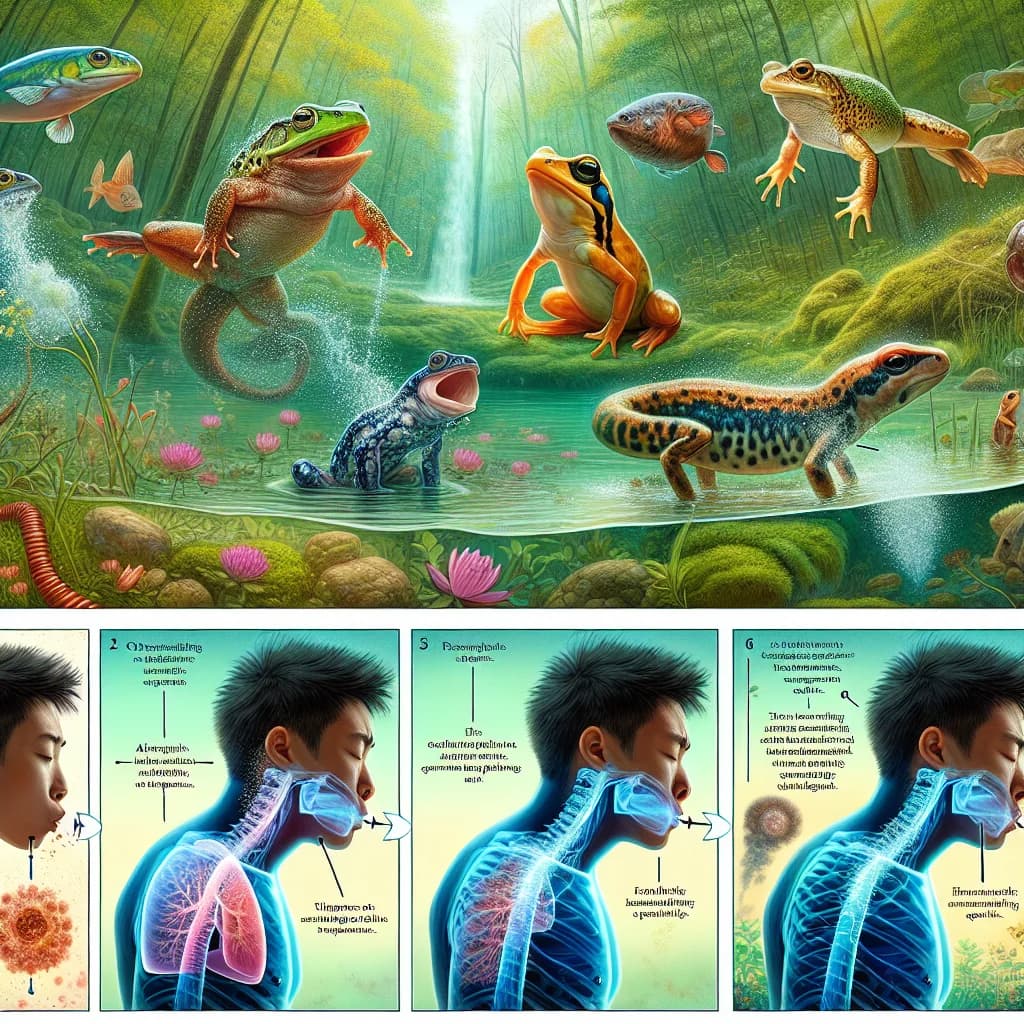
Hiccups are an evolutionary leftover from our amphibian ancestors who used a similar gulping mechanism to breathe through gills while protecting their lungs. This ancient neural circuit remains in the human brainstem as a vestigial reflex from our transition from water to land.
The Ancient Echo in Your Chest: Why Are Hiccups Actually a Vestigial Reflex Left Over from Our Ancient Amphibian Ancestors' Gill Breathing?
We have all experienced the sudden, involuntary "hic" that disrupts a quiet room or a meal. Usually, we dismiss hiccups as a minor annoyance caused by eating too fast or drinking something carbonated. But have you ever wondered why our bodies possess such a specific, jarring, and seemingly useless reflex? Unlike coughing or sneezing, which clear our airways, the hiccup serves no modern physiological purpose. However, evolutionary biologists suggest that this quirk is far from a mistake. Instead, it is a fascinating "neural circuit" held over from our distant past. Why are hiccups actually a vestigial reflex left over from our ancient amphibian ancestors' gill breathing? The answer lies in the transition from water to land and the complex history written in our DNA.
Anatomy of a Glitch: What Happens During a Hiccup?
To understand the evolutionary connection, we must first look at the mechanics of the hiccup itself. A hiccup is a two-part involuntary action:
- The Spasm: The diaphragm, the large muscle beneath your lungs that controls breathing, suddenly contracts.
- The "Hic": About 35 milliseconds later, the glottis—the opening between the vocal cords—snaps shut.
This abrupt closure of the glottis is what creates the signature sound and prevents air from entering the lungs. In modern humans, this serves no benefit. In fact, for chronic sufferers, it can be quite detrimental. However, when we look at the animal kingdom, specifically amphibians, this exact sequence of events is vital for survival.
The Tadpole Connection
The theory that hiccups are an evolutionary leftover was popularized by paleontologist Neil Shubin in his research and book, Your Inner Fish. Shubin and other biologists point toward tadpoles as the missing link to understanding this reflex.
Tadpoles are unique because they use both lungs and gills to breathe. When a tadpole is breathing through its gills, it faces a significant problem: it needs to pump water over its gills, but it must prevent that same water from entering its lungs. To achieve this, the tadpole uses a mechanism remarkably similar to a human hiccup:
- They pump water into their mouths.
- They snap the glottis shut to seal off the lungs.
- The water is then forced out through the gill slits.
Research published in journals such as BioEssays notes that the brain patterns that control gill ventilation in tadpoles are nearly identical to the neural pathways that trigger hiccups in humans. Essentially, when you hiccup, your brain is trying to breathe like a creature that hasn't existed in your direct lineage for hundreds of millions of years.
The Long Road of the Phrenic Nerve
Another piece of evidence for our "inner amphibian" lies in the path of the phrenic nerve. In fish, the nerves that control breathing are located near the head, close to the gills. As mammals evolved, our necks grew longer and our diaphragms moved lower into the chest cavity.
However, evolution rarely "re-wires" from scratch; it builds upon existing structures. Consequently, the human phrenic nerve travels an awkward, elongated path from the brainstem, down through the neck, and past the heart to reach the diaphragm. This long, circuitous route makes the nerve easily irritated. When it is agitated, it triggers the ancient gill-breathing reflex—the hiccup—reminding us of our aquatic origins.
Why Do We Still Have It?
If the reflex is useless, why hasn't evolution discarded it? Evolutionary biology suggests that certain traits persist if they are "neutral"—meaning they don't harm the organism's ability to reproduce. Since hiccups are generally harmless, there has been no strong evolutionary pressure to eliminate the neural circuit.
Additionally, some researchers suggest the reflex might serve a minor purpose in infancy. Mammals are the only animals that suckle, and the hiccup reflex may help infants coordinate the complex task of swallowing milk while preventing it from entering the lungs, mirroring the tadpole's use of the glottis to redirect fluid.
Conclusion
The next time you are struggling to hold your breath to cure a bout of hiccups, remember that you are experiencing a 370-million-year-old biological "echo." Why are hiccups actually a vestigial reflex left over from our ancient amphibian ancestors' gill breathing? Because our bodies are living records of every stage of evolution, from the ocean floor to the dry land. While the hiccup is an inconvenient glitch in the 21st century, it stands as a profound testament to our shared history with the natural world. Understanding these vestigial quirks allows us to appreciate the complexity of human biology, not as a perfect machine, but as a fascinating work in progress. To learn more about how our ancient past shapes our modern health, exploring the field of evolutionary medicine offers a wealth of surprising insights.


