
Why are humans the only animal species on Earth that possesses a true bony chin
While every other primate has a recessed jaw, humans stand alone as the only species with a true bony chin—but is this unique feature an evolutionary accident or a hidden biological advantage?

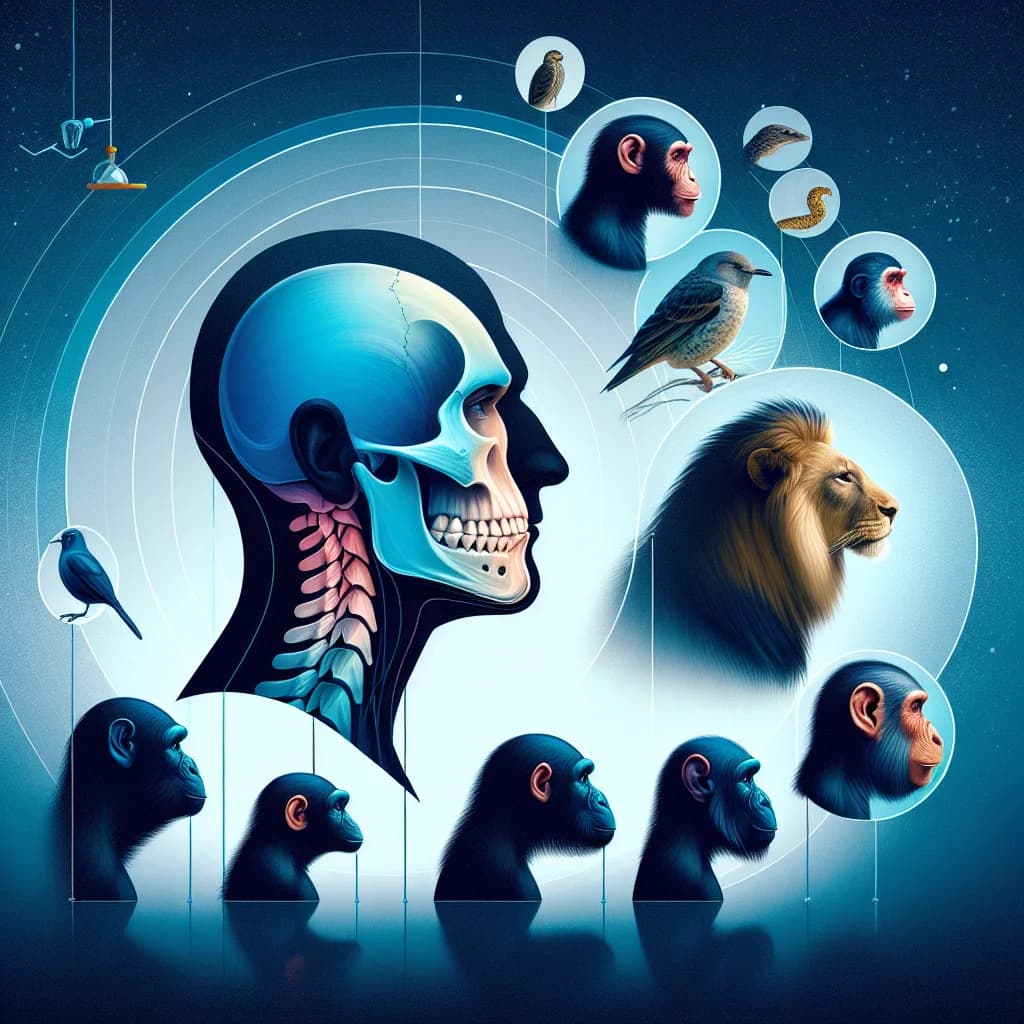
Too Long; Didn't Read
Humans are the only species with a true bony chin, a feature that distinguishes us even from our extinct relatives like Neanderthals. While various theories suggest the chin evolved to assist with chewing or speech, most scientists now believe it is an evolutionary byproduct caused by our faces shrinking and becoming flatter over time rather than a specific functional adaptation.
Facing the Facts: Why are humans the only animal species on Earth that possesses a true bony chin?
Take a look at your reflection in the mirror and focus on the lower part of your face. You are looking at a feature that is uniquely yours—not just as an individual, but as a member of the human race. While we share 99% of our DNA with chimpanzees and were once contemporaries with robust Neanderthals, neither of those species possessed a chin. In the vast kingdom of Animalia, humans stand alone with this peculiar protrusion of the lower jaw. Understanding why are humans the only animal species on Earth that possesses a true bony chin? is more than a matter of vanity; it is a complex evolutionary puzzle that bridges the gap between biology, mechanics, and the history of our species. This post explores the leading scientific theories behind this anatomical anomaly and what it reveals about our unique evolutionary path.
Defining the True Bony Chin
Before diving into the "why," it is essential to understand what exactly a chin is. In biological terms, a "true chin" is known as the mental protuberance. It is a specific protrusion of the mandible (lower jawbone) that extends forward from the base of the teeth.
Many people mistake the lower part of any animal’s jaw for a chin, but this is anatomically incorrect. For example:
- Non-human Primates: Chimpanzees and gorillas have jaws that slope backward toward the neck, often supported by an internal thickening called a "simian shelf."
- Extinct Hominids: Even our closest extinct relatives, the Neanderthals, lacked a protruding chin; their lower jaws generally receded or were vertical.
- Other Mammals: Dogs, cats, and elephants may have jaw structures, but none possess the specific bony projection that characterizes the modern human face.
Leading Evolutionary Theories
Anthropologists and evolutionary biologists have debated the origin of the chin for over a century. While no single consensus exists, several prominent theories offer insights into its development.
1. The Mechanical Stress Theory
One of the oldest hypotheses suggests that the chin evolved to help the jaw withstand the mechanical stresses of chewing (mastication) or speaking. The idea is that as humans began eating tougher foods or developed complex speech, the jaw needed extra reinforcement.
However, research from the University of Iowa, published in the Journal of Anatomy, utilized biomechanical analysis to debunk this. Researchers found that the chin is actually poorly positioned to provide structural support against the forces of chewing. In fact, the chin is often under more stress because of its shape, not less.
2. The Sexual Selection Hypothesis
In many species, certain physical traits evolve because they are preferred by the opposite sex—think of a peacock’s feathers or a lion’s mane. Some researchers argue that the chin may have emerged as a signal of genetic quality or hormonal health. A well-defined jawline is often associated with higher testosterone levels in males, which could have made the chin an attractive trait that was passed down through generations. However, because both human males and females possess chins, this theory remains heavily contested.
3. The "Spandrel" or Byproduct Theory
A "spandrel" is a term used in evolutionary biology to describe a physical trait that is a byproduct of the evolution of some other feature, rather than a direct adaptation. This theory, championed by thinkers like Stephen Jay Gould, suggests that the chin is not "for" anything.
As Homo sapiens evolved, our faces underwent significant changes:
- Dietary Shifts: The invention of fire and cooking meant we no longer needed massive teeth and powerful jaw muscles to process raw meat and fibrous plants.
- Facial Retraction: Our faces became smaller and shifted underneath our braincases (a process called orthognathization).
- The Result: As the upper part of the jaw and the tooth row shrank and moved backward, the very bottom of the mandible didn't recede at the same pace. The "chin" is essentially the leftover part of our jaw that remained as the rest of our face shrunk away.
The Role of Self-Domestication
A more recent perspective looks at the chin through the lens of "self-domestication." As humans became more social and cooperative, our hormone levels—specifically testosterone and cortisol—decreased. According to research published in Science Advances, this hormonal shift led to a "feminization" of the human face, resulting in smaller brow ridges and the overall shortening of the face. The chin may simply be the architectural result of this softening and shrinking of the human skull as we became a more peaceful, social species.
Conclusion
The question of why are humans the only animal species on Earth that possesses a true bony chin? remains one of the most intriguing mysteries in physical anthropology. While theories ranging from mechanical reinforcement to sexual attraction have been proposed, the most scientifically supported view today is that the chin is an evolutionary byproduct. It is a physical marker of our shrinking faces and our transition into a species that cooks its food and lives in complex social groups.
The chin is a reminder that evolution does not always work through intentional design; sometimes, our most defining features are simply the result of other parts of our biology changing over time. Understanding our chin helps us understand our history, marking the moment we truly became a distinct branch on the tree of life. For those interested in the intricacies of human anatomy, the chin serves as a small but significant testament to the unique journey of Homo sapiens.


