
Why are koala fingerprints so nearly identical to human ones that they have confused forensic experts at crime scenes
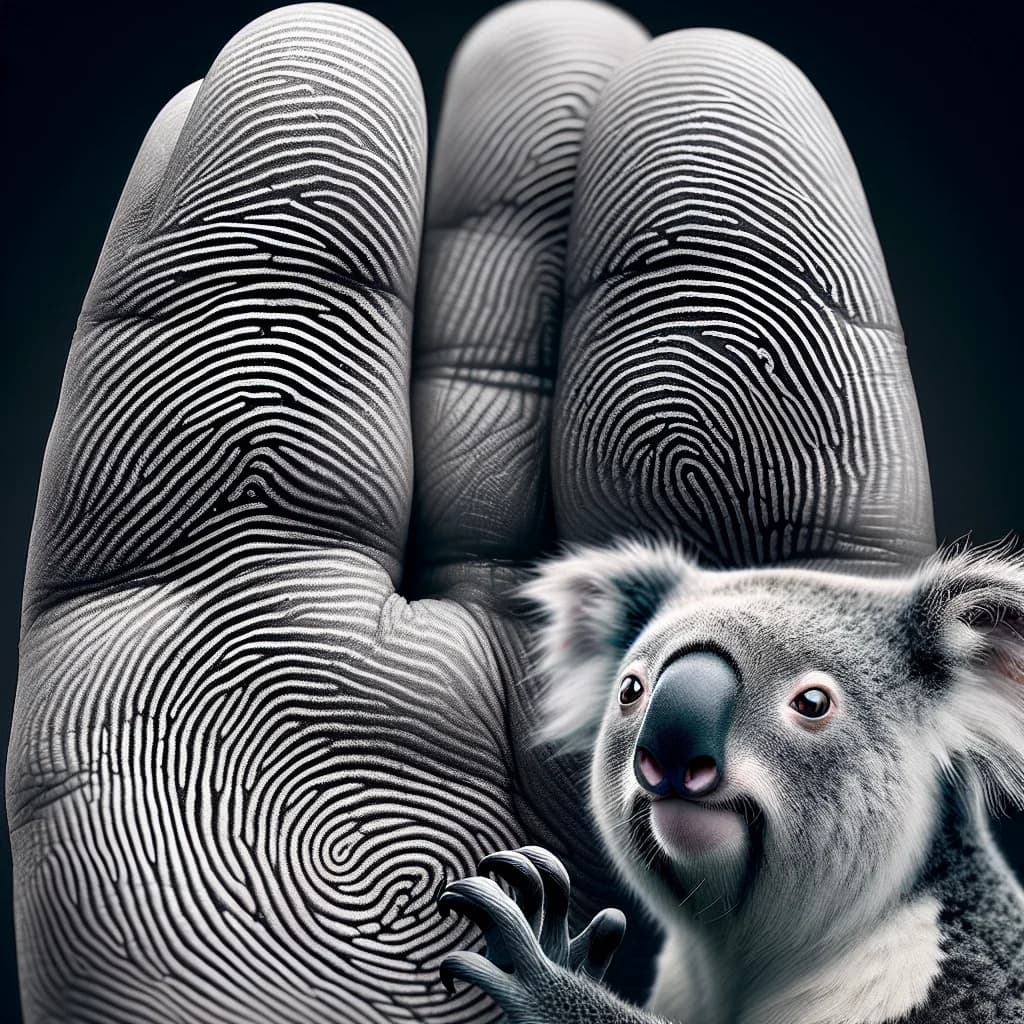
From loops to whorls, a koala’s fingerprints are so eerily similar to our own that they’ve been known to baffle forensic investigators at actual crime scenes. Discover the mind-blowing evolutionary mystery behind why these cuddly marsupials share our most unique biological signature.

Too Long; Didn't Read
Koalas and humans share nearly identical fingerprints due to convergent evolution, as both species independently developed unique ridges to improve grip and tactile sensitivity. This similarity is so precise that koala prints have occasionally misled forensic experts at crime scenes, despite the two species being separated by 70 million years of evolution.
Nature’s Uncanny Mimics: Why Are Koala Fingerprints So Nearly Identical to Human Ones That They Have Confused Forensic Experts at Crime Scenes?
Imagine a forensic investigator dusting a crime scene for prints, only to find a perfect set of loops and whorls that appear undeniably human. Now, imagine the confusion when DNA evidence suggests the "suspect" isn't a human at all, but a fuzzy, eucalyptus-munching marsupial. While it sounds like the plot of a bizarre detective novel, the biological reality is even more fascinating. Koalas possess fingerprints so strikingly similar to ours that even under a high-powered microscope, distinguishing between the two is a challenge for professionals.
This phenomenon is one of nature’s most peculiar coincidences. This post explores the biological mystery of why koala fingerprints are so nearly identical to human ones that they have confused forensic experts at crime scenes, diving into the science of convergent evolution and the functional necessity of these ridges.
The Mystery of the Marsupial Print
Humans and koalas are separated by approximately 70 million years of independent evolution. Humans are primates, while koalas are marsupials—a branch of the mammal family tree that diverged long ago. Despite this massive evolutionary gap, both species developed "dermatoglyphs"—the scientific term for the ridges on our fingers.
In the late 1990s, researchers at the University of Adelaide in Australia discovered that koala fingerprints feature the same complex patterns of arches, loops, and whorls found in humans. According to biological anthropologist Maciej Henneberg, the similarity is so profound that even forensic experts can be misled. The ridges on a koala’s pads are indistinguishable from human prints in terms of shape, size, and ridge spacing.
Why Do Koalas Have Fingerprints?
The primary question for scientists is: why? Most mammals do not have fingerprints. Our closest relatives, like chimpanzees and gorillas, have them, but our more distant relatives do not. The presence of fingerprints in koalas is a classic example of convergent evolution.
Convergent evolution occurs when two unrelated species independently evolve similar traits because they face similar environmental challenges. For humans and koalas, the development of fingerprints likely serves two main purposes:
- Enhanced Grip: Koalas are specialized climbers that spend nearly their entire lives in trees. Fingerprint ridges create friction, allowing them to grasp smooth eucalyptus branches more securely.
- Tactile Sensitivity: The ridges help channel vibrations to the nerves beneath the skin. This allows koalas to "feel" the texture of the leaves they eat, helping them determine which ones are the most nutritious or least toxic.
Forensic Challenges and Crime Scene Confusion
The similarity between human and koala prints is not just a biological quirk; it has practical implications for law enforcement in Australia. While it is highly unlikely a koala would be a "suspect" in a traditional crime, their presence in areas where crimes occur—such as suburban yards or parks—can complicate investigations.
Forensic experts have noted several reasons for potential confusion:
- Pattern Matching: Standard fingerprint recognition software often identifies koala prints as human because the ridge patterns follow the same mathematical distributions.
- Physical Scale: The size of a koala’s fingertip is roughly comparable to a human’s, making it difficult to dismiss a print based on scale alone.
- Microscopic Detail: Even under magnification, the "pores" and ridge endings (minutiae) used by experts to verify identity look remarkably human-like.
According to reports from the University of Adelaide's Forensic Science South Australia, police have been warned to be aware of the possibility of non-human prints at scenes in areas with high koala populations to avoid wasting resources on "animal" evidence.
Key Differences: How to Tell Them Apart
While the prints themselves are nearly identical, there are subtle ways experts can distinguish them:
- Placement: Humans have fingerprints covering the entire surface of their finger pads and palms. Koalas, however, only have these ridges on their fingertips and parts of their palms.
- The "Double Thumb": Koalas have two opposable thumbs on each front paw. A sequence of prints left by a koala would show a hand structure entirely different from a human's.
Conclusion
The fact that koala fingerprints are so nearly identical to human ones that they have confused forensic experts at crime scenes is a testament to the power of evolution. It demonstrates that nature often arrives at the same solution for a problem—in this case, the need for a precise grip—regardless of the species' lineage.
Understanding these biological overlaps is more than just a trivia point; it highlights the complexity of forensic science and the incredible ways in which the animal kingdom mirrors our own biology. Next time you see a koala, remember that beneath those claws are "human" fingerprints that could, quite literally, baffle a detective.


