
Why are movie theater seats usually red when red is the first color to disappear in low light
It seems like a design flaw to use a color that vanishes in the dark, but there’s a brilliant scientific secret behind those iconic red theater seats. Discover how this clever optical trick actually enhances your movie-watching experience the moment the lights go down.

Too Long; Didn't Read
Movie theater seats are typically red because of the Purkinje effect, which causes red to be the first color the human eye loses sight of in low-light conditions. This helps the seats blend into the darkness and minimizes visual distractions once the movie starts. Historically, the color was also chosen to mimic the luxury and prestige of traditional opera houses.
Seeing Red: Why are movie theater seats usually red when red is the first color to disappear in low light?
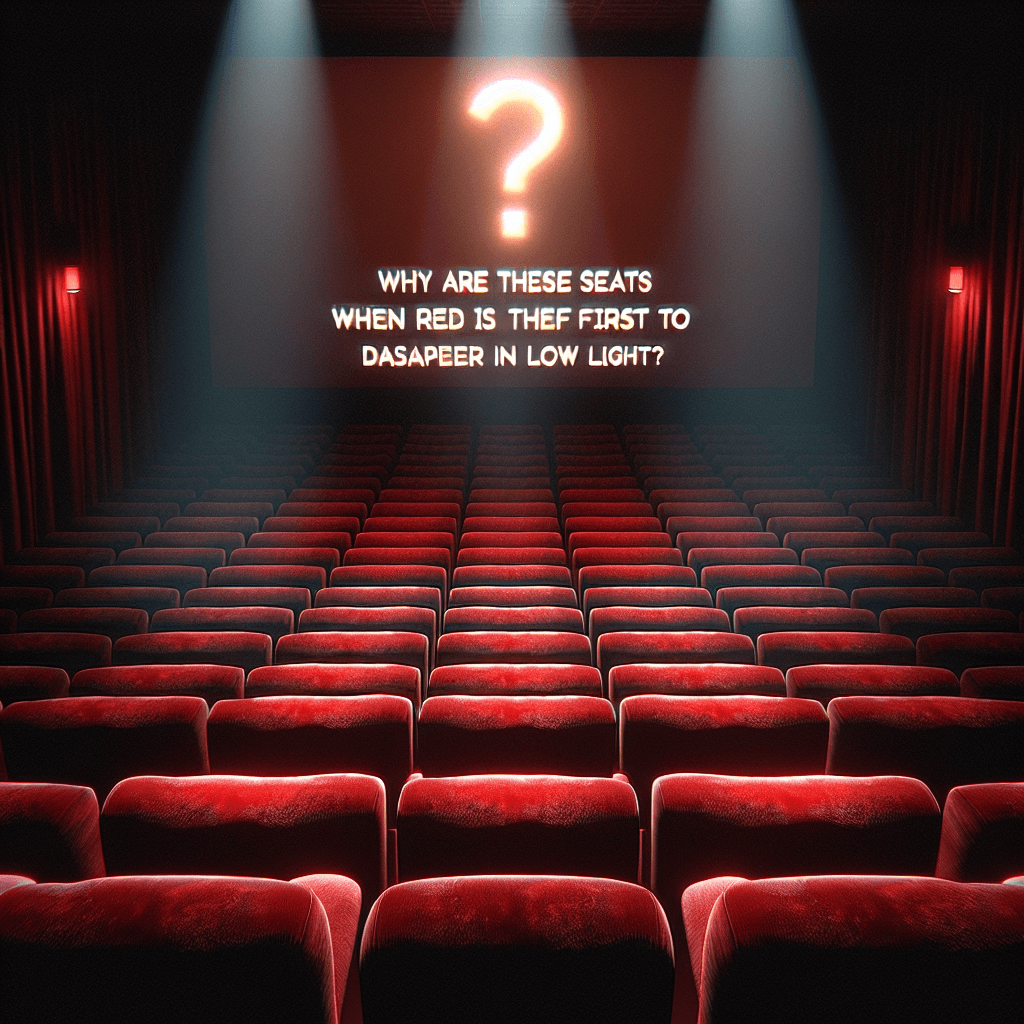
Imagine walking into a grand cinema. The smell of buttered popcorn fills the air, and you navigate through rows of plush, crimson chairs. Have you ever stopped to wonder why that specific shade of red is the nearly universal standard for theater seating? At first glance, it seems counterintuitive. In the world of optics, red is famously the first color to "disappear" from our vision as the lights go down. This design choice isn't just an aesthetic whim; it is a sophisticated intersection of historical prestige and human biology. Understanding why movie theater seats are usually red when red is the first color to disappear in low light reveals how designers use a phenomenon called the "Purkinje effect" to enhance your viewing experience.
The Purkinje Effect: The Science of "Disappearing" Red
The primary reason theaters use red is rooted in human physiology, specifically how our eyes process light. Our retinas contain two main types of photoreceptors: cones, which handle color and high-detail vision in bright light, and rods, which are sensitive to movement and light in low-intensity settings.
As a theater dims, our vision shifts from "photopic" (daylight) to "scotopic" (dark-adapted) vision. During this transition, our eyes become more sensitive to shorter wavelengths, like blues and greens, while becoming significantly less sensitive to longer wavelengths, like red. This discovery is attributed to Jan Evangelista Purkyně, a Czech anatomist who noticed that while red flowers looked bright in the sun, they appeared almost black at dawn compared to blue flowers.
In a cinema environment, this "disappearing act" is a massive advantage:
- Minimal Distraction: Because our eyes lose the ability to see red in low light, the seats essentially "fade" into the darkness.
- Contrast Retention: If seats were blue or green, they would appear as glowing grey shapes in our peripheral vision, competing with the light from the screen.
- Focus: By turning dark to the human eye, red seats ensure that the audience’s attention remains 100% focused on the film.
A Legacy of Luxury: From Opera Houses to Cinemas
While science explains why red works, history explains why it started. The tradition of red seating predates the invention of motion pictures by centuries. During the 19th century, Italy was the epicenter of opera and high culture. Iconic venues like Milan’s Teatro alla Scala utilized deep red velvet and gold gilding to signal wealth, power, and prestige.
Historically, red was an expensive dye to produce, making it a status symbol. When the first "movie palaces" were built in the early 20th century, architects wanted to elevate the experience of watching a film to the level of the opera or the stage. By mimicking the red-and-gold aesthetic of European royalty, cinema owners convinced the public that movies were a sophisticated form of art rather than a passing fad.
Practical Advantages of the Crimson Choice
Beyond biology and history, there are several practical reasons why red remains the industry standard for cinema upholstery:
- Light Absorption: Red surfaces are excellent at absorbing light rather than reflecting it. This prevents the "bounce-back" of light from the screen onto the seating, which would otherwise wash out the colors of the movie.
- Durability and Maintenance: Deep shades of red are remarkably effective at hiding spills, stains, and general wear and tear compared to lighter colors.
- The Psychology of Excitement: According to color psychology, red is associated with excitement and physiological arousal. It helps build a sense of anticipation before the opening credits roll.
Conclusion
The next time you settle into a red velvet seat, you are experiencing a design choice that is both a nod to 19th-century Italian opera and a clever application of 20th-century vision science. The reason why movie theater seats are usually red when red is the first color to disappear in low light is precisely because of that disappearance. By utilizing the Purkinje effect, theaters ensure that the room "vanishes" the moment the lights dim, leaving nothing but the story on the screen. While modern theaters are increasingly experimenting with black or grey leather recliners, the classic red seat remains a testament to the enduring marriage of tradition and optical physics. It is the perfect example of how a simple color choice can fundamentally improve the way we experience art.


