
Why are some emergency exit signs red while others are green
It's the most important sign you'll ever read, so why is its color a matter of global debate between the universal symbols for "stop" and "go"?

Too Long; Didn't Read
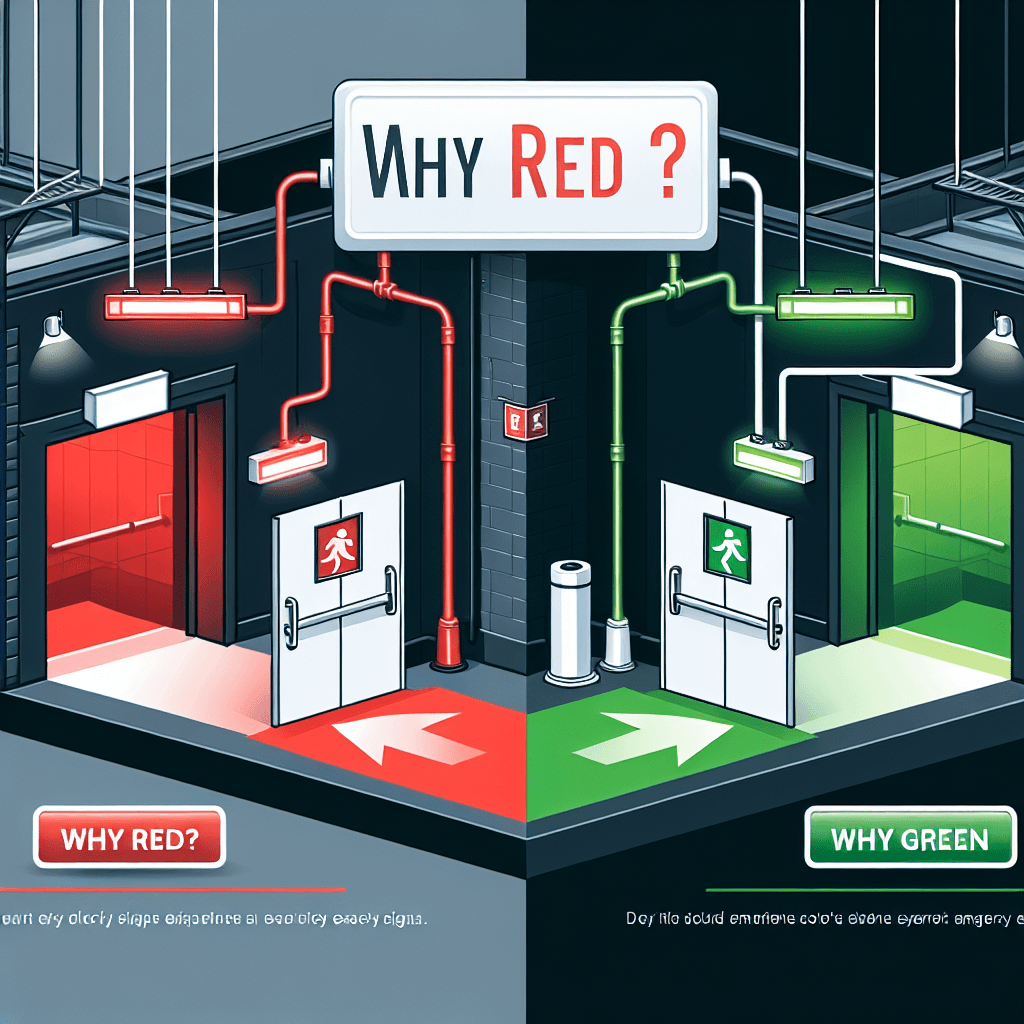
TLDR: It's a regional difference. The US uses red, associating it with fire and danger. Most of the world uses green, the international standard for go and safety, which is also more visible in smoke.
The Great Debate: Why Are Some Emergency Exit Signs Red While Others Are Green?
Have you ever looked up in a public building and noticed the emergency exit sign? Of course, you have. But have you ever stopped to wonder why the sign in a movie theater might be a familiar, commanding red, while the one in a modern airport is a calming, reassuring green? This color difference isn't a random design choice; it’s the result of a long-standing debate rooted in psychology, history, and international safety standards. The color of that glowing sign above the door tells a fascinating story about how we perceive safety and danger. This post will illuminate the reasons behind the red versus green divide and explain why you see both in use today.
The American Standard: Why Red Reigns in the U.S.
For decades, the color red has been the dominant choice for exit signs in the United States. This tradition is built on a simple and powerful psychological association.
A Legacy of "Stop" and "Danger"
In Western culture, red is the universal color for alert. We see it in:
- Stop signs and traffic lights: Commanding drivers to halt.
- Fire alarms and fire trucks: Signaling an urgent emergency.
- Warning labels: Highlighting potential hazards.
Early safety regulators in the U.S., including the National Fire Protection Association (NFPA), leveraged this pre-existing cultural understanding. The logic was straightforward: an emergency is a dangerous situation, and a red sign effectively grabs attention, cutting through visual noise and compelling people to take notice. The color inherently screams "Pay attention! This is important!"
Furthermore, research has shown that the long wavelength of red light makes it more visible through smoke and haze than many other colors, a critical advantage during a fire. Because of these factors, both the NFPA's Life Safety Code and regulations from the Occupational Safety and Health Administration (OSHA) have long permitted red as an acceptable color for exit signs.
Going Green: The International Perspective
While the U.S. was solidifying its red tradition, many other parts of the world, particularly Europe and Asia, were moving in a different direction. The International Organization for Standardization (ISO), a global body that sets standards for everything from product quality to safety symbols, advocates for green.
The Psychology of "Go" and "Safety"
The argument for green is just as psychologically compelling as the one for red, but it comes from the opposite perspective. Green universally signifies "go," "permission," and "safety." Think of a green traffic light giving you the all-clear to proceed.
Proponents of green exit signs argue that in an emergency, you don't want to signal "stop" or "danger." Instead, you want to clearly indicate a safe path forward—a way to go to safety. A green sign communicates that the marked door is a safe egress route, free of hazards. This "go" message can be more intuitive during a moment of panic.
Scientific evidence also supports the use of green. The human eye is most sensitive to light in the green portion of the spectrum, making green signs easier to see, especially in low-light conditions. Additionally, in the unfortunate event of a fire, a green sign provides a much stronger contrast against the orange and red glow of flames, potentially making it more legible than a red sign that could blend in.
A Tale of Two Codes: Who Decides the Color?
So why do we see both in a country like the United States? The answer lies in flexible regulations. While U.S. codes have a history with red, modern standards like the NFPA 101 Life Safety Code and the International Building Code (IBC) actually permit both red and green lettering for exit signs.
This has led to a mixed landscape where the choice often depends on:
- Local and State Ordinances: Some jurisdictions may have a preference or requirement for one color over the other.
- Building Age: Older buildings are more likely to have the traditional red signs they were built with.
- Architect or Owner Preference: In the absence of a strict local mandate, the design team makes the call.
There is, however, a slow but steady trend toward adopting green signs in the U.S., especially in new construction and in venues that host international visitors, such as airports and large hotels. This shift helps align with global standards and provides a more universally understood symbol of safety for people from all over the world.
In conclusion, the color of an emergency exit sign is not an arbitrary detail. The choice between red and green represents two different but equally valid philosophies on communicating safety. Red leverages our conditioned response to danger to grab our attention, while green uses the universal symbol for "go" to guide us toward a safe path. While regulations in the U.S. allow for both, the global trend leans toward green. The next time you walk through a public space, notice the color of the exit signs. You’ll now understand the rich history and psychology glowing behind that simple, life-saving word: EXIT.


