
Why are the names for farm animals different from the names for their meat
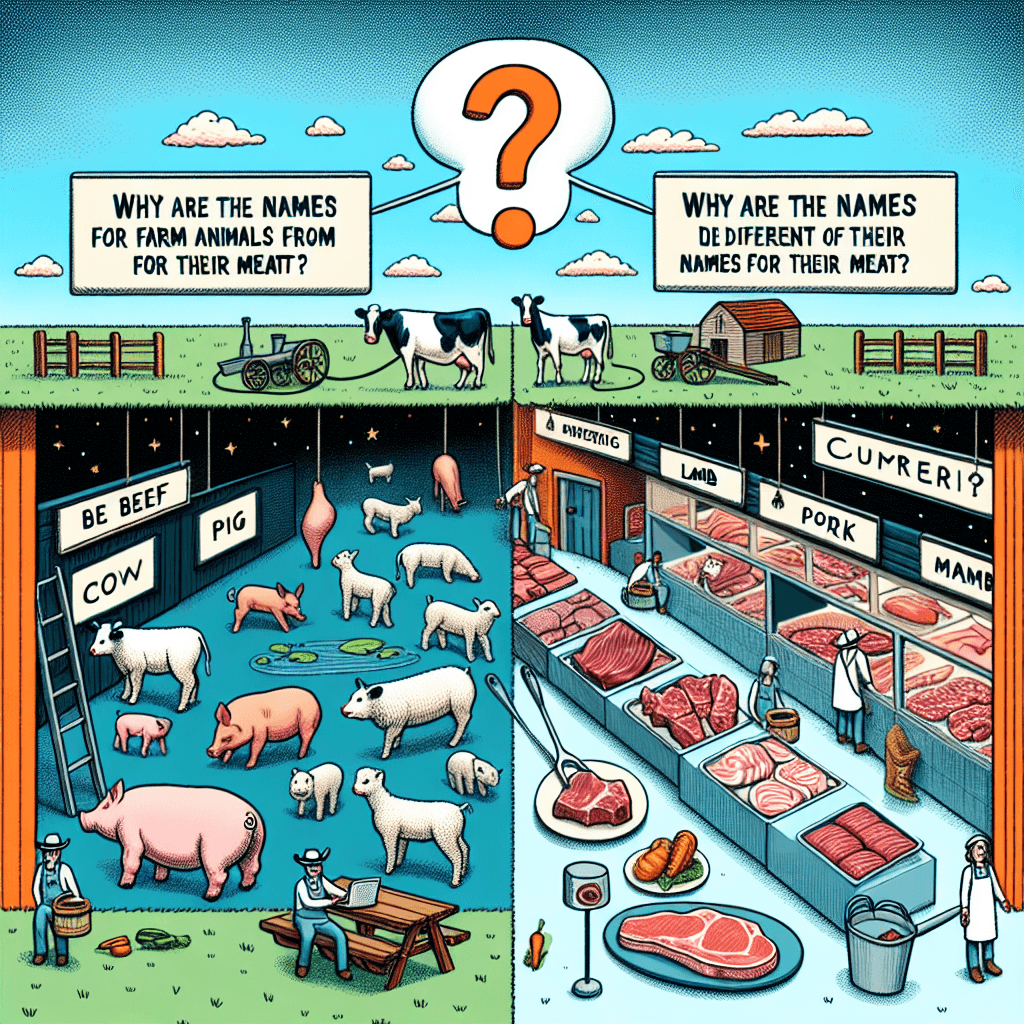
Ever wondered why you eat 'beef' from a 'cow' and 'pork' from a 'pig'? The answer lies in a bloody medieval conquest that forever separated the language of the farm from the language of the feast.

Too Long; Didn't Read
TLDR: After the Norman Conquest, the English-speaking peasants who raised the animals used Germanic words like cow and pig, while the French-speaking nobles who ate the meat used French words like beef and pork. We ended up keeping both.
Blog Post Title: From Cow to Beef: A Linguistic Mystery – Why Are the Names for Farm Animals Different from the Names for Their Meat?
Have you ever paused at a butcher counter and wondered why you ask for "beef" instead of "cow meat," or "pork" instead of "pig"? This linguistic quirk is so deeply ingrained in the English language that we rarely question it. But this separation between the name of the animal in the field and the name of the meat on our plate is no accident. It’s a fascinating remnant of a dramatic historical event that reshaped not just a nation, but the very words we use for food. This post will uncover the historical, social, and linguistic reasons behind this culinary vocabulary.
The Norman Conquest: A Tale of Two Languages
The primary reason for this linguistic divide dates back nearly a thousand years to one of the most significant events in English history: the Norman Conquest of 1066. When William the Conqueror invaded and took control of England, he brought with him the Norman-French language and a new ruling class. This created a stark social and linguistic hierarchy.
The Anglo-Saxon peasants, who spoke Old English, continued to do the hands-on work of raising the animals. They kept using their familiar, Germanic-based words for the live creatures.
On the other hand, the new Norman aristocracy, the French-speaking lords and ladies, were the ones primarily being served the cooked meat in their castles and dining halls. They used their own French-derived words for the prepared dishes on the table. Over time, this class-based vocabulary merged into the English language, leaving us with a dual system.
A Menu of French Origins
This historical split is clearly visible in the etymology of our food vocabulary. The farm animal names come from Old English, while the meat names are derived from Old French.
- Cow (from the Old English cū) became Beef (from the Old French boef, meaning ox).
- Pig (from the Old English picg) became Pork (from the Old French porc).
- Sheep (from the Old English scēap) became Mutton (from the Old French moton).
- Calf (from the Old English cealf) became Veal (from the Old French veel).
- Deer (from the Old English dēor) became Venison (from the Old French venesoun, which originally meant any hunted game).
This pattern shows a clear distinction: the language of the farm remained English, while the language of the sophisticated cuisine became French.
The Lasting Impact: Class, Cuisine, and Psychology
This linguistic legacy did more than just give us two words for the same thing; it reinforced the social structure of the time. Using the French word for the meat elevated it, associating it with the wealth, power, and prestige of the ruling class. "Pork" simply sounded more refined than "pig meat" to the Norman elite.
Today, this linguistic separation serves a more psychological purpose. Using different names helps create a mental disconnect between the living animal and the food product. This concept, sometimes called the "absent referent," makes it easier for many people to consume meat without directly confronting its origin. It’s psychologically simpler to think about eating "beef" than it is to think about eating a "cow."
This is a unique feature of the English language, a direct result of its specific history. In many other languages, the connection is much more direct. For example, in German, a pig is a Schwein, and its meat is Schweinefleisch (literally, "pig meat").
Conclusion
The reason we have different names for farm animals and their meat is not a random quirk but a direct echo of history. The Norman Conquest of 1066 cleaved English society, and our language reflects that divide, separating the Old English words of the farm from the Old French words of the feast. This linguistic remnant reveals how class, culture, and conquest can shape the words we use every day. So, the next time you sit down for a meal, remember that the words on your menu are telling a story that is centuries old—a story of two cultures and two languages that came together to create the vocabulary we use today.


