
Why are there stiff nylon brushes along the inner edges of almost every moving escalator
You might think they’re just there to buff your shoes, but those stiff nylon brushes are actually a life-saving boundary between you and a mechanical disaster. Discover the surprising safety secret hiding in plain sight on every escalator ride.

Too Long; Didn't Read
Escalator brushes are essential safety features designed to prevent feet, loose clothing, and shoelaces from getting trapped in the gap between the moving steps and the side panels. They act as both a physical barrier and a psychological reminder for passengers to keep their distance from the edges, significantly reducing the risk of entrapment accidents.
Mind the Gap: Why are there stiff nylon brushes along the inner edges of almost every moving escalator?
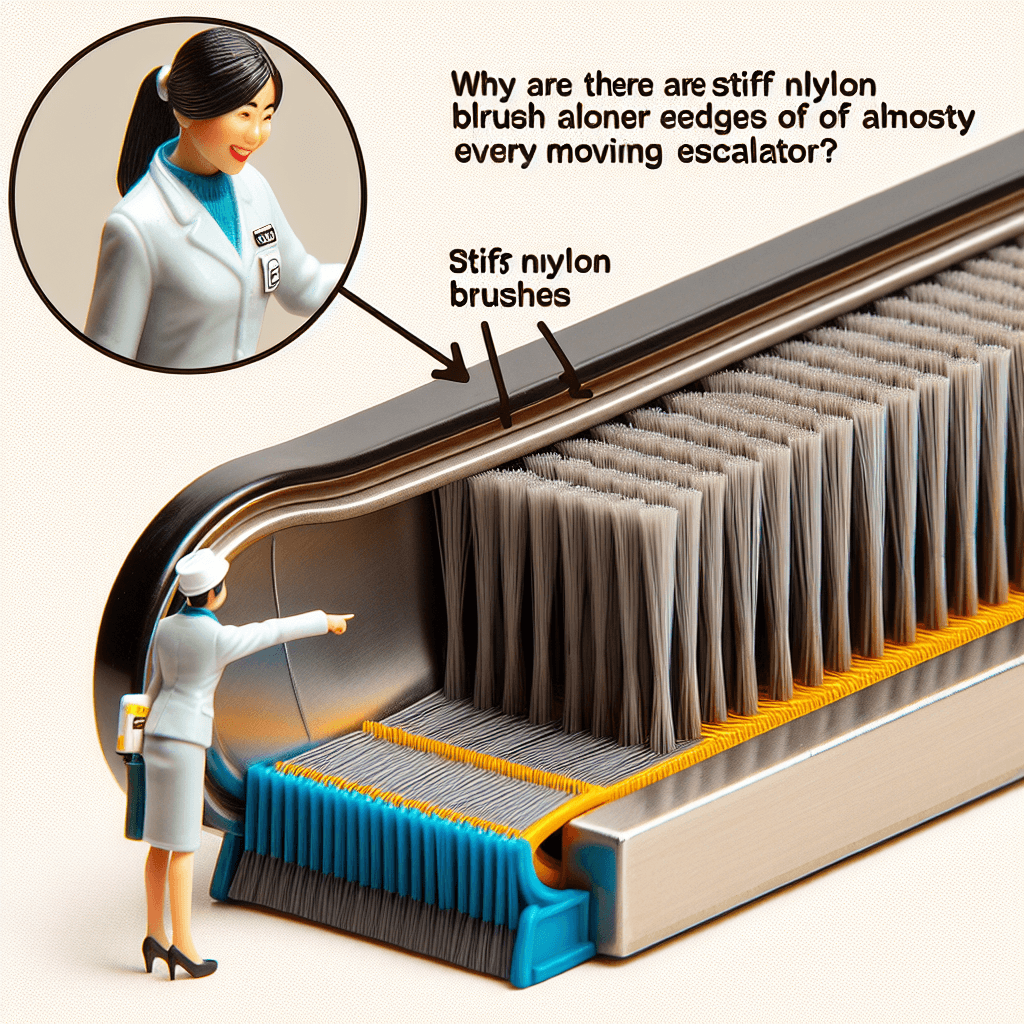
Have you ever found yourself standing on a moving escalator and felt the urge to press your shoe against the stiff bristles lining the sides? You might have even assumed they were a clever, built-in shoe polisher provided for your convenience. However, those brushes—technically known as "skirt brushes"—serve a purpose far more critical than footwear maintenance. In fact, they are a primary safety feature designed to prevent some of the most common and Gruesome accidents associated with vertical transportation. Understanding the function of these brushes reveals the hidden engineering and psychology required to keep millions of commuters safe every day.
The Danger of the "Skirt" Gap
To understand the necessity of these brushes, one must first look at the anatomy of an escalator. The "skirt" is the stationary side panel located next to the moving steps. Because the steps must move freely, there is a necessary mechanical gap between the edge of the step and the skirt.
While this gap is usually only a few millimeters wide, it represents a significant hazard known as an "entrapment point." According to safety reports from organizations like the Elevator Escalator Safety Foundation, the friction between a moving step and a stationary side wall can easily snag loose items. If a shoe, a long dress, or a dangling shoelace enters this gap, the downward or upward motion of the stairs can pull the object—and the person attached to it—into the internal machinery.
How Skirt Brushes Act as a Life-Saving Barrier
The introduction of stiff nylon brushes along these edges serves two primary functions: physical deflection and psychological signaling.
1. Physical Deflection
The brushes act as a physical deterrent. The stiff nylon bristles are strong enough to deflect soft materials, such as rubber flip-flops or flowing fabric, away from the dangerous gap. By filling the space immediately above the gap, the brushes make it significantly harder for an object to accidentally slip into the "pinch point" where the step meets the wall.
2. Tactile Warning and Psychology
Perhaps even more importantly, the brushes provide a tactile warning to passengers. Escalator design relies heavily on human behavior. When a passenger feels the stiff bristles against their leg or shoe, their natural reaction is to move their foot away from the source of the sensation. This "soft" boundary encourages riders to stand in the center of the step, which is the safest possible position. Without the brushes, a passenger might lean their foot against the stationary side panel without realizing how close they are to the entrapment zone.
Standards and Regulations
The presence of these brushes is not merely a design choice by individual manufacturers; in many parts of the world, they are a legal requirement.
- The British and European Standard (EN 115): This regulation mandates the installation of "skirt deflectors" to reduce the risk of entrapment.
- The American Society of Mechanical Engineers (ASME): Under the A17.1 Safety Code for Elevators and Escalators, specific guidelines are provided for the installation of these brushes to ensure they meet the necessary stiffness and height requirements to effectively protect the public.
Research conducted by various safety boards has shown that the installation of skirt brushes can reduce entrapment accidents by as much as 90%. This statistic underscores why they have become a global standard in urban infrastructure.
Common Misconceptions and Best Practices
Despite their importance, several myths persist regarding escalator brushes. To stay safe, it is essential to distinguish fact from fiction:
- They are NOT shoe cleaners: Using the brushes to clean your shoes brings your feet dangerously close to the gap, defeating the purpose of the safety feature entirely.
- They do not "grease" the stairs: Some believe the brushes apply lubricant. In reality, they are dry nylon designed specifically for deflection and signaling.
- Watch your footwear: Soft-soled shoes, like crocs or flip-flops, are particularly prone to "dead-heading"—a phenomenon where the rubber creates enough friction against the side wall to be sucked into the gap.
Conclusion
The stiff nylon brushes along the inner edges of almost every moving escalator are far more than an aesthetic addition or a cleaning tool. They are a sophisticated safety mechanism designed to address the mechanical risks inherent in moving stairs. By providing a physical barrier and a tactile warning, these brushes prevent thousands of potential injuries every year.
The next time you step onto an escalator, remember that the "Mind the Gap" warning applies to your feet as much as your surroundings. By standing in the center of the step and respecting the boundary set by those stiff bristles, you ensure a safe and smooth journey to your destination. Understanding these small engineering details helps us navigate our modern world with greater awareness and safety.


