
Why can an octopus suffer brain damage by swallowing large food because its brain surrounds its own throat
Imagine if a single oversized meal could literally crush your mind. Discover why the octopus’s bizarre anatomy turns every big bite into a high-stakes gamble between a full stomach and permanent brain damage.

Too Long; Didn't Read
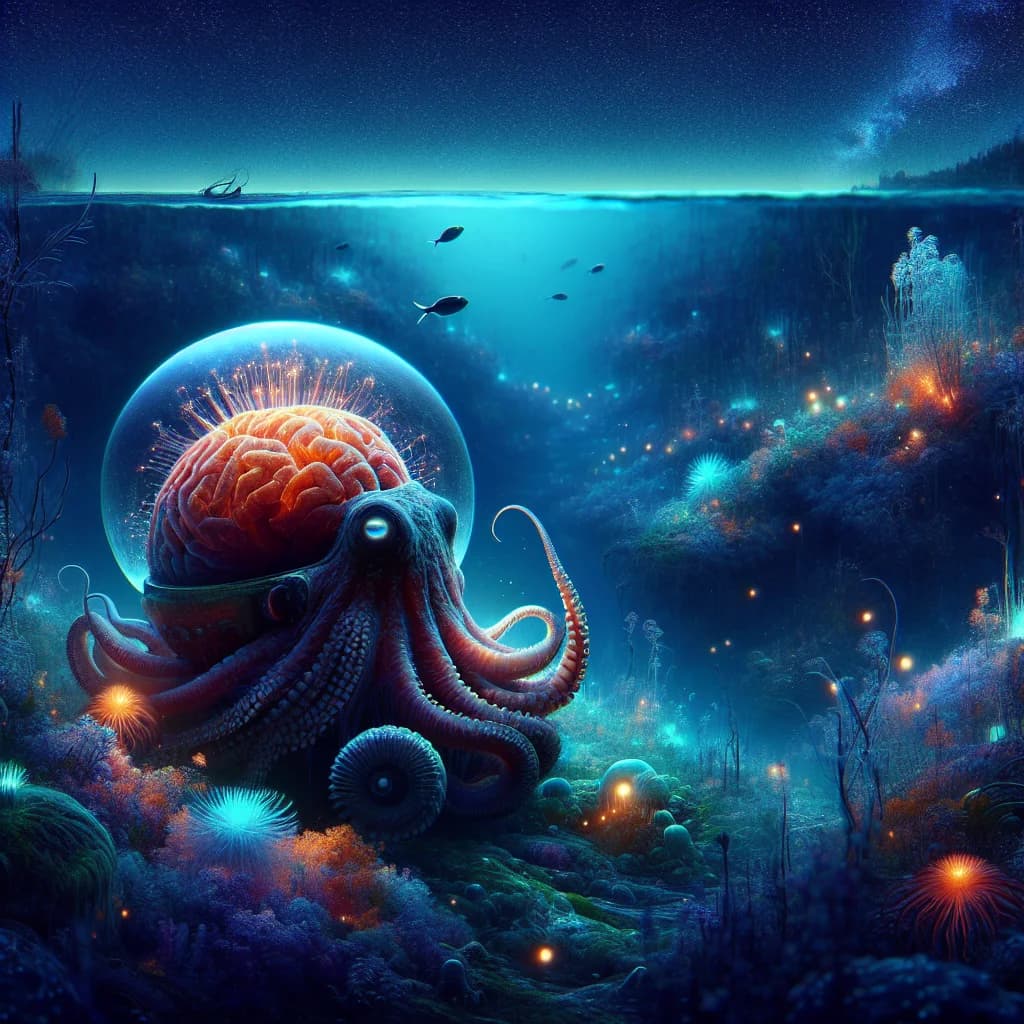
Because an octopus’s donut-shaped brain surrounds its esophagus, swallowing oversized prey can physically compress its neural tissue and cause permanent brain damage.
A Risky Appetite: Why Can an Octopus Suffer Brain Damage by Swallowing Large Food Because Its Brain Surrounds Its Own Throat?
Imagine if every time you swallowed a large bite of steak, it had to pass directly through the center of your brain. For humans, this is a physical impossibility, but for the octopus, it is a daily biological reality. While these cephalopods are celebrated as some of the most intelligent invertebrates on Earth—capable of solving puzzles and navigating complex mazes—their internal anatomy features a design that seems like an evolutionary paradox.
The central nervous system of an octopus is uniquely vulnerable due to its location. Specifically, the octopus’s esophagus passes directly through the middle of its donut-shaped brain. This means that if the animal attempts to ingest prey that is too large, it faces a life-threatening dilemma. This post explores the biological mechanics of this "brain-squeeze" and explains why can an octopus suffer brain damage by swallowing large food because its brain surrounds its own throat.
The Anatomy of a Cephalopod Brain
To understand the danger of a large meal, one must first look at the unique architecture of the octopus nervous system. Unlike vertebrates, whose brains are safely encased in a bony skull far from the digestive tract, the octopus has a highly decentralized nervous system. While two-thirds of their neurons are actually located in their arms, the remaining third forms a ring-shaped central brain located in the head.
This central brain is shaped remarkably like a donut. According to marine biology research, such as studies published by the Smithsonian Institution, the esophagus (the tube that carries food from the mouth to the stomach) travels right through the "hole" of this neural donut. This compact arrangement allows the octopus to maintain a streamlined body shape, but it creates a literal bottleneck for digestion.
The Mechanical Risk of Large Prey
The primary reason why can an octopus suffer brain damage by swallowing large food because its brain surrounds its own throat is the physical pressure exerted during the swallowing process.
- Expansion vs. Compression: When an octopus swallows, the food must pass through the center of the brain. If a piece of food is too wide or too hard, the esophagus must expand to accommodate it.
- Neural Displacement: Because the brain tissue is soft and lacks a protective internal shell, the expanding esophagus presses outward against the surrounding neurons.
- Physical Trauma: Significant expansion can lead to the tearing of neural connections or the deprivation of oxygen to brain cells through compressed blood vessels.
In extreme cases, if an octopus is overly ambitious and attempts to swallow a large, un-chewed chunk of a crab or fish, the resulting pressure can cause permanent neurological impairment or immediate death.
Evolutionary Safety Measures: The Beak and Radula
Because of this anatomical vulnerability, octopuses have evolved sophisticated tools to ensure their food is "brain-safe" before it is swallowed. They do not simply gulp down their prey. Instead, they utilize a multi-step processing system:
- The Beak: The only hard part of an octopus's body is its parrot-like beak. It uses this to crack open the shells of crustaceans and bite into the flesh of fish.
- The Radula: Inside the beak is a spiked, tongue-like organ called the radula. This acts like a biological grater, shredding food into tiny, manageable ribbons.
- Salivary Enzymes: Many species inject venom and digestive enzymes into their prey to liquefy the tissue, making it easier to break down into a soft pulp that can slide safely through the "brain-tunnel."
The Evolutionary "Why"
You might wonder why evolution would permit such a risky design. Biologists suggest this is a trade-off for the octopus's extreme flexibility. By grouping the brain around the esophagus in a compact cluster, the octopus avoids having a rigid, elongated neck or a bulky head. This allows them to squeeze their entire bodies through tiny crevices—an essential survival tactic for both hunting and evading predators. The "price" of this incredible maneuverability is the constant need to mince their food into small portions.
Conclusion
The octopus is a marvel of biological engineering, but its donut-shaped brain highlights the fascinating compromises found in nature. The reason why can an octopus suffer brain damage by swallowing large food because its brain surrounds its own throat serves as a reminder that even the most intelligent creatures have physical limits. Through the use of their powerful beaks and rasping radulas, they manage to navigate this "digestive minefield" every day. Understanding these anatomical quirks not only deepens our appreciation for cephalopods but also illustrates the diverse and often surprising ways life has evolved to solve the problems of survival in the deep sea.


