Why can some people voluntarily create a deep rumbling sound inside their ears by flexing a tiny muscle
Can you conjure a private thunderstorm inside your skull on command? Discover the strange science behind the "ear rumblers" and find out if you possess this hidden physiological superpower.

Too Long; Didn't Read
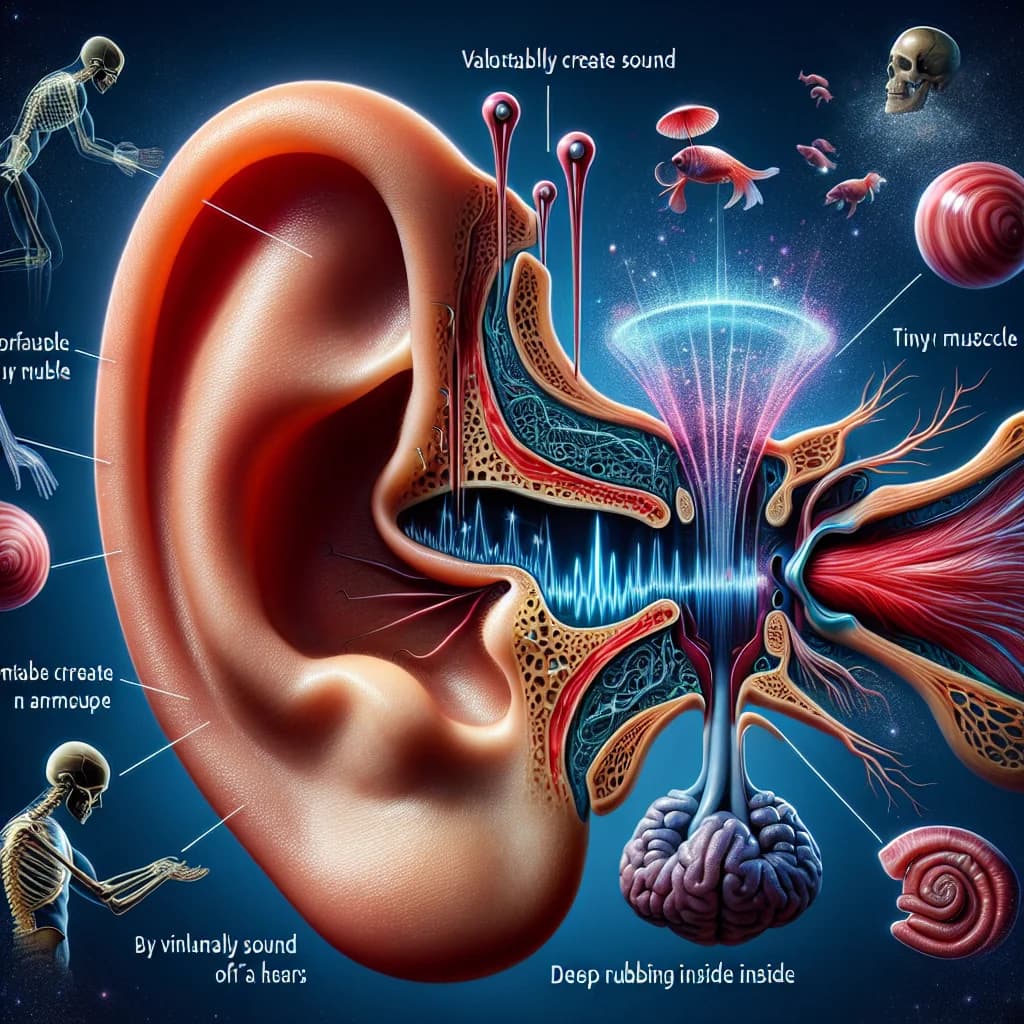
Some people can voluntarily contract the tensor tympani muscle in their middle ear, which typically functions automatically to dampen loud noises. This intentional flexing creates a low-frequency vibration perceived as a deep rumbling sound.
The Science of the Ear Rumble: Why Can Some People Voluntarily Create a Deep Rumbling Sound Inside Their Ears by Flexing a Tiny Muscle?
Have you ever closed your eyes tightly or tensed your jaw and heard a low, rolling thunder inside your head? For a segment of the population, this deep rumbling sound isn’t just an occasional accident; it is a voluntary "superpower." While it might feel like a strange internal vibration, it is actually a specific physiological response. This phenomenon often leaves those who cannot do it baffled, while those who can often assume everyone else hears it too.
The ability to produce this sound at will is tied to a specific anatomical feature of the middle ear. This blog post explores the mechanics of the tensor tympani muscle, why it produces such a distinct sound, and why can some people voluntarily create a deep rumbling sound inside their ears by flexing a tiny muscle while others cannot.
The Anatomy of the Sound: The Tensor Tympani
At the heart of this mystery is the tensor tympani, one of two tiny muscles located within the middle ear. This muscle is attached to the malleus, or the "hammer" bone, which is the first of the three small bones (ossicles) that transmit sound vibrations from the eardrum to the inner ear.
When the tensor tympani contracts, it pulls the malleus medially, which tenses the tympanic membrane (the eardrum). This tension dampens the vibrations of the eardrum, effectively reducing the volume of sound that reaches the inner ear. When someone voluntarily "flexes" this muscle, they are witnessing the physical vibrations of muscle fibers in a very confined space, which the ear interprets as a low-frequency rumble.
Why Does it Sound Like Thunder?
The sound experienced by "ear rumblers" is often described as a deep, rushing, or vibrating noise, similar to the sound of a distant thunderstorm or a heavy wind. This occurs for several reasons:
- Muscle Vibrations: Like any muscle in the body, the tensor tympani vibrates when it contracts. Because this muscle is located directly inside the ear structure, the ear picks up these mechanical vibrations as sound.
- Low-Frequency Output: According to physiological studies, muscle contractions typically produce low-frequency sounds (usually below 30 Hz). Because these vibrations are occurring right next to the auditory processing machinery, they are perceived clearly despite their low frequency.
- Acoustic Filtering: Because the eardrum is being pulled tight during the contraction, it changes how external sounds enter the ear, further isolating the internal "thrumming" of the muscle itself.
The Biological Purpose of the Ear Rumble
While being able to do this voluntarily is a bit of a biological quirk, the tensor tympani serves a vital involuntary function. Evolutionarily, this muscle acts as a protective mechanism for our hearing.
- Noise Dampening: The muscle traditionally contracts in response to extremely loud noises—a process known as the acoustic reflex. This prevents potential damage to the delicate hair cells of the cochlea.
- Internal Noise Reduction: It also contracts when we perform "noisy" internal actions, such as chewing, coughing, or speaking. By tensing the eardrum, the body masks the sounds generated by our own bodies so they don't drown out external environmental sounds.
- Pressure Equalization: While the Eustachian tube is primarily responsible for pressure, the tensor tympani plays a supporting role in maintaining the mechanical integrity of the middle ear environment.
Why Can Only Some People Do It Voluntarily?
For most people, the tensor tympani is an involuntary muscle, much like the heart or the muscles that control pupil dilation. It reacts automatically to stimuli. However, a small percentage of the population has the unique ability to bridge the gap between the autonomic and somatic nervous systems.
This "voluntary control" is likely due to individual variations in motor nerve wiring. Just as some people can wiggle their ears or raise a single eyebrow while others cannot, "ear rumblers" have the neurological pathway necessary to send a conscious signal to the tensor tympani. Research suggests that while many people can trigger the rumble by grimacing or squeezing their eyes shut, only a smaller group can trigger the muscle in total isolation without moving any other facial muscles.
Conclusion
The ability to create a deep rumbling sound by flexing the tensor tympani is a fascinating example of human physiological diversity. It isn’t a medical condition or a cause for concern; rather, it is a rare window into the mechanics of how our bodies protect our hearing from the internal and external world.
Whether you are a lifelong "rumbler" or someone who just learned this muscle exists, understanding the tensor tympani highlights the incredible complexity of the human ear. If you’ve never heard the rumble before, try squeezing your eyes shut very tightly—you might just discover a hidden talent you never knew you had. For those interested in the quirks of human anatomy, the "ear rumble" remains one of the most interesting, harmless "superpowers" hidden within our own heads.