
Why can you see your own white blood cells moving as tiny sparks when staring at a blue sky
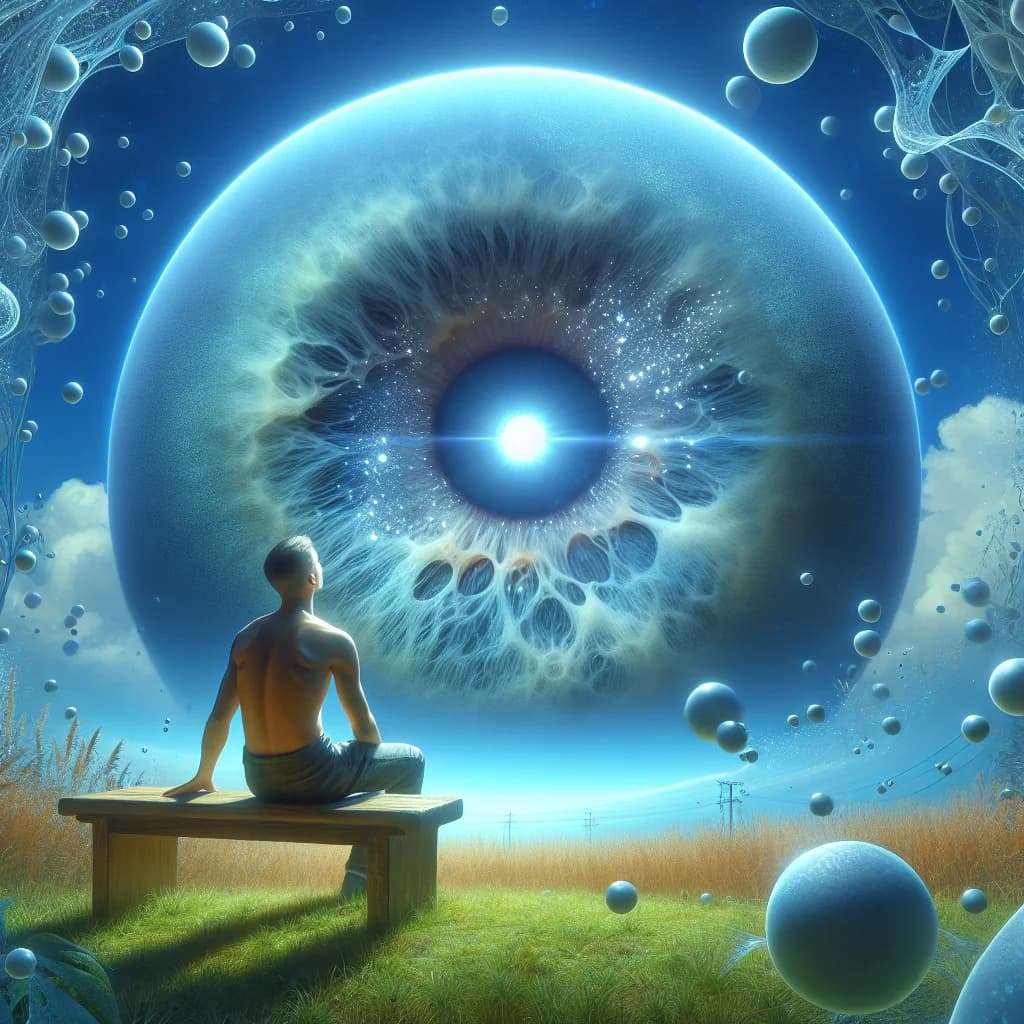
Ever wondered about those mysterious, dancing sparks that appear when you stare at a clear blue sky? It’s not just a trick of the light—you’re actually witnessing your own white blood cells racing through your eyes in real-time.

Too Long; Didn't Read
Known as the Blue Field Entoptic Phenomenon, those moving sparks are white blood cells traveling through capillaries in front of your retina. Unlike red blood cells, they do not absorb blue light, allowing it to pass through and create the appearance of bright, darting points in your field of vision.
The Science of Inner Vision: Why Can You See Your Own White Blood Cells Moving as Tiny Sparks When Staring at a Blue Sky?
Have you ever gazed up at a clear, bright blue sky and noticed tiny, bright sparks of light darting in zig-zag patterns across your field of vision? These aren't stars, dust, or "floaters," and they certainly aren't a sign that your eyes are playing tricks on you. In fact, you are witnessing a fascinating physiological event occurring right inside your own eyeballs. This occurrence, known to scientists as the Blue Field Entoptic Phenomenon, is one of the few ways humans can observe their own internal biological processes in real-time. Understanding why you can see your own white blood cells moving as tiny sparks when staring at a blue sky reveals the incredible complexity of how our eyes and brain process light and blood flow.
What is the Blue Field Entoptic Phenomenon?
The Blue Field Entoptic Phenomenon, also commonly referred to as Scheerer’s phenomenon after the German ophthalmologist Richard Scheerer who first described it in 1924, is an "entoptic" event. This means the visual effect is caused by the structure of the eye itself.
Unlike "floaters," which are shadows cast by tiny clumps of protein or cells drifting in the vitreous gel of the eye, these sparks are actual cells moving through the capillaries located in front of your retina. While we usually think of our vision as a clear window to the outside world, the retina is actually covered by a dense network of fine blood vessels. Under normal circumstances, our brain filters out the shadows of these vessels so we don’t "see" the plumbing of our own eyes.
The Role of Blood Cells and Light Absorption
To understand why this happens specifically against a blue sky, we have to look at the physics of light and the composition of our blood.
- Red Blood Cells (RBCs): These cells are packed with hemoglobin, which is highly efficient at absorbing blue light. As red blood cells flow through the capillaries over the retina, they absorb the blue light hitting the eye, casting a continuous, faint shadow that the brain eventually ignores.
- White Blood Cells (WBCs): These cells are much larger than red blood cells and, crucially, they do not contain hemoglobin. Because they lack hemoglobin, they do not absorb blue light; instead, they let it pass through.
When you stare at a high-energy blue light source—like a clear sky—the red blood cells in your retinal capillaries absorb the blue light, but the white blood cells act like tiny, moving "windows."
Why They Look Like Sparks
When a white blood cell enters a capillary, it is often large enough to fill the entire diameter of the vessel. As it moves through, it pushes the red blood cells out of the way. Because the white blood cell allows blue light to pass through to the photoreceptors underneath, while the surrounding red blood cells absorb it, you perceive a moving gap in the absorption. This gap appears to your brain as a tiny, bright spark of light.
Key Characteristics of the "Sparks"
If you observe these sparks closely, you will notice several distinct patterns that confirm you are looking at your own circulatory system:
- Synchronization with Pulse: If you monitor the movement of the sparks, you may notice they move in rhythm with your heartbeat. According to clinical observations, the speed of these sparks increases during exercise or periods of high blood pressure, reflecting the faster flow of blood through the retinal vessels.
- The Dark Tail: Occasionally, you might see a dark trail following the bright spark. This is caused by red blood cells "piling up" behind the larger, slower-moving white blood cell as it navigates the narrow capillary.
- Short Paths: The sparks usually follow short, curving paths and then disappear. This occurs because the sparks are only visible while the white blood cell is in a capillary directly in front of the fovea (the center of your vision). Once the cell moves into a larger vessel or a different layer, it becomes invisible again.
Distinguishing Sparks from Other Visual Effects
It is important to distinguish the Blue Field Entoptic Phenomenon from other common visual experiences.
- Floaters (Muscae Volitantes): These look like dark "worms" or spots that drift slowly when you move your eyes. Unlike sparks, they do not follow the pulse and are not restricted to blue light.
- Phosphenes: These are flashes of light caused by pressure on the eye or "seeing stars" after a head injury. These are not related to blood flow.
- Visual Snow: This is a persistent "static" in the vision, which is believed to be a neurological processing issue rather than a physical phenomenon within the eye.
Conclusion
The next time you find yourself wondering why you can see your own white blood cells moving as tiny sparks when staring at a blue sky, remember that you are experiencing a unique form of "macro-microscopy." Your eyes are essentially acting as a lens to view your own immune system at work. This phenomenon is a testament to the intricate design of the human body and the way our brains interpret the environment around us. While it may seem like a strange glitch in our vision, the Blue Field Entoptic Phenomenon is a perfectly healthy and fascinating reminder of the life-sustaining processes happening within us every second. If you ever want to show someone else, simply have them look at a clear blue sky or a bright blue computer screen—it is a laboratory experiment available to everyone.


