
Why can you sometimes see three suns in the sky at once
It's not a scene from a sci-fi movie, but a spectacular atmospheric illusion. Discover the beautiful science that makes two "phantom suns" appear in our sky.

Too Long; Didn't Read
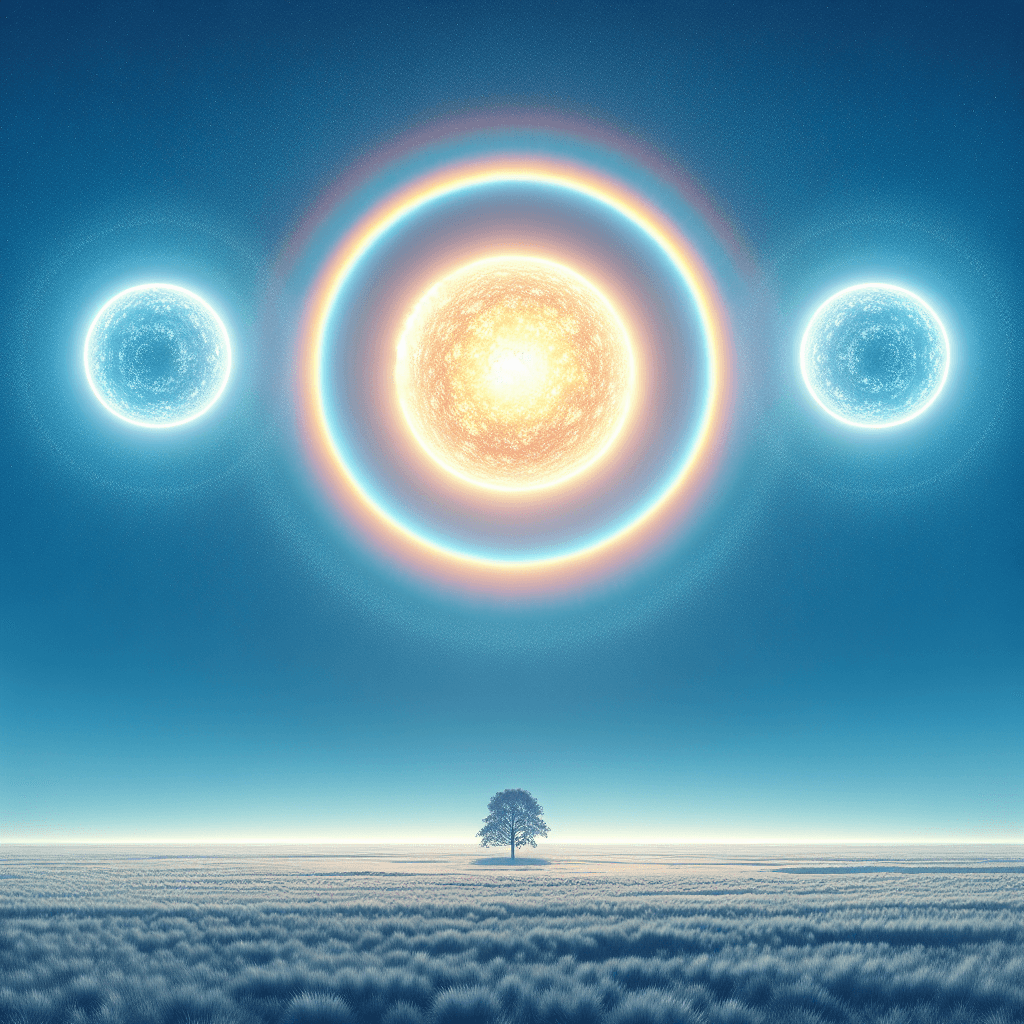
This optical illusion is called a sun dog. It occurs when sunlight passes through flat, hexagonal ice crystals in cold air, which act like tiny prisms and bend the light, creating two bright spots on either side of the real sun.
Why Can You Sometimes See Three Suns in the Sky at Once? The Science Behind Sun Dogs
Have you ever glanced towards the horizon and done a double-take, convinced you were seeing not one, but three suns blazing in the sky? It’s a sight straight out of science fiction, but this stunning celestial display is a very real, and surprisingly common, atmospheric phenomenon. It isn’t a sign of a distant solar system, but rather a beautiful trick of light and ice happening right here in our own atmosphere. This post will unveil the science behind this "three-sun" illusion, an optical marvel known as a parhelion, or more commonly, a "sun dog."
What Exactly Are You Seeing? Introducing the Sun Dog
When you see three bright orbs in the sky, you are not actually witnessing two extra suns. What you are seeing is the real sun flanked by two bright spots of light. These phantom suns are officially called parhelia (singular: parhelion), a name derived from Greek words meaning "beside the sun." More colloquially, they are known as sun dogs or mock suns.
Sun dogs are a type of atmospheric halo. They typically appear as luminous spots on a ring of light, known as a 22° halo, on either side of the sun. While they can be intensely bright, sometimes rivaling the sun itself, they are merely focused reflections. They often display a touch of color, with a reddish hue on the side closest to the sun, gradually shifting to blue or white on the outer edge.
The Science of Light and Ice: How Sun Dogs Form
The magic behind a sun dog isn't magic at all—it's physics. The formation of this illusion requires a specific set of atmospheric ingredients and conditions.
The Key Ingredients: Ice and Light
The primary component needed for a sun dog is an abundance of tiny, hexagonal (six-sided), plate-shaped ice crystals. These crystals are typically found in:
- High-altitude clouds: Thin, wispy cirrus or cirrostratus clouds, often miles up in the troposphere where temperatures are well below freezing.
- Low-level air: On very cold days, these ice crystals can float in the air closer to the ground, a phenomenon sometimes called "diamond dust."
These flat, hexagonal crystals act like millions of miniature prisms floating in the sky. For sun dogs to appear, the crystals must be oriented horizontally as they gently drift downwards, like leaves falling from a tree.
The Process of Refraction
The formation of a sun dog is a beautiful example of light refraction. Here’s how it works step-by-step:
- Entry: Sunlight enters one of the side faces of a flat, hexagonal ice crystal.
- Bending: As the light passes from the air into the denser medium of ice, it bends, or refracts.
- Exit: The light ray then travels through the crystal and exits through an alternate side face, where it is refracted again as it re-enters the air.
According to studies on atmospheric optics, this double-refraction process bends the sunlight at a minimum angle of about 22 degrees. Because countless ice crystals are all refracting light in the same way, they collectively concentrate the sunlight into two bright spots approximately 22 degrees to the left and right of the sun. This specific angle is why sun dogs always appear at a consistent distance from the sun.
The Perfect Conditions for a Triple Sun Sighting
While the necessary ice crystals can exist in the atmosphere at any time, sun dogs are most commonly seen under specific conditions:
- When the sun is low: The phenomenon is most frequently observed and most vibrant when the sun is near the horizon, such as shortly after sunrise or before sunset. When the sun is higher in the sky, the light passes through the crystals at a different angle, making the sun dogs less distinct or causing them to appear farther away from the sun.
- Cold, clear weather: Frigid temperatures, either at high altitudes or on the ground, are essential for the formation of the required ice crystals. This is why sun dog sightings are more common during the winter months.
So, if it’s a cold, crisp morning and you see thin, hazy clouds in the sky, it’s the perfect time to look for this spectacular display.
Conclusion: A Reminder to Look Up
The next time you see "three suns" in the sky, you'll know you're not seeing an alien star system but a perfectly natural and mesmerizing optical illusion. Sun dogs are a testament to the intricate interplay of sunlight and ice crystals in our atmosphere, turning the sky into a canvas for physics. They are a powerful reminder that some of the most awe-inspiring sights are not in a galaxy far, far away, but are happening right above our heads. So, on the next cold and sunny day, take a moment to look up—you might just be treated to one of nature's most beautiful light shows.


