
Why did ancient Romans use fermented human urine as a key ingredient in their laundry and mouthwash
From gleaming white togas to brighter smiles, the secret to Roman hygiene was far more pungent—and practical—than you’d ever imagine. Discover the surprising chemical reason why the ancient world turned to fermented human urine as its ultimate household essential.

Too Long; Didn't Read
Ancient Romans used fermented urine because it breaks down into ammonia, a powerful natural cleaning agent and disinfectant. This high ammonia content served as an effective bleach for whitening togas and a chemical agent for brightening teeth and killing oral bacteria.
Liquid Gold: Why Did Ancient Romans Use Fermented Human Urine as a Key Ingredient in Their Laundry and Mouthwash?
Imagine strolling through the bustling streets of ancient Rome. Amidst the architectural marvels and lively marketplaces, you would likely encounter large clay jars stationed at street corners. These were not for decoration or wine; they were public urinals designed to collect a resource so valuable that it was eventually taxed by the Emperor. To the modern sensibility, the idea of using bodily waste for hygiene is repulsive, yet for the Romans, it was a practical necessity. But why did ancient Romans use fermented human urine as a key ingredient in their laundry and mouthwash? The answer lies in the unique chemical properties of ammonia and the sophisticated industrial economy of the Roman Empire.
The Chemistry of "Liquid Gold": Why Urine?
The primary reason Romans valued urine was its high nitrogen content, specifically in the form of urea. When urine is left to sit and ferment, bacteria break down the urea into ammonia. Ammonia is a highly effective cleaning agent because it is a weak base with a high pH level.
In an era before synthetic detergents, ammonia served several critical functions:
- Neutralizing Acids: It could break down organic matter, such as grease and sweat.
- Bleaching: It acted as a mild whitening agent, essential for the pristine appearance of Roman garments.
- Antibacterial Properties: The high pH environment created by ammonia was hostile to many types of bacteria.
The Fullonica: Ancient Rome’s Industrial Laundries
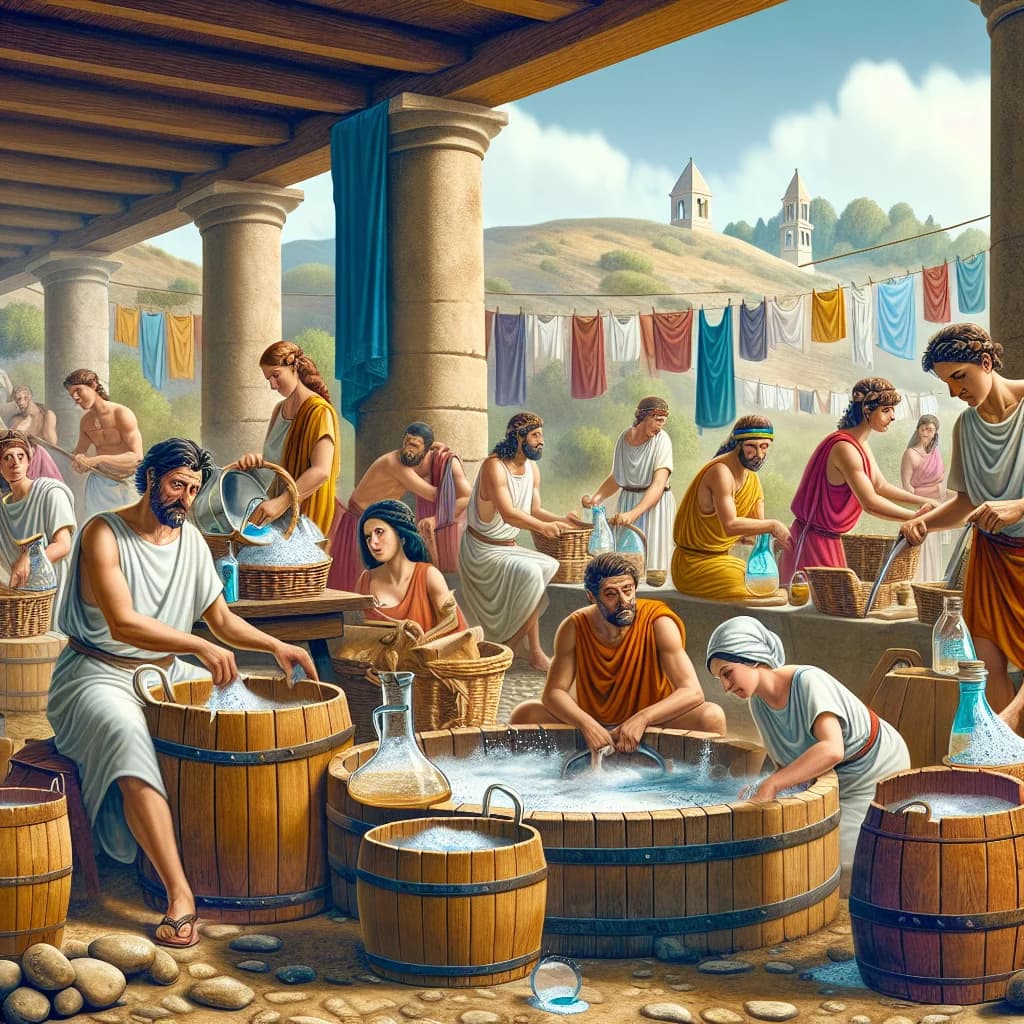
The most prominent use of fermented urine was in the textile industry. Professional laundry workers, known as fullones, operated establishments called fullonicae. Because of the pungent odor associated with the fermentation process, these facilities were often located in specific districts or on the outskirts of residential areas.
The process of cleaning a Roman toga was labor-intensive and involved several steps:
- The Wash: Clothes were placed in large vats filled with a mixture of aged, fermented urine and water.
- The "Fuller’s Kick": A worker would stand in the vat and stomp on the clothes—a process known as insaltatio—to agitate the fabric and allow the ammonia to dissolve oils and dirt.
- Rinsing and Treating: After the urine bath, the garments were thoroughly rinsed in clean water. They were often treated with "fuller's earth" (a type of clay) to further absorb impurities.
- Whitening: To ensure the iconic Roman white toga remained bright, the clothes were sometimes draped over a wicker frame and smoked with sulfur.
According to historical records from Pompeii, where several well-preserved fullonicae have been excavated, this was a highly profitable and essential business. The ammonia effectively stripped away the lanolin from raw wool and the grime from used clothing, making it an indispensable industrial chemical.
A Bright Smile: Urine in Ancient Oral Care
While the use of urine in laundry has a clear chemical logic, its use as a mouthwash is perhaps more shocking to contemporary audiences. Romans used urine—specifically imported "Celtiberian urine" from the Iberian Peninsula, which was rumored to be the strongest—to whiten their teeth and firm up their gums.
The ammonia in the urine worked much like it did in the laundry vats. It acted as a solvent to remove stains and surface plaque. Roman poets, such as Catullus, famously mocked individuals for having "pearly white teeth," implying that their brilliance was a result of a particularly vigorous urine-based dental routine. While we now use safer chemical alternatives, the Roman practice was based on the same fundamental principle of using alkaline substances to combat acidity and staining in the mouth.
The Economics and Ethics of Waste
The value of urine was so significant that it became a matter of state policy. During the reign of Emperor Vespasian in the 1st century AD, a tax was imposed on the collection of urine from public jars. When his son, Titus, complained that such a tax was disgusting, Vespasian famously held a gold coin to his son's nose and asked if it smelled. When Titus replied that it did not, Vespasian uttered the legendary phrase, "Pecunia non olet"—"Money does not smell." This underscores that even the most "revolting" substances were viewed through a lens of economic utility and chemical efficiency.
Conclusion
Understanding why ancient Romans used fermented human urine as a key ingredient in their laundry and mouthwash offers a fascinating glimpse into their resourcefulness. Lacking the luxury of modern laboratories, they turned to the natural chemical processes at their disposal. The ammonia derived from fermented urine provided a powerful, albeit pungent, solution for degreasing fabrics and whitening teeth. This practice highlights a sophisticated understanding of chemistry and a pragmatic approach to waste management that allowed the Roman Empire to maintain its high standards of public appearance and hygiene. Today, while we have replaced "liquid gold" with more pleasant-smelling alternatives, we still rely on the same chemical principles the Romans discovered in those clay jars centuries ago.


