
Why did London once run a special daily train service just for corpses
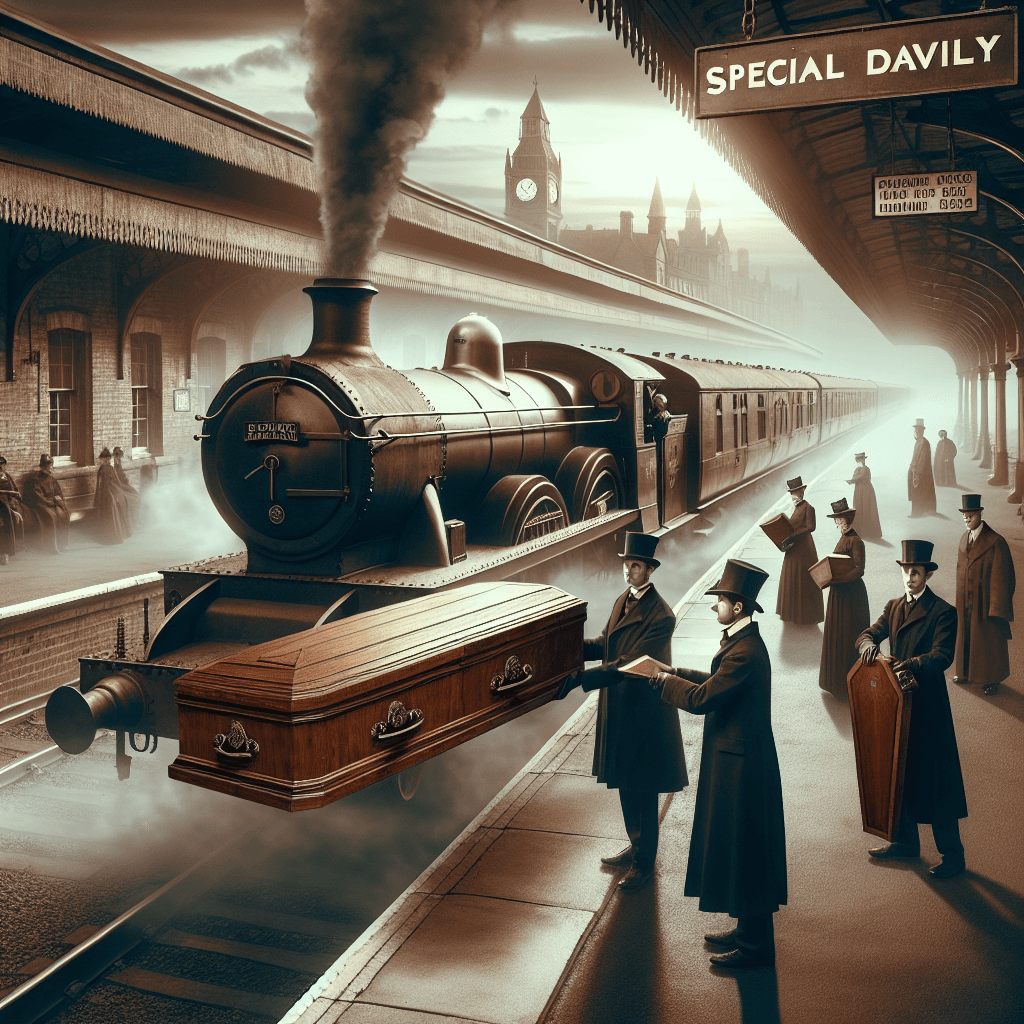
When Victorian London began literally overflowing with its dead, the city devised an ingenious and macabre solution: a special daily train service with a one-way ticket for corpses.

Too Long; Didn't Read
TLDR: Victorian London's inner-city graveyards were dangerously full, so a huge new cemetery was built far outside town. A special daily train service was created as the most practical way to transport bodies and mourners from the city to the new burial ground.
The Necropolis Railway: Why London Ran a Special Daily Train Service Just for Corpses
Imagine a train station in the heart of London with separate waiting rooms for the living and the dead. A daily service where some passengers held a one-way ticket to their final resting place. This isn't the plot of a gothic novel; it was a reality for nearly 90 years. The London Necropolis Railway, a dedicated funeral train, was a remarkable piece of Victorian engineering born from a grim and urgent public health crisis. This post explores the fascinating and macabre history of why London needed a special daily train service designed exclusively for its deceased citizens and their mourners, a solution that forever changed how the city dealt with death.
A City Overwhelmed by the Dead
By the mid-19th century, London was in crisis. Its population had boomed, and its ancient churchyards and small cemeteries were horrifically overcrowded. The city was, quite literally, full of its dead. Graveyards were so packed that old graves were constantly being disturbed to make room for new ones, and bodies were often buried in shallow pits.
This created a severe public health hazard. As sanitation reformer Edwin Chadwick noted in his influential 1842 report, the stench emanating from these burial grounds was overpowering. In an era when many believed in the "miasma theory"—the idea that diseases like cholera were spread by foul air—these overflowing cemeteries were seen as sources of pestilence. The situation was not just a health risk; it was a profound assault on public decency and the dignity of the dead. London desperately needed a new solution.
The Grand Solution: A Cemetery in the Countryside
The answer came in the form of a bold and ambitious private enterprise: The London Necropolis & National Mausoleum Company. Formed in 1852, their plan was as grand as it was practical. They purchased a vast 2,200-acre plot of land in Brookwood, Surrey, about 23 miles from the city. This new site, Brookwood Cemetery, was designed to be the largest burial ground in the world, capable of accommodating all of London's dead for centuries to come.
There was just one major logistical problem: how to transport potentially thousands of bodies and their mourners from central London to this new "city of the dead" in the countryside. The answer lay in the most advanced technology of the age: the railway. The company secured an Act of Parliament allowing them to build a dedicated rail line to transport the deceased.
All Aboard the London Necropolis Railway
In 1854, the London Necropolis Railway began its unique service. It was a complete, self-contained funereal transport system.
- A Dedicated London Station: A private station was built at 121 Westminster Bridge Road, near Waterloo. It featured discreet entrances, chapels for services, and waiting rooms segregated by both class and religion (Anglican and Non-conformist/Dissenters) to cater to Victorian social customs.
- Specialised Carriages: The trains themselves were specially designed. There were carriages for the living—again, separated into first, second, and third class—and specially constructed hearse carriages for the coffins.
- A Timetabled Service: This was not a charter service but a scheduled daily train. It departed London in the late morning, allowing mourners to attend a funeral and return home on the same day. The deceased, of course, were issued a one-way ticket.
- Stations at the Cemetery: The train didn't just arrive at Brookwood; it entered the cemetery itself. The track split to serve two separate stations within the grounds—one for the Anglican section and another for the Non-conformist section—ensuring segregation was maintained from the start of the journey to the final destination.
For decades, this solemn service reliably transported the city's dead to their peaceful resting place, away from the crowded and unsanitary conditions of the inner-city graveyards.
The End of the Line
The London Necropolis Railway was a remarkable feat of social and industrial planning. It solved a critical public health issue while providing a dignified and efficient way for Londoners to bury their dead. However, its decline began with the rise of a new technology: the motor vehicle. As motor hearses became more common in the early 20th century, the need for a funeral train dwindled. The final blow came on the night of 16 April 1941, during the Blitz, when the London station was heavily damaged by bombs. The service was never reinstated, bringing an end to one of history's most unusual railway lines. Today, little remains of the Necropolis Railway, but its story is a powerful reminder of Victorian ingenuity in the face of a city's ultimate challenge.


