
Why did many historical sailors wear a single gold earring to pay for their own funeral
For a high-seas wanderer, a flash of gold was more than just a style choice—it was a grim insurance policy for the afterlife. Discover the haunting reason why these legendary sailors wore their funeral costs on their ears to ensure they never faced a nameless grave.

Too Long; Didn't Read
Sailors wore gold earrings as a form of portable burial insurance to ensure they received a proper funeral if they died far from home or washed ashore. The value of the precious metal was intended to cover the costs of a coffin and grave marker, providing a final safeguard for those working a dangerous trade at sea.
Burial Insurance at Sea: Why Did Many Historical Sailors Wear a Single Gold Earring to Pay for Their Own Funeral?
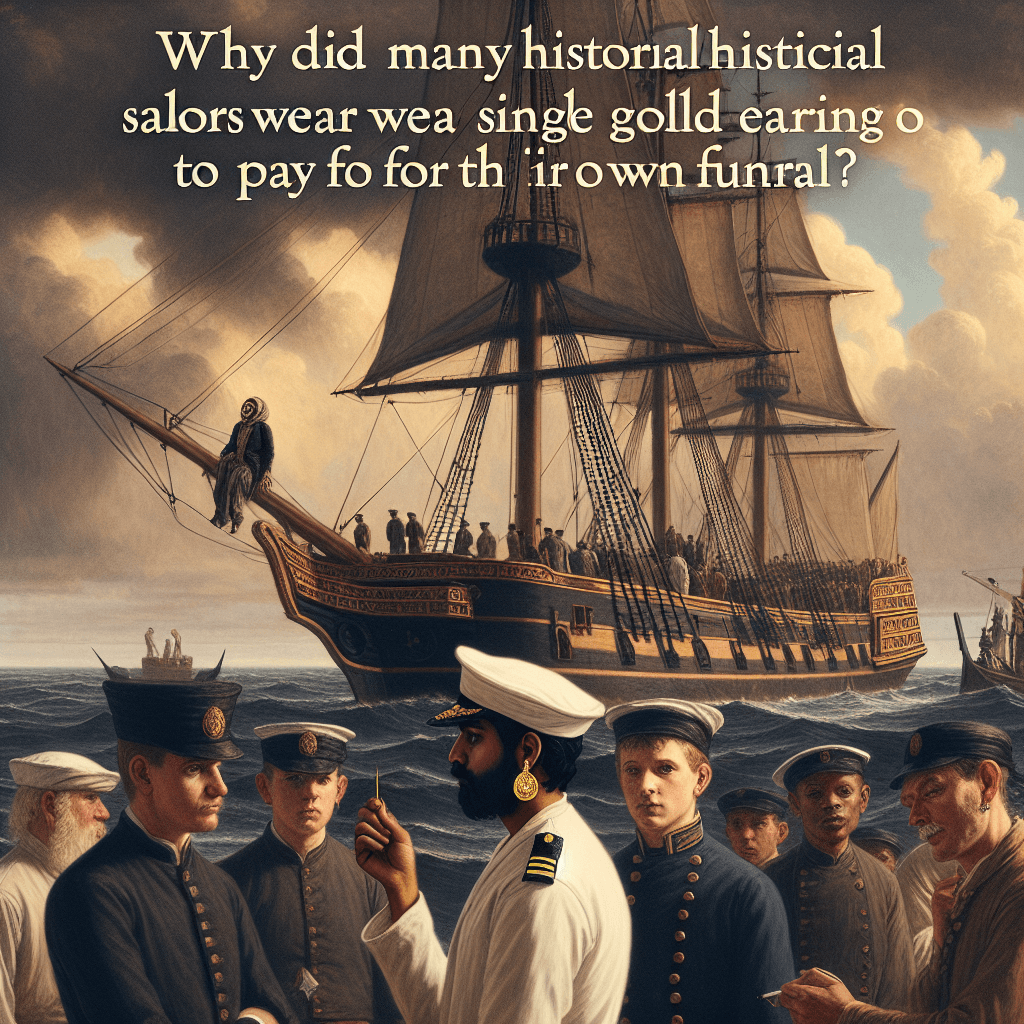
Imagine standing on the deck of a wooden galleon in the 17th century, the salt spray stinging your eyes and the horizon offering nothing but the vast, unpredictable Atlantic. For the historical mariner, death was not a distant possibility but a constant companion. Amidst the rigging and the roar of the cannons, one peculiar fashion choice stood out: a glint of gold in a single ear. While modern audiences might view this as a mere aesthetic choice or a mark of rebellion, the reality was far more pragmatic. Why did many historical sailors wear a single gold earring to pay for their own funeral? This tradition served as a unique form of "burial insurance" in an era when life was cheap and the sea was a merciless graveyard.
The Gold Standard: A Practical Solution for a Proper Burial
The primary reason for the gold earring was survival—not of the body, but of the soul. In the maritime culture of the 17th and 18th centuries, a Christian burial in consecrated ground was of paramount importance. To be thrown overboard or buried in an unmarked pauper’s grave was considered a fate worse than death.
According to historical maritime accounts, if a sailor’s body washed ashore in a foreign land, the gold earring served as payment for the locals to provide a proper funeral. The value of the gold was typically enough to cover the costs of a casket and the labor required for a burial. Some sailors went a step further by engraving the name of their home port on the inside of the earring, hoping that if their body was found, the gold would not only pay for the service but also facilitate the return of their remains to their families.
Beyond the Grave: The Superstitions of the Sea
While the funeral payment was the most practical application, the gold earring was also steeped in the rich folklore of the high seas. Sailors were famously superstitious, and their jewelry often doubled as a talisman. Some of the common beliefs included:
- Improved Eyesight: Many mariners believed that piercing the ears with precious metals would sharpen their vision, a vital trait for a lookout scanning the horizon for enemy ships or rocky shoals.
- Preventing Seasickness: A common myth suggested that the pressure applied by the earring could act as a form of acupuncture to ward off motion sickness.
- Protection from Drowning: Gold was often viewed as a protective charm. It was widely believed that a sailor wearing gold was less likely to be claimed by the "locker" of Davy Jones.
A Rite of Passage and Status Symbol
In many naval circles, the earring was not something a young recruit could simply put on. It often functioned as a badge of honor and experience. Historical records suggest that a sailor was traditionally allowed to wear a gold earring only after they had achieved a significant maritime milestone.
- Crossing the Equator: Passing this invisible line for the first time was a major event, often celebrated with rowdy ceremonies.
- Rounding Cape Horn: Navigating the treacherous, storm-wracked waters at the southern tip of South America was considered one of the most dangerous feats in sailing. Those who survived the journey earned the right to wear gold as a mark of their elite status.
Legal Protection and Identity
Interestingly, the earring also offered a subtle form of legal protection. During periods of heavy privateering and piracy, sailors were frequently captured or pressed into service. Small, portable wealth like a gold earring was harder for authorities to confiscate than a heavy chest of coins. Furthermore, it served as a permanent form of identification. Because the life of a sailor was transient, having their "wealth" literally attached to their person ensured that even in the event of a shipwreck, they possessed the means to secure their dignity in the afterlife.
Conclusion
The image of the earring-clad sailor is more than a romanticized trope of pirate movies; it is a reflection of the harsh realities of maritime history. By wearing a single gold earring to pay for their own funeral, historical sailors demonstrated a grim but necessary foresight. They understood that their lives were precarious and that the gold in their ear was the only guarantee of a respectful end. Today, this tradition stands as a testament to the resilience and resourcefulness of those who braved the world's oceans, blending financial pragmatism with a deep-seated hope for a proper final resting place. For those interested in maritime history, the gold earring remains a powerful symbol of the thin line between life and death on the high seas.


