
Why did people once seriously plan to tow icebergs to the desert
It sounds like a fever dream, but for a time, the most serious solution to quenching the desert's thirst was a multi-billion-dollar plan to lasso a 100-million-ton iceberg and tow it across the equator.

Too Long; Didn't Read
TLDR: In the 1970s, facing a water crisis, wealthy arid regions like Saudi Arabia seriously explored towing icebergs from Antarctica as a potential source of massive amounts of fresh water. The idea was ultimately abandoned due to insurmountable engineering challenges, massive costs, and the high risk of the iceberg melting or breaking apart during the long journey.
From Pole to Pipeline: Why Did People Once Seriously Plan to Tow Icebergs to the Desert?
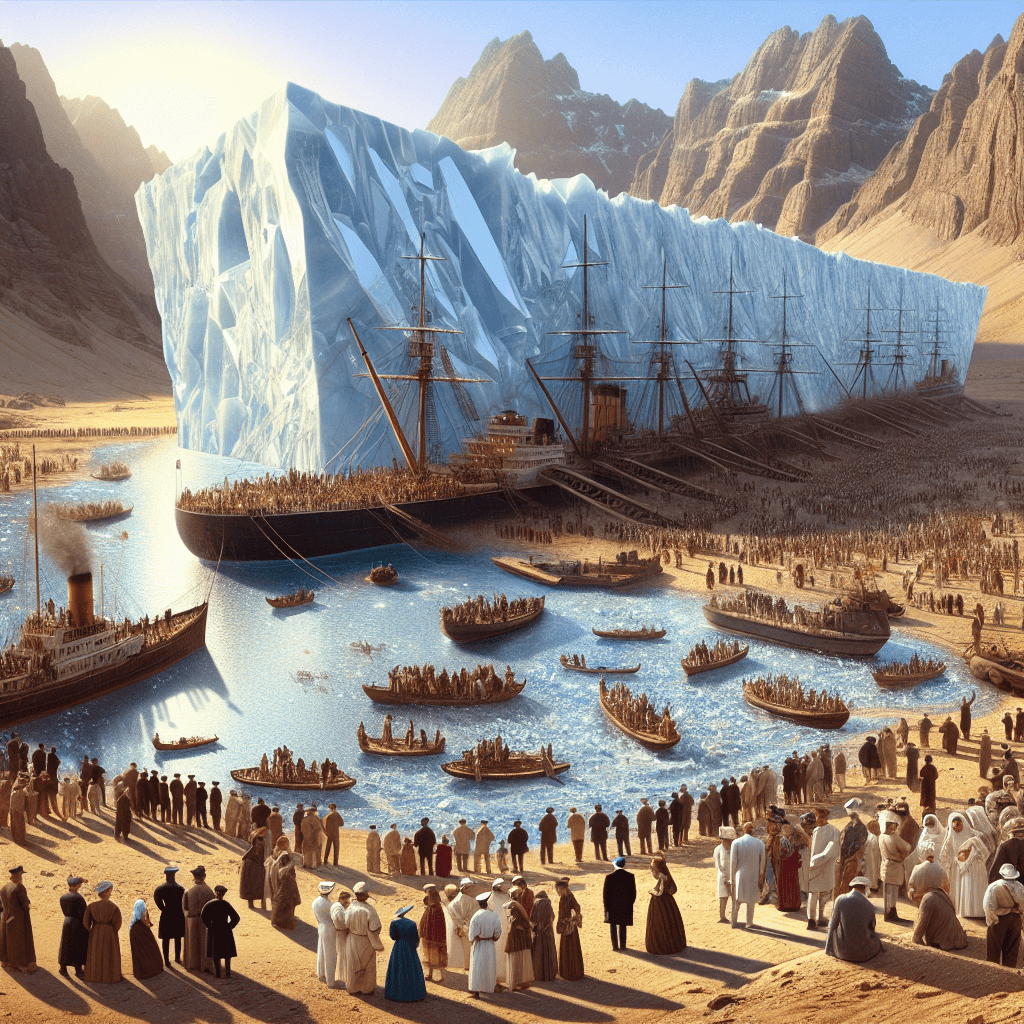
Imagine a gleaming white mountain of ice, miles long and hundreds of feet thick, slowly being pulled by a fleet of tugboats across the warm waters of the Indian Ocean. Its destination? The sun-scorched coast of the Arabian Peninsula. This might sound like a scene from a wildly imaginative science fiction novel, but in the 1970s, it was a multi-million-dollar engineering proposal taken very seriously by scientists, engineers, and even royalty. The audacious plan to tow Antarctic icebergs to arid regions was seen as a potential solution to one of humanity's most pressing problems: freshwater scarcity. This post delves into the fascinating history of why this grand idea was conceived, how it was supposed to work, and the immense challenges that ultimately left it frozen in time.
A World Dying of Thirst
To understand the appeal of iceberg harvesting, we must go back to the 1970s. The world was facing a growing water crisis. In the Middle East, particularly in nations like Saudi Arabia, the oil boom was fueling rapid population growth and industrialization. This created an insatiable demand for freshwater in one of the driest regions on Earth.
At the time, the primary solution was desalination—the process of removing salt from seawater. However, desalination plants were, and still are, incredibly expensive to build and operate, requiring vast amounts of energy. For leaders looking at their growing populations, the sheer volume of pristine, naturally-desalinated water locked away in polar ice caps seemed like a tantalizingly simple alternative. A single, large iceberg could potentially provide billions of gallons of fresh water, enough to supply a city for a year or more.
The Visionary Prince and The Science
The most prominent champion of this idea was Saudi Prince Mohammed al-Faisal. Educated in the United States, the prince was tasked with finding innovative solutions to his country's water woes. In 1977, he funded the First International Conference on Iceberg Utilization, held at Iowa State University, bringing together leading scientists and engineers from institutions like the Scripps Institution of Oceanography to explore the concept's feasibility.
The plan developed by the prince's company, Iceberg Transport International, and French engineer Georges Mougin was breathtaking in its ambition. Here’s how it was envisioned:
- Selection: Satellites would identify a suitable iceberg in Antarctica. The ideal candidate would be a flat-topped "tabular" iceberg, about one mile long, half a mile wide, and 800 feet thick, to minimize rolling during transit.
- Insulation: The iceberg would be fitted with a gigantic "shroud" or insulating curtain made of durable fabric to protect its sides and bottom. A protective plastic wrap around the top would reduce melting from the sun.
- Towing: A fleet of powerful tugboats would slowly tow the billion-ton behemoth on a journey of nearly 5,000 miles, a trip estimated to take the better part of a year. The slow speed was crucial to minimize friction and prevent the iceberg from fracturing under stress.
- Harvesting: Upon arrival, the iceberg would be moored in a shallow coastal area. As it slowly melted, the fresh water—which is less dense than saltwater—would form a layer on the surface, ready to be pumped ashore for use in cities and agriculture.
The Icy Reality: Why the Dream Melted Away
Despite the detailed planning and serious financial backing, the monumental project never came to fruition. The engineering, logistical, and environmental challenges proved to be as colossal as the icebergs themselves.
- Melting in Transit: Even with insulation, models predicted that a significant portion of the iceberg would melt during its year-long journey through progressively warmer waters. Losing 40-50% of the payload was a real possibility, drastically affecting the project's cost-effectiveness.
- Risk of Fracture: The stresses of being towed, combined with ocean currents and temperature changes, could cause the iceberg to break apart. A catastrophic failure would not only mean the loss of the water but could also create a major navigational hazard for shipping lanes.
- Astronomical Costs: The price tag was staggering. The cost of the tugboats, fuel, insulation materials, and the complex logistics of the operation was estimated to be in the hundreds of millions of dollars in the 1970s—billions in today's money. It was unclear if it would be cheaper than advancing desalination technology.
- Environmental Impact: Towing a massive iceberg would create a plume of cold, fresh water in its wake, potentially disrupting marine ecosystems. Furthermore, mooring a melting mountain of ice offshore would drastically lower the local water temperature, with unknown consequences for coastal habitats.
A Legacy of Innovation
The dream of towing icebergs to the desert may seem like a curious footnote in engineering history, but it serves as a powerful testament to human ingenuity in the face of resource scarcity. It forced scientists and policymakers to think on an epic scale about solving fundamental problems. While the project itself was deemed too impractical, the spirit behind it lives on. The same drive for water security that inspired Prince al-Faisal now fuels advancements in hyper-efficient desalination, atmospheric water generation, and sophisticated water recycling systems. The great iceberg tow never happened, but the bold thinking it represented continues to shape our search for a sustainable, water-secure future.


