
Why did people use pieces of crustless bread as the primary way to erase pencil marks for centuries
Long before the first rubber eraser was ever conceived, the secret to a perfect page was hiding in the kitchen pantry. Discover the fascinating reason why soft, crustless bread was the world's go-to correction tool for over two hundred years.

Too Long; Didn't Read
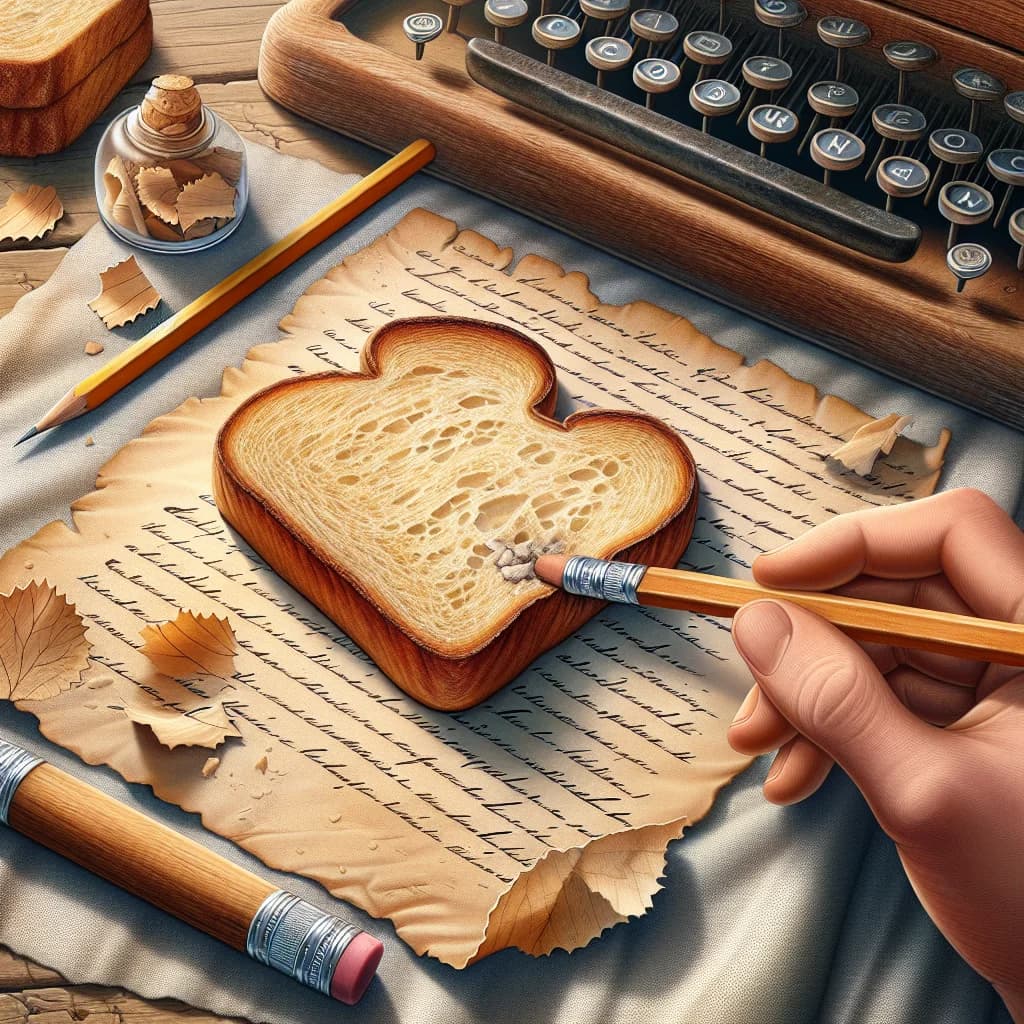
Before the 1770 invention of rubber erasers, writers used moist, balled-up pieces of crustless bread to lift graphite from paper. This method was popular for centuries because the bread's soft, sticky texture effectively removed mistakes without damaging expensive writing surfaces.
Before Rubber: Why Did People Use Pieces of Crustless Bread as the Primary Way to Erase Pencil Marks for Centuries?
Imagine an artist in the 17th century laboring over a complex architectural sketch. Upon making a stray mark, they do not reach for a modern pink rubber eraser. Instead, they pick up a loaf of white bread, tear out the soft center, and begin rubbing the paper. For hundreds of years, from the discovery of graphite in the 1500s until the late 18th century, moist, crustless bread was the global standard for correcting mistakes. While it may seem like a messy culinary workaround today, bread was actually a highly effective and scientifically sound tool for the job. This blog post explores the historical and physical reasons why did people use pieces of crustless bread as the primary way to erase pencil marks for centuries? and how this humble staple eventually gave way to the modern eraser.
The Science of the Doughy Eraser
To understand why bread was the preferred tool, one must first understand how a pencil works. When you write with a pencil, you are actually laying down microscopic layers of graphite—a form of carbon—onto the fibers of the paper. Unlike ink, which chemically bonds with or soaks into the paper, graphite sits loosely on the surface.
Bread was an ideal candidate for removing these particles because of its physical properties:
- Porosity: The cellular structure of bread acts like a microscopic sponge, trapping the graphite particles within its holes.
- Tackiness: Moist, kneaded bread has a slight stickiness. This allows it to lift the graphite off the paper without the need for excessive friction, which could tear or "pill" the delicate handmade paper of the era.
- Abrasiveness: While soft, the fibers in the bread provide just enough texture to scrub the surface gently.
A Staple of the Renaissance Artist
The need for an effective eraser grew rapidly following the discovery of a massive graphite deposit in Borrowdale, England, in 1564. As pencils became the primary tool for designers, engineers, and artists, the "bread crumb" method became a standardized technique.
According to historical accounts from the Royal Academy of Arts, students and masters alike would prepare their "erasers" by removing the crust from a loaf of fresh white bread. They would then knead the soft interior (the mie de pain) into a small, pliable ball. This ball could be pinched into a sharp point for precision erasing or flattened for broader strokes. It was essentially the precursor to the "kneaded eraser" used by charcoal artists today.
Why Bread Remained the Primary Tool for Centuries
The longevity of bread as a writing tool was primarily due to its accessibility and the lack of viable alternatives. Before the 1770s, the other common way to "erase" was using a sharp knife to scrape the top layer of paper away—a risky move that often ruined the document. Bread was:
- Ubiquitous: Every household and studio had access to bread.
- Inexpensive: Compared to specialized tools, a few crumbs of bread cost almost nothing.
- Gentle: It was far safer for expensive vellum or rag paper than mechanical scraping.
The Limitations and the "Happy Accident"
Despite its effectiveness, bread had significant drawbacks. It was a perishable food item; it would eventually grow moldy, rot, or attract pests if left in a desk drawer. Furthermore, if the bread was too moist, it could leave grease stains or soggy patches on the paper.
The reign of the bread eraser ended in 1770 due to a fortunate mistake by English engineer Edward Nairne. As the story goes, Nairne accidentally picked up a piece of raw rubber (caoutchouc) instead of his usual bread crumbs to erase a mistake. He discovered that the rubber was far more durable and effective than the bread. Shortly thereafter, he began selling "India Rubber" cubes for the then-exorbitant price of three shillings, marking the beginning of the end for the bread-based method.
Conclusion
The history of the eraser is a testament to human ingenuity and the use of everyday materials to solve complex problems. For centuries, the soft, porous nature of crustless bread provided the perfect balance of stickiness and gentleness required to lift graphite from paper. While the invention of vulcanized rubber eventually rendered the bread loaf obsolete in the stationery world, the legacy of the "kneaded" cleaning tool lives on in art studios globally. Understanding why did people use pieces of crustless bread as the primary way to erase pencil marks for centuries? offers a fascinating glimpse into a time when the line between the kitchen and the craft room was much thinner than it is today.


