
Why did some governments once legally require margarine to be dyed a bright, unappealing shade of pink
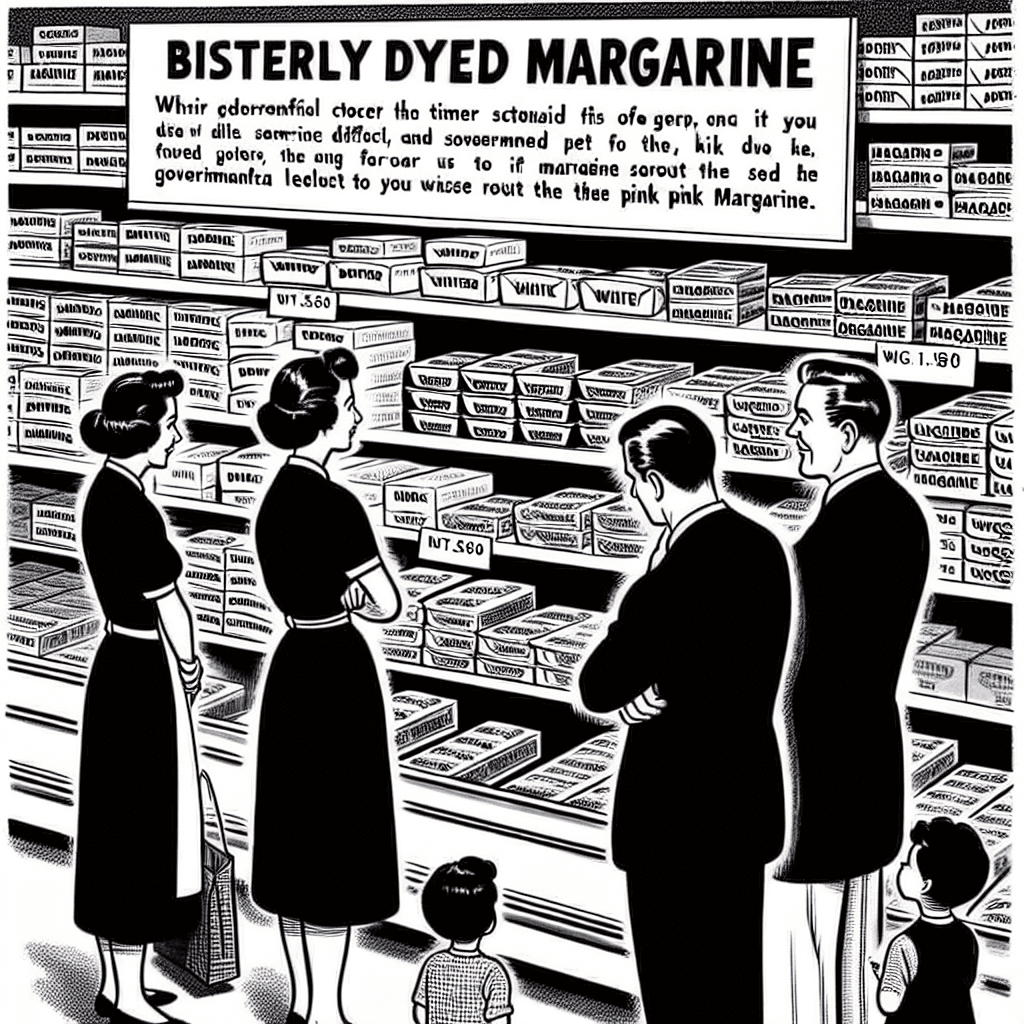
Think your dinner plate is immune to politics? Step back into the high-stakes "Margarine Wars," where governments once legally mandated that butter’s cheaper rival be dyed a stomach-turning shade of pink just to keep the dairy industry on top.

Too Long; Didn't Read
In the late 19th century, several governments mandated that margarine be dyed bright pink to protect the dairy industry. These laws were designed to make the butter alternative look unappetizing and prevent it from being fraudulently sold as genuine butter, ensuring that only real dairy could maintain its traditional yellow appearance.
The Great Pink Butter War: Why Did Some Governments Once Legally Require Margarine to be Dyed a Bright, Unappealing Shade of Pink?
Imagine sitting down for breakfast in the late 1880s and reaching for a spread to put on your toast, only to find a tub of substance colored a jarring, neon shade of bubblegum pink. This wasn't a culinary trend or a festive novelty; it was a legal requirement. For several decades, the battle between the traditional dairy industry and the burgeoning margarine market resulted in some of the strangest food regulations in history.
The question of why did some governments once legally require margarine to be dyed a bright, unappealing shade of pink? reveals a fascinating story of economic protectionism, political lobbying, and the lengths to which an established industry will go to stifle innovation. This blog post explores the "Margarine Wars" of the 19th and 20th centuries and the legislative tactics used to make butter’s cheapest competitor look as unappetizing as possible.
The Birth of a Rival: Why Butter Felt Threatened
To understand the "pink laws," one must first understand the threat margarine posed. Margarine was patented in 1869 by French chemist Hippolyte Mège-Mouriès in response to a challenge by Emperor Napoleon III to create a cheap butter substitute for the military and the lower classes. Originally made from beef tallow and later from vegetable oils, margarine was significantly cheaper to produce than butter.
By the 1880s, margarine had arrived in North America. The dairy industry, a powerful political force at the time, viewed this "artificial butter" as an existential threat. According to historical archives from the Smithsonian Institution, dairy farmers argued that margarine was a "counterfeit" product that deceived consumers. However, their primary concern was economic: margarine was undercutting butter prices and eating into their profits.
The Strategy of Sabotage: The "Anti-Color" Laws
The dairy lobby realized that margarine's greatest asset was its ability to mimic butter. When left in its natural state, margarine is off-white or greyish. To make it more appealing, manufacturers began adding yellow dye to make it look like high-quality summer butter.
In response, the dairy industry lobbied for "Anti-Color" laws. These regulations generally took two forms:
- The Yellow Ban: Many states and provinces outright banned the use of yellow dye in margarine.
- The Pink Mandate: Several U.S. states—specifically New Hampshire, Vermont, and West Virginia—went a step further. They passed laws requiring that margarine be dyed a bright, unappealing pink.
The logic behind the pink dye was simple: if they couldn't ban the product entirely, they would make it look so repulsive that no consumer would want to put it on their table. It was a form of psychological warfare intended to ensure that margarine could never be "passed off" as butter, even in a dark room.
Legal Battles and the Supreme Court
The "pink laws" did not go unchallenged. Margarine manufacturers fought back, arguing that these laws were an unconstitutional restriction on trade. The battle eventually reached the highest levels of the judiciary.
In the landmark 1898 case Collins v. New Hampshire, the U.S. Supreme Court struck down New Hampshire’s pink margarine law. The Court ruled that the law was essentially a prohibition disguised as a regulation. While the state had the right to prevent fraud, requiring a product to be dyed a color that made it unpalatable was seen as an unreasonable burden on interstate commerce.
Despite this victory, the dairy industry didn't give up. They pivoted to high taxes on colored margarine. For decades, many consumers had to buy white margarine and manually knead in a capsule of yellow dye (often provided in the packaging) to make the product look like butter at home.
The Legacy of the Margarine Wars
The requirement to dye margarine pink eventually faded as the dairy industry's political grip loosened and consumer demand for affordable fats grew, especially during the fat shortages of World War II. In Canada, some provinces maintained bans on yellow margarine well into the mid-20th century, with Quebec being the last to repeal its color restrictions as recently as 2008.
Key takeaways from this era include:
- Protectionism: The pink laws were a clear example of using legislation to protect an established industry from a more efficient competitor.
- Consumer Deception vs. Competition: While framed as "consumer protection" to prevent fraud, the laws were actually designed to eliminate competition.
- Innovation: These restrictions led to creative workarounds, such as the "color squeeze" packets that allowed consumers to dye their own margarine.
Conclusion
The history of why some governments once legally required margarine to be dyed a bright, unappealing shade of pink serves as a colorful reminder of how economic interests can shape the very food on our plates. It wasn't about health or safety; it was about the aesthetics of competition. By forcing margarine to look unappetizing, the dairy lobby hoped to preserve the cultural and economic dominance of butter.
Today, we take our yellow margarine for granted, but the "Pink Butter War" remains a significant chapter in food history. It highlights the enduring tension between traditional industries and technological innovation—a struggle that continues in various forms today as new food technologies, like lab-grown meat, enter the marketplace. For those interested in the intersection of law and food, the story of pink margarine is a perfect example of how the law can be used to color our choices—literally.


