
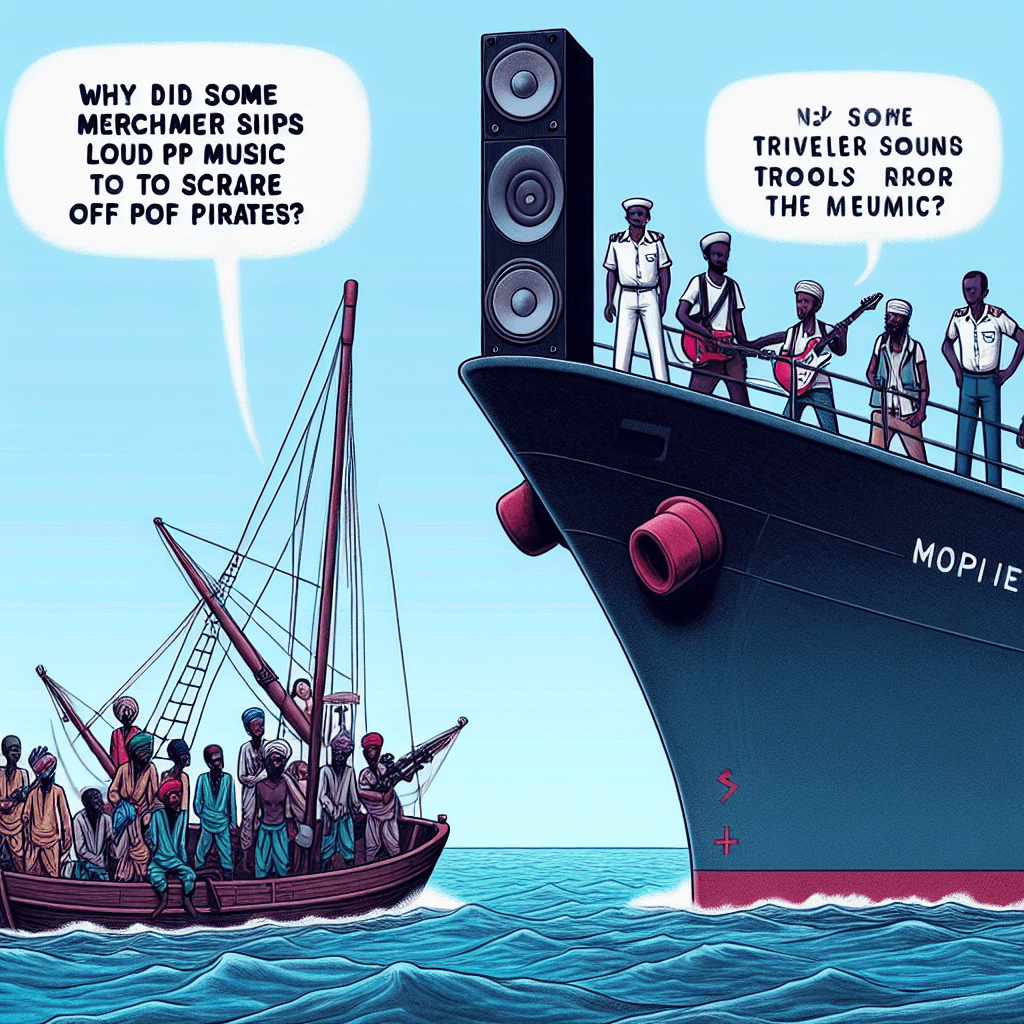
Why did some merchant ships use the music of Britney Spears to scare off Somali pirates
Forget heavy artillery—some merchant ships warded off Somali pirates using nothing but the high-decibel hits of Britney Spears. Discover the bizarre, true story of how 2000s pop became the ultimate tactical weapon in the battle for the high seas.

Too Long; Didn't Read
Merchant ships played Britney Spears hits at high volumes to deter Somali pirates because the music was culturally offensive to the attackers. Songs like Oops I Did It Again served as an effective acoustic deterrent that successfully repelled boarding attempts without the use of lethal force.
Pop Hits on the High Seas: Why Did Some Merchant Ships Use the Music of Britney Spears to Scare Off Somali Pirates?
Imagine a high-stakes standoff on the Indian Ocean. A group of heavily armed Somali pirates in a high-speed skiff approaches a massive merchant vessel. Instead of the sound of gunfire or the roar of engines, the pirates are suddenly blasted with the high-pitched, unmistakable opening notes of "Oops!... I Did It Again." While it sounds like a scene from a surreal comedy, this was a legitimate tactic employed by British merchant navy officers to protect their ships and crews.
During the height of the piracy crisis off the coast of East Africa, maritime security became a field of intense innovation. While many ships opted for armed guards and razor wire, others turned to psychological warfare. This blog post explores the fascinating reasoning behind why the discography of a pop icon became a strategic tool in maritime defense and how "toxic" hits were used to keep sea lanes safe.
The Science of Acoustic Deterrence
To understand how music can be used as a weapon, one must first understand the technology involved. Merchant ships do not simply play music through standard deck speakers. Instead, they utilize Long Range Acoustic Devices (LRADs).
An LRAD is a specialized loudspeaker system that emits a highly directional beam of sound over long distances—often up to 3,000 meters. These "sound cannons" allow crews to communicate with approaching vessels or, when necessary, emit a "deterrent tone" that is physically painful to the human ear. However, security teams discovered that constant sirens or white noise can be modulated. By broadcasting specific music through these devices, they could create a focused, unbearable wall of sound that was both physically and psychologically taxing for attackers.
Why Britney Spears?
The choice of Britney Spears as a primary deterrent was not arbitrary. According to reports from merchant navy officers, including Second Officer Rachel Owens in interviews with The Guardian and The Metro, hits like "Baby One More Time" and "Oops!... I Did It Again" were exceptionally effective for several reasons:
1. Cultural Aversion
One of the primary theories behind the success of this tactic was the cultural clash. Many Somali pirates were young men from conservative backgrounds who found Western pop music—and specifically the image and sound of Britney Spears—to be culturally offensive or highly irritating. The music represented a "Western decadence" that they reportedly found unbearable to listen to for extended periods.
2. Pitch and Frequency
From a purely technical standpoint, the high-pitched, synthesized nature of 90s and early 2000s pop music is incredibly abrasive when played at high volumes. The frequencies found in Spears' vocals and the accompanying electronic beats are sharp and piercing, making it difficult for pirates to focus or communicate with one another as they attempt to board a moving vessel.
3. Psychological Disruption
Piracy requires intense focus and a sense of intimidation. Being blasted with "toxic" pop hits breaks the "tough" atmosphere of a boarding attempt. It creates a sense of confusion and frustration, effectively de-escalating the pirates’ adrenaline and making the prospect of staying near the ship less appealing than retreating.
The Advantages of Non-Lethal Defense
The use of music as a deterrent fits into a broader category of maritime security known as non-lethal or "soft" defenses. There are several reasons why shipping companies preferred these methods:
- Avoiding Escalation: Using music or sound cannons allows a ship to defend itself without immediately resorting to gunfire, which could lead to a deadly firefight or the injury of hostages.
- Legal Simplicity: Carrying firearms on merchant ships involves complex international laws and port regulations. Acoustic devices are generally seen as defensive tools rather than weapons of war.
- Cost-Effectiveness: Implementing a "pop-music protocol" via an LRAD is significantly cheaper than hiring a private military security team for every voyage.
Conclusion
The use of Britney Spears’ music to ward off Somali pirates remains one of the most unconventional chapters in the history of maritime security. It serves as a reminder that effective defense often requires a mix of high-tech equipment and a deep understanding of psychology. By leveraging the power of Long Range Acoustic Devices and the specific cultural "clash" of Western pop, merchant crews were able to create an invisible shield that was as effective as it was unexpected.
While piracy tactics and maritime technology continue to evolve, the "Britney defense" stands as a testament to the creativity of seafarers. It proves that sometimes, the most effective way to handle a threat isn't through force, but through a well-timed, high-volume chorus of a pop masterpiece. For those interested in the intersection of culture and security, this case study remains a fascinating example of out-of-the-box thinking on the high seas.


