
Why did the Australian military once lose a formal war fought against a population of twenty thousand wild emus
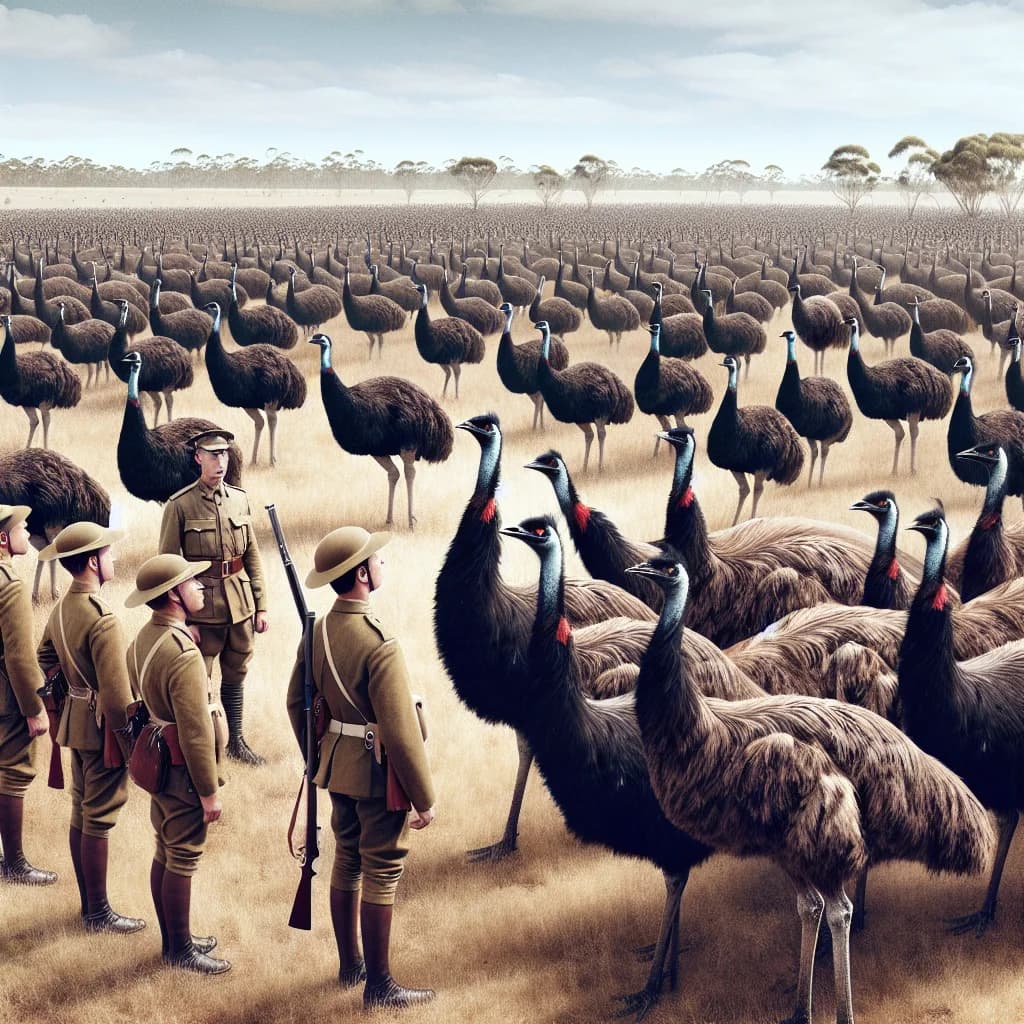
In 1932, the Australian military deployed machine guns against an army of 20,000 flightless birds—and somehow, the birds won. Discover the unbelievable true story of the Great Emu War and how one of history’s most absurd conflicts ended in a humiliating military retreat.

Too Long; Didn't Read
In 1932, the Australian military failed to cull 20,000 crop-destroying emus because the birds proved unexpectedly resilient and tactically superior. Despite using heavy machine guns, soldiers were outmaneuvered by the emus' incredible speed, endurance, and ability to scatter into small groups, leading to a humiliating withdrawal and a strategic victory for the flightless birds.
Feathers vs. Firepower: Why Did the Australian Military Once Lose a Formal War Fought Against a Population of Twenty Thousand Wild Emus?
In 1932, the Australian military embarked on a mission that remains one of the most unusual chapters in military history: a declared "war" against the national bird. Equipped with Lewis machine guns and ten thousand rounds of ammunition, soldiers set out to cull a population of twenty thousand emus that were ravaging farmland in Western Australia. To the surprise of the government and the public alike, the military eventually withdrew, leaving the emus largely victorious. But why did the Australian military once lose a formal war fought against a population of twenty thousand wild emus? This post explores the tactical failures, the biological resilience of the targets, and the logistical hurdles that led to this bizarre defeat.
A Desperate Battlefield: The Origins of the Conflict
The "Great Emu War" was born out of economic desperation. Following World War I, the Australian government settled a large number of veterans as farmers in Western Australia. By 1932, these "soldier-settlers" were struggling with the double blow of the Great Depression and a severe drought. When twenty thousand emus migrated inland in search of water and food, they found the farmers' irrigated lands and wheat crops to be an ideal habitat.
The birds didn't just eat the crops; they destroyed fences, allowing rabbits to enter and cause further devastation. Faced with a crisis, the farmers—using their military backgrounds—requested the assistance of the Ministry of Defence. Minister of Defence Sir George Pearce agreed to deploy troops, viewing the operation as both a practical solution and a convenient target practice opportunity.
Why the Military Strategy Failed
Despite the use of automatic weaponry, the Australian military faced several insurmountable challenges that turned a seemingly simple cull into a tactical nightmare.
The Emu’s Surprising Resilience
One of the primary reasons for the military’s failure was the sheer biological toughness of the emu. Major G.P.W. Meredith, who commanded the operation, noted that the birds were remarkably difficult to kill. According to historical accounts from the Argus newspaper at the time, emus could sustain multiple hits from heavy-caliber bullets and continue running. Meredith famously remarked that if the military had a division with the bullet-carrying capacity of these birds, it could face any army in the world.
Superior Maneuverability and Tactics
While the soldiers had firepower, the emus had strategy—albeit an instinctual one. The birds did not stay in large, vulnerable groups. Instead, they adopted what observers described as "guerilla tactics":
- Splitting into Small Groups: When fire was opened, the emus scattered into tiny clusters, making it impossible for a machine gunner to target more than a few at a time.
- Sentinel Behavior: Groups of emus often had a "lookout" bird that stayed alert while others fed, warning the flock at the first sign of human approach.
- Speed: Capable of running at nearly 50 km/h, the emus easily outpaced the soldiers on foot and proved difficult to track in the rough terrain.
Logistical and Mechanical Hurdles
The military also struggled with their equipment. The Lewis guns were heavy and prone to jamming in the dusty conditions of the Outback. In one attempt to increase mobility, the soldiers mounted a gun on a truck, but the terrain was so rugged that the vehicle could not keep up with the birds, and the vibration made accurate aiming impossible.
The Aftermath and Lessons Learned
By the time the military withdrew in December 1932, they had expended thousands of rounds of ammunition with minimal impact on the emu population. The "war" was deemed a failure by the press and a source of embarrassment in Parliament.
Ultimately, the government realized that traditional warfare was ineffective against nature. They eventually shifted to a more successful "bounty" system, where locals were incentivized to manage the population themselves. Between 1934 and 1960, hundreds of thousands of emus were culled this way, proving that decentralized local action was far more effective than a centralized military strike.
Conclusion
The Great Emu War serves as a fascinating reminder that technology and firepower are not always a match for biological adaptation and environmental challenges. Why did the Australian military once lose a formal war fought against a population of twenty thousand wild emus? The answer lies in a combination of the birds' incredible physical resilience, their decentralized movement, and the logistical failure of applying conventional warfare to a non-conventional target.
This historical anomaly highlights the importance of understanding ecological contexts before attempting to solve environmental problems with force. For those interested in the intersection of history and biology, the Emu War remains a premier example of what happens when human ambition clashes with the unpredictable reality of the natural world.


