
Why did the giant tortoise lack a formal scientific name for centuries because hungry sailors kept eating them
For three centuries, the giant tortoise remained a biological mystery for one hilariously grim reason: it was simply too delicious to survive the voyage home. Discover the bizarre true story of the "living pantry" that was eaten by sailors and scientists alike before it could ever reach a museum to be named.

Too Long; Didn't Read
Giant tortoises lacked a formal scientific name for over 300 years because they were so delicious that sailors ate every specimen before it could reach European scientists for study. Their ability to survive for months without food or water made them the perfect live rations, ensuring none survived the long journey home to be officially classified.
Too Tasty to Categorize: Why Did the Giant Tortoise Lack a Formal Scientific Name for Centuries Because Hungry Sailors Kept Eating Them?
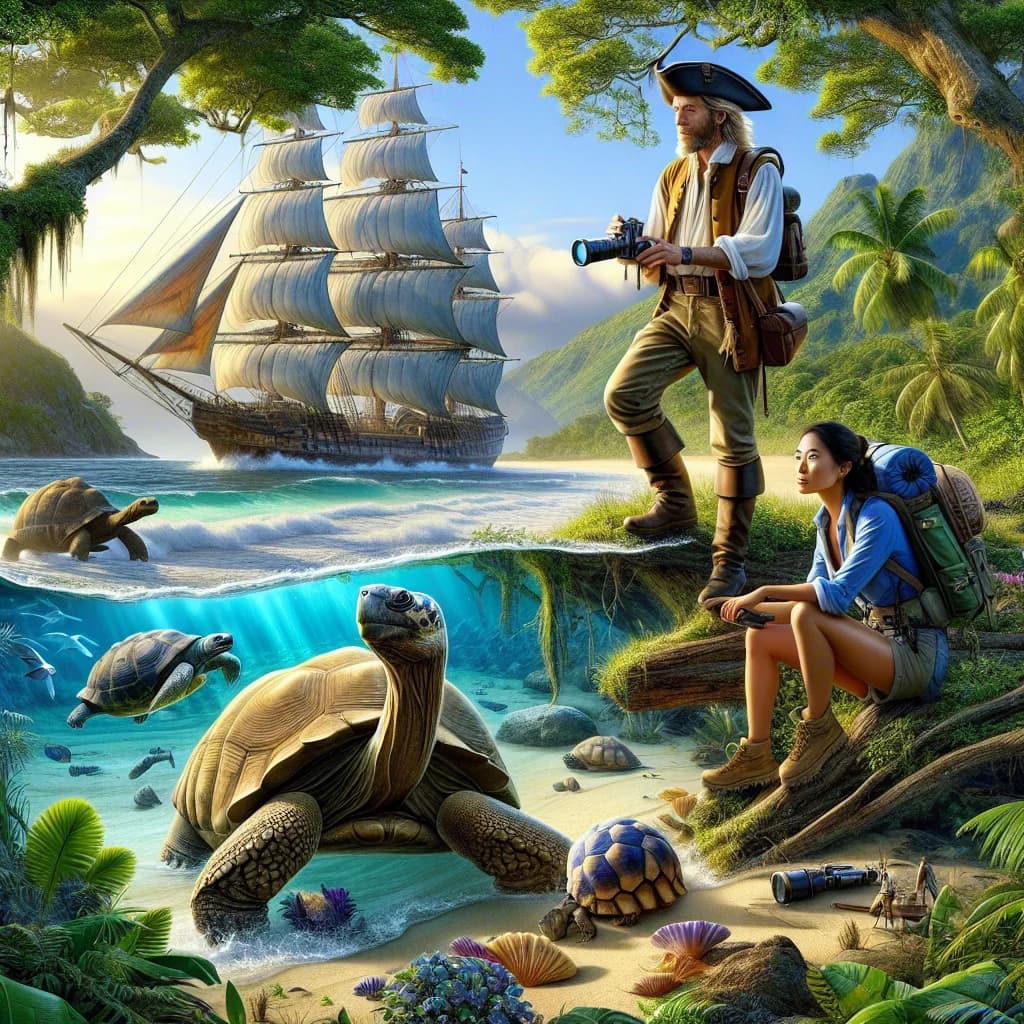
Imagine discovering a biological marvel—a creature that can weigh over 500 pounds and live for over a century—only to find that it is so delicious it never makes it back to a laboratory. This was the peculiar reality for the giant tortoise. For nearly 300 years after their discovery by Western explorers, these massive reptiles lacked a formal scientific name and classification. The reason was as simple as it was gluttonous: every time a specimen was placed on a ship bound for Europe, the hungry crew ate it before reaching home.
This blog post explores the historical and biological factors that led to this taxonomic delay. We will examine how the unique physiology of the tortoise made it the ultimate "living larder" for sailors and why it took centuries for the scientific community to finally record a type specimen.
The Biological Irony of the "Living Larder"
To understand why the giant tortoise remained nameless in the annals of science, one must understand the logistical nightmare of 17th and 18th-century sea travel. Sailors often suffered from scurvy and malnutrition due to a diet of salted meats and rancid biscuits. The discovery of the giant tortoises on the Galápagos and Aldabra Islands offered a miraculous solution.
Giant tortoises possessed biological traits that made them the perfect food source for long voyages:
- Extreme Resilience: They could survive for up to a year without any food or water.
- Easy Storage: Unlike cattle or pigs, they did not require fodder or constant cleaning; they could simply be stacked upside down in the cargo hold.
- Superior Flavor: Historical accounts from explorers like William Dampier and even Charles Darwin praised the meat as being better than chicken, beef, or butter.
Because they remained alive and "fresh" without any maintenance, they were treated as a convenience rather than a scientific curiosity. Ships would often depart from the islands with hundreds of tortoises in the hold, but by the time the vessel neared European ports, every single one had been consumed.
The Taxonomic Requirement: The "Type Specimen" Problem
In the world of taxonomy, particularly following the systems established by Carl Linnaeus, a species cannot be formally named and described without a "type specimen." This is a physical example—usually a preserved body, skeleton, or shell—that is deposited in a museum or herbarium for other scientists to study.
For centuries, naturalists struggled to provide this evidence. Scientific expeditions were often secondary to trade and exploration. If a ship ran low on rations during the months-long journey across the Atlantic or Pacific, the "scientific specimens" were the first things to go into the soup pot.
According to historical records from the 16th to the 19th century, it is estimated that hundreds of thousands of tortoises were removed from the islands. While shells were occasionally brought back, they were often fragmented or lacked the necessary data to distinguish between the various island subspecies. Without a complete specimen to present to the scientific community in Europe, the giant tortoise remained a tall tale told by sailors rather than a classified species.
Even Charles Darwin Couldn't Resist
The most famous figure associated with these creatures, Charles Darwin, was not immune to the culinary temptation. During the voyage of the HMS Beagle in 1835, Darwin and his crew collected numerous tortoises. While Darwin eventually used the variations in their shell shapes to help formulate his theory of evolution, his initial interactions were largely gastronomic.
Records from the Beagle indicate that the crew consumed about 48 tortoises during their stay and the subsequent leg of their journey. Darwin himself wrote extensively about the deliciousness of the tortoise liver and the "very refreshing" fluid found in their bladders. It was only after the tortoise populations began to dwindle and the scientific value of "biological diversity" became clearer that the focus shifted from consumption to classification.
The Conclusion: A Legacy of Survival
The story of why the giant tortoise lacked a formal scientific name for centuries is a testament to the creature's incredible, yet detrimental, evolutionary success. Their ability to survive harsh conditions made them the ideal prey for the Age of Discovery, leading to a 300-year gap between their discovery and their official naming.
Today, the giant tortoise is no longer a menu item but a global icon of conservation. The delay in their scientific naming serves as a stark reminder of how human necessity and appetite can often outpace our quest for knowledge. Reiterating the importance of this history helps us appreciate the modern efforts to protect these ancient giants, ensuring they remain in our oceans' ecosystems rather than just in historical cookbooks. For those interested in evolutionary history, the tale of the tortoise remains a unique example of how biology and human history intersect in the most unexpected—and edible—ways.


