
Why did the invention of the elevator transform penthouses from lowly servant quarters into the world's most expensive housing
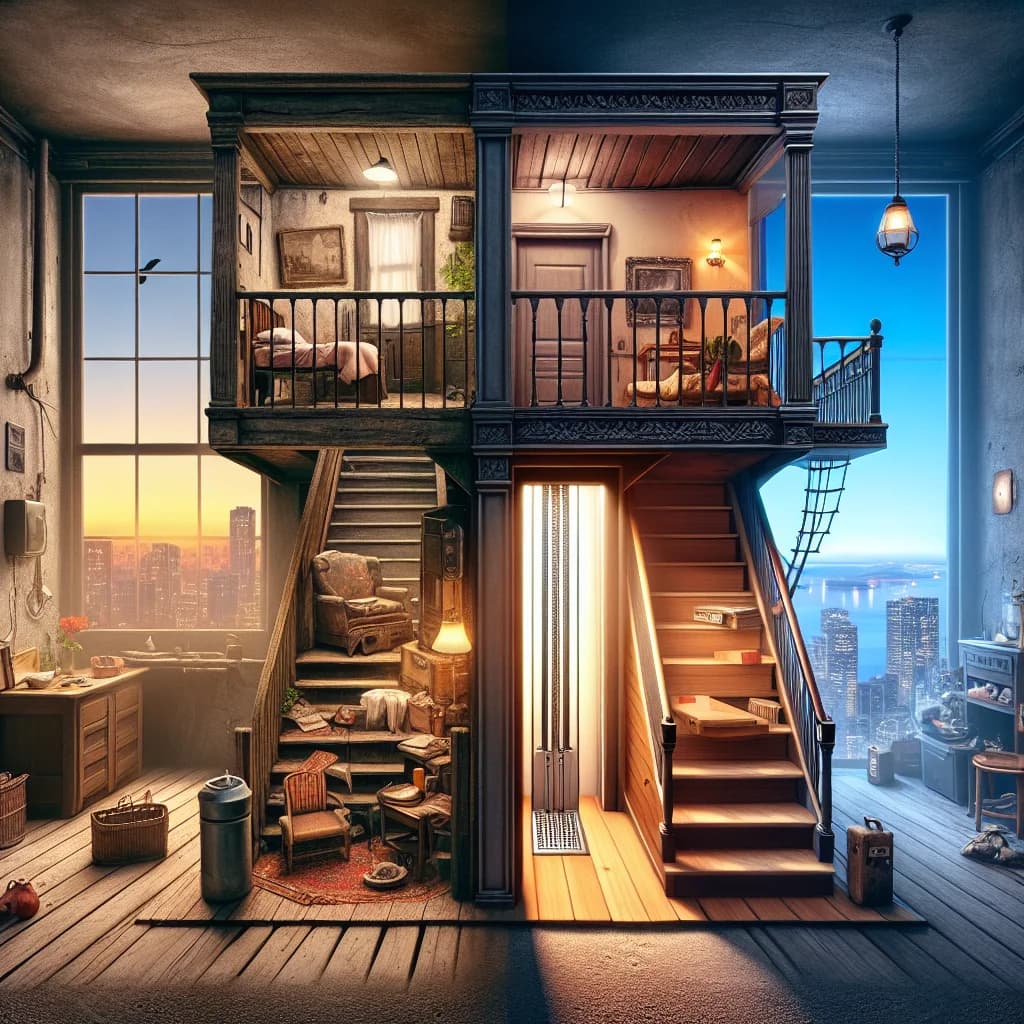
Before the elevator, the top floor was a dreaded climb reserved for servants; now, it’s the world’s ultimate status symbol. Discover how one invention flipped the social hierarchy of the skyline upside down, turning "the attic" into a billion-dollar view.

Too Long; Didn't Read
Before the elevator, top floors were undesirable due to the exhausting climb, making them cheap housing for servants. The elevator eliminated this physical barrier, transforming upper levels into luxury retreats valued for their panoramic views, privacy, and distance from street-level noise and pollution.
From Attics to Assets: Why did the invention of the elevator transform penthouses from lowly servant quarters into the world's most expensive housing?
Imagine a time when living on the top floor of a building was a mark of poverty rather than prestige. In the mid-19th century, the wealthiest residents of London, Paris, and New York occupied the "piano nobile"—the second or third floors—to minimize the grueling climb up flights of stairs. The higher one went, the lower the rent and the social standing of the occupants. However, a single technological breakthrough fundamentally reoriented our urban geography. This post explores why did the invention of the elevator transform penthouses from lowly servant quarters into the world's most expensive housing, turning the architectural hierarchy of the world upside down.
The Pre-Elevator Era: The Burden of the Climb
Before the mid-1800s, the height of a building was limited by the human knee. In a world without mechanized vertical transport, every additional floor represented a physical tax on the resident. As a result, the "attic" or top floor was the least desirable space in any structure.
These spaces were typically characterized by:
- Extreme Temperatures: Without modern insulation, the top floor bore the brunt of the summer heat and the winter chill.
- Poor Accessibility: Carrying groceries, luggage, or coal for heating up six flights of stairs was a task relegated to those who had no other choice.
- Social Stigma: High-altitude living was synonymous with the working class, struggling artists, and domestic servants.
Historically, the "piano nobile" (the noble floor) was the prime real estate. These lower-level apartments featured higher ceilings and ornate windows, while the top floors were cramped, dark, and strictly utilitarian.
The Turning Point: Elisha Otis and the Safety Brake
While primitive hoists had existed for centuries, they were notoriously dangerous; if a cable snapped, the platform plummeted. The true catalyst for change came in 1853, when Elisha Otis demonstrated his "safety elevator" at the New York World’s Fair. By inventing a brake that automatically engaged if the hoisting rope broke, Otis proved that vertical travel could be safe for humans.
As noted by architectural historians, this invention didn't just allow buildings to grow taller; it changed the value proposition of every floor. Once the physical exertion of climbing was removed by steam (and later electric) power, the drawbacks of the top floor vanished, leaving only the benefits.
The Reversal of Value: Why Higher Became Better
With the elevator acting as a vertical "highway," developers and architects began to realize that the top of a building offered amenities that lower floors could never match. This realization sparked a radical shift in how luxury was defined.
1. Light and Air
In the coal-burning cities of the late 19th and early 20th centuries, the street level was plagued by noise, horse manure, and thick smog. Moving upward meant escaping the "miasma" of the streets. The top floor offered cleaner air, better ventilation, and significantly more natural sunlight—luxuries that became increasingly valuable as urban density grew.
2. The Birth of the "Penthouse" Concept
The term "penthouse" originally referred to a small "appentis" (minor structure) on a roof, often used for machinery or storage. However, during the 1920s economic boom in New York City, developers began transforming these service structures into lavish residences. According to historical housing records, the 1925 legal change in New York building codes allowed for "luxury roof-top dwellings," effectively birthing the modern penthouse.
3. Privacy and Exclusivity
The elevator created a "gatekeeper" effect. The top floor became the most private part of the building, far removed from the bustle of the lobby and the street. This seclusion, combined with panoramic views of the skyline, transformed the former servant quarters into a status symbol for the elite.
The Economic Impact of Vertical Living
The financial implications of this shift were staggering. Today, the price-per-square-foot of a penthouse can be double or triple that of a ground-floor unit in the same building. This inversion of the social ladder is a direct result of the elevator's ability to turn height from a liability into a luxury.
Conclusion
The evolution of the penthouse is a fascinating case study in how technology can redefine social status. Why did the invention of the elevator transform penthouses from lowly servant quarters into the world's most expensive housing? Because it decoupled height from hardship. By providing a safe, effortless way to reach the clouds, the elevator allowed the wealthy to reclaim the sky, turning what was once a cramped attic into a prestigious sanctuary. Today, the penthouse stands as a monument to verticality, proving that in the world of real estate, the only way to go—both literally and financially—was up. For those interested in urban history, the elevator remains perhaps the most influential tool in the creation of the modern luxury lifestyle.


