Why did Victorians say prunes instead of cheese when posing for a portrait
In an era where a wide smile was seen as a sign of madness or poor breeding, Victorians relied on one specific word to achieve the perfect, dignified pout. Discover the fascinating social history behind why "prunes" was the original "cheese" of 19th-century photography.

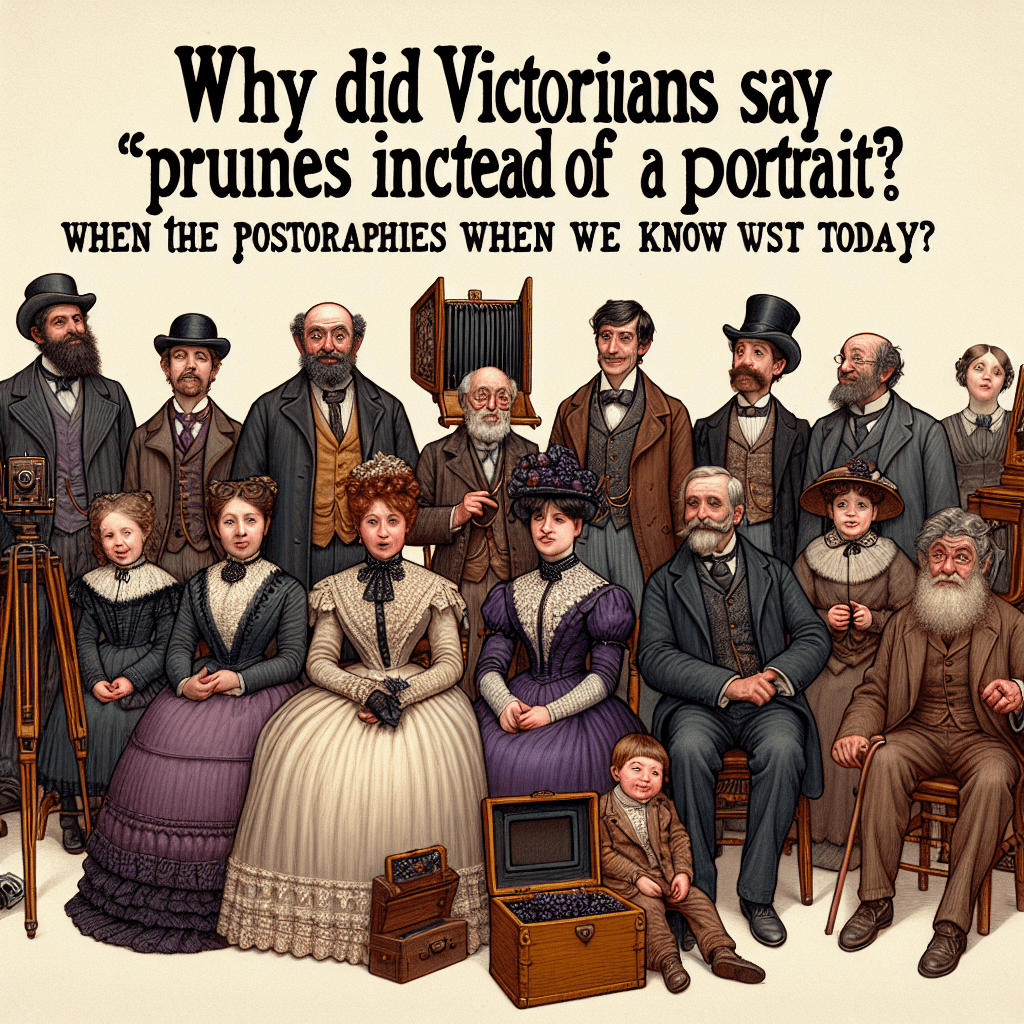
Too Long; Didn't Read
Victorians said prunes to keep their mouths small and tight for photos. Unlike today’s broad smiles, a serious and controlled expression was considered elegant and dignified, whereas showing teeth was associated with lower classes or intoxication.
The History of the Victorian Pout: Why Did Victorians Say Prunes Instead of Cheese When Posing for a Portrait?
If you scroll through a digital archive of 19th-century photography, you will notice a striking pattern: almost no one is smiling. While modern culture encourages us to "say cheese" and flash a wide, toothy grin, our Victorian ancestors preferred a much more somber expression. In fact, when photographers of the era gave instructions on how to pose, the common prompt wasn't "cheese," but "prunes."
This linguistic choice was not a random preference for dried fruit. Instead, it was a calculated social and technical decision. Understanding why did Victorians say prunes instead of cheese when posing for a portrait requires a look into the intersection of early photographic technology, 19th-century social etiquette, and the evolving standards of beauty.
The Pursuit of the "Rosebud" Mouth
The primary reason Victorians were instructed to say "prunes" was to achieve a specific aesthetic. In the 1800s, a large, wide mouth was often associated with the lower classes or those lacking in character. Conversely, a small, controlled mouth—frequently referred to as a "rosebud" mouth—was considered the height of elegance and refinement.
When a person says the word "prunes," the lips naturally pucker and the mouth narrows into a small, tight circle. This created the demure, "prim and proper" look that was highly desirable in formal portraiture. On the contrary, saying "cheese" stretches the mouth wide, which Victorians believed made a person look unintelligent or even slightly mad.
Social Etiquette and the "Grin"
During the Victorian era, photography was not the casual, everyday occurrence it is today. It was a formal event, often likened to sitting for a painted portrait. Because of this, people followed the long-standing rules of fine art.
In the world of 19th-century etiquette:
- The "Broad Grin": A wide smile was often reserved for children, "drunkards," or stage performers.
- Dignity and Seriousness: Most people wanted to be remembered as dignified and serious individuals. As Mark Twain famously noted in a letter, "A photograph is a most important document, and there is nothing more damning to go down to posterity than a silly, foolish smile caught and fixed forever."
- Dental Hygiene: It is also a practical reality that dental care in the 1800s was rudimentary. Many people suffered from missing, decayed, or discolored teeth. Keeping the mouth closed was an easy way to maintain an attractive appearance.
The Limitations of Early Technology
Beyond social norms, the technical constraints of early photography played a significant role in the Victorian pout. In the early days of the daguerreotype, exposure times were incredibly long—sometimes lasting several minutes.
Holding a natural, wide smile for five to fifteen minutes is physically exhausting and nearly impossible to do without trembling. If a subject’s facial muscles twitched during the exposure, the resulting image would be blurred. A neutral, relaxed face was far easier to maintain over long periods, ensuring a crisp and clear final product.
The Shift from "Prunes" to "Cheese"
The transition from the "prunes" pout to the "cheese" smile didn't happen overnight. It was driven by two major factors:
- Faster Shutter Speeds: As technology improved, exposure times dropped to seconds, allowing photographers to capture fleeting expressions.
- The Kodak Revolution: In the late 19th and early 20th centuries, Kodak began marketing cameras to the general public. Their advertisements focused on capturing "moments of joy" and snapshots of daily life, rather than formal, stiff portraits. This shifted the cultural perception of photography from a solemn record to a celebration of happiness.
Conclusion
The reason why did Victorians say prunes instead of cheese when posing for a portrait reveals a fascinating glimpse into the values of the past. It was a world where a small, controlled mouth signaled "prudence" and "primness," and where the limitations of technology dictated the very expressions we see in history books.
Today, our "cheese"-filled selfies represent a complete 180-degree turn in how we choose to present ourselves to the world. While we may find their stern expressions haunting or cold, the Victorians were simply following the fashion and etiquette of their time—aiming for a timeless, dignified "rosebud" rather than a momentary grin. The next time you look at a vintage portrait, remember: they weren't necessarily unhappy; they were just saying "prunes."