
Why do armadillos almost always give birth to identical quadruplets
It's one of nature's strangest reproductive strategies: a single fertilized egg that splits to create four perfect clones. Discover the astonishing evolutionary reason behind the armadillo's identical quadruplets.

Too Long; Didn't Read
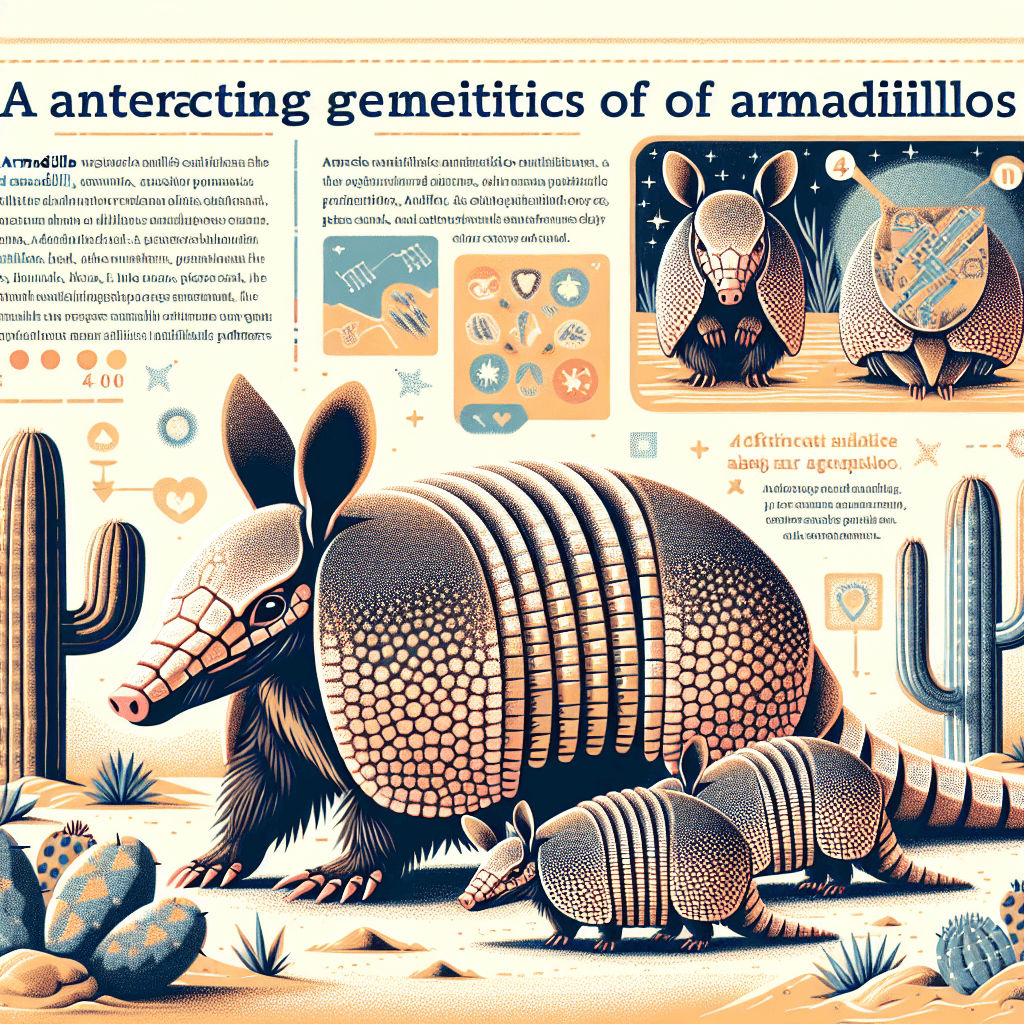
Armadillos have a rare trait called polyembryony where a single fertilized egg splits into four identical embryos. This results in genetically identical quadruplets and is likely an evolutionary strategy to maximize offspring when the mother's uterus has only one spot for an egg to implant.
Nature's Clones: Why Do Armadillos Almost Always Give Birth to Identical Quadruplets?
Have you ever marveled at the phenomenon of identical twins? The idea of two individuals sharing the exact same genetic code is fascinating. Now, imagine a species where this isn't a rare occurrence but the biological standard, and instead of twins, they have quadruplets. Welcome to the world of the nine-banded armadillo, an animal with one of the most peculiar and remarkable reproductive strategies in the entire vertebrate kingdom. These small, armored mammals almost always give birth to a litter of four genetically identical, same-sex pups.
This isn't a random quirk of nature; it's a built-in feature of their biology. This blog post will delve into the science behind the armadillo's instant family, exploring the unique process of polyembryony and the evolutionary theories that attempt to explain why this creature mass-produces clones.
The Biological Phenomenon: Obligate Polyembryony
The secret to the armadillo's identical quadruplets lies in a process called polyembryony. This term literally means "many embryos" and refers to the development of more than one embryo from a single fertilized egg. While this happens occasionally in humans (leading to identical twins) and other animals, the nine-banded armadillo is unique among vertebrates for practicing obligate polyembryony. "Obligate" means it's a required, consistent part of their life cycle.
For the nine-banded armadillo, reproduction doesn't just sometimes result in multiple identical offspring—it is the standard operating procedure. A single egg, once fertilized by a single sperm, will reliably split to form four separate, but genetically identical, embryos. This means that every litter of armadillo pups is a set of natural clones.
From One Egg to Four Pups: The Reproductive Journey
The process is as precise as it is fascinating. The armadillo's reproductive cycle has a few key stages that make this quadruplet birth possible:
- Fertilization: Like most mammals, the process begins with the fertilization of a single ovum (egg) by a single sperm cell, forming a zygote.
- Delayed Implantation: Here's where things get interesting. The armadillo's fertilized egg doesn't immediately implant into the uterine wall. Instead, the blastocyst (the small ball of cells that will become the embryo) can remain in a state of suspension for three to four months. This delay allows the armadillo to time the birth of her young for a more favorable season, typically spring, when food is abundant.
- Implantation and Division: Once conditions are right, the blastocyst implants into the uterus. Shortly after implantation, this single mass of cells divides into four distinct quadrants.
- Development: Each of these four cell masses then develops into its own complete embryo. While they all share a common chorionic sac (the outermost fetal membrane), each pup develops its own placenta and amniotic sac, allowing it to grow independently before birth.
The result of this intricate biological process is a litter of four healthy, identical pups, all born ready to face the world with the exact same genetic toolkit.
The Evolutionary Mystery: Why Quadruplets?
The ultimate question is why the nine-banded armadillo evolved this highly specialized reproductive strategy. While scientists don't have one definitive answer, several compelling theories exist.
One of the leading hypotheses relates to the female armadillo's anatomy. Her uterus is a simple, pear-shaped structure that appears to have only one site where an egg can successfully implant. Given this physical limitation, producing a single offspring per pregnancy would significantly limit her reproductive output. Obligate polyembryony provides a brilliant workaround. By having that single successful implantation produce four offspring, the female maximizes her reproductive success from a single fertilization event. It’s an evolutionary strategy of efficiency—getting four for the price of one.
Other theories suggest it could be a way to hedge against environmental risks, though this is less widely accepted. The bottom line is that this strategy has proven incredibly successful for the nine-banded armadillo, allowing it to expand its range significantly over the last century.
A Marvel of Mammalian Reproduction
The nine-banded armadillo's ability to consistently produce identical quadruplets is more than just a fun fact; it's a testament to the incredible diversity of life on our planet. This unique reproductive method, born from anatomical constraints and evolutionary pressures, makes the armadillo a subject of great interest for researchers studying genetics, embryology, and reproductive biology. The next time you see one of these armored critters scurrying along the roadside, remember that you're likely looking at one of a set of four identical siblings, a perfect, natural-born clone army and a true marvel of the natural world.


