
Why do banknotes feature a hidden pattern of circles called the EURion constellation to prevent unauthorized color photocopying
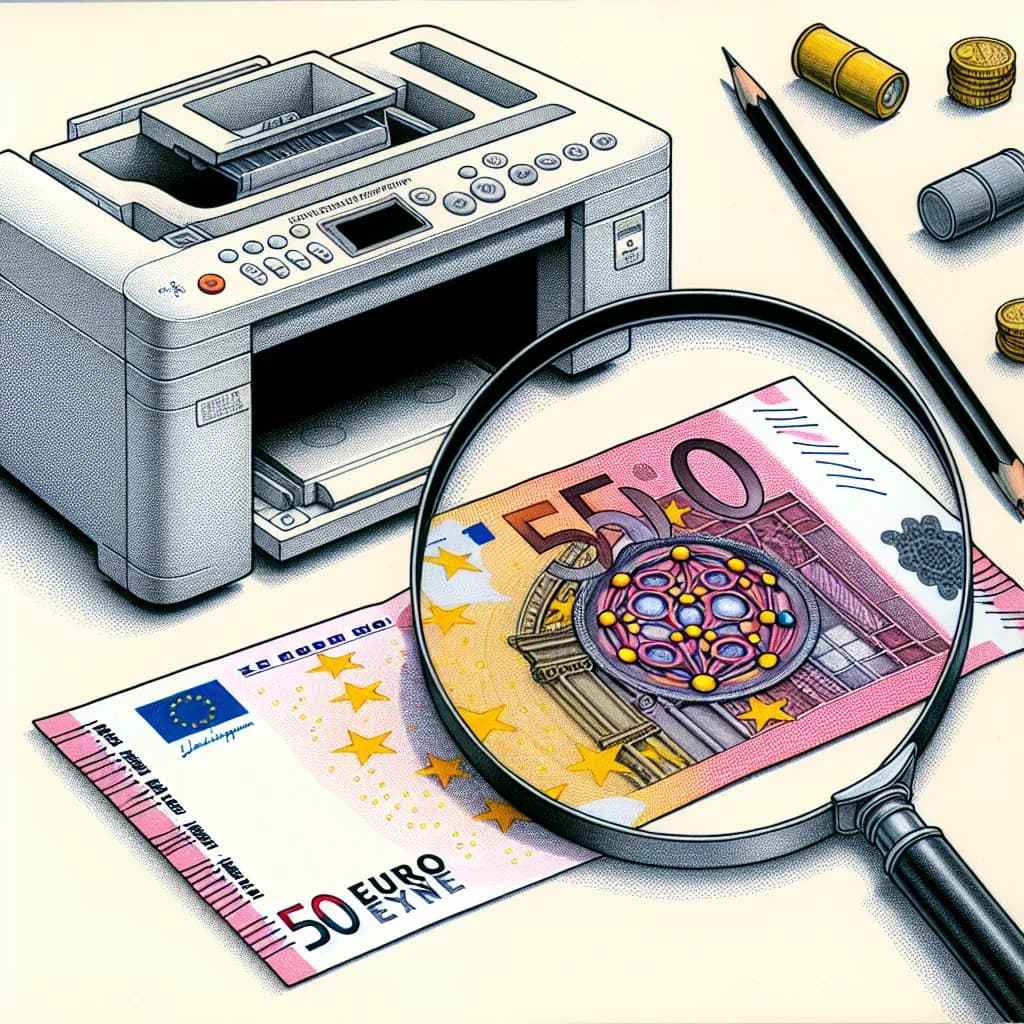
Your money is hiding a secret "star chart" designed to outsmart the world’s most advanced scanners. Discover how the mysterious EURion constellation acts as a silent, high-tech guardian that stops counterfeiters in their tracks the moment they press "copy."

Too Long; Didn't Read
Banknotes feature the EURion constellation, a specific pattern of five small circles, to prevent counterfeiting. Modern photocopiers and scanners are programmed to recognize this arrangement and will automatically block or disable the imaging process when it is detected on currency.
Hidden in Plain Sight: Why Banknotes Feature the EURion Constellation to Prevent Photocopying
Have you ever looked closely at a twenty-dollar bill or a ten-euro note and noticed a series of tiny, seemingly random circles scattered across the design? At first glance, they might look like a simple aesthetic choice or part of a background pattern. However, these small shapes are actually a sophisticated security feature known as the EURion constellation. This hidden pattern plays a critical role in global financial security by acting as a "do not copy" signal to modern hardware. This blog post explores why banknotes feature the EURion constellation and how this clever design prevents unauthorized color photocopying to keep currency secure.
What is the EURion Constellation?
The EURion constellation is a specific pattern of five small circles found on the banknotes of over 50 different currencies worldwide. The circles are typically about 1 millimeter in diameter and are often colored yellow, green, or orange. While they may appear scattered, they are arranged in a very specific geometric configuration.
The name "EURion" is a portmanteau of the Euro (the first currency on which the pattern was widely noticed) and the constellation Orion, which the pattern resembles. In technical circles, it is often referred to as "Omron rings," named after the Japanese corporation Omron that is credited with developing the technology.
The Science of Prevention: How it Works
The primary purpose of the EURion constellation is to prevent "casual counterfeiting." This refers to individuals using high-quality home or office color photocopiers and scanners to create fraudulent currency.
When a modern digital photocopier scans a document, its internal software quickly analyzes the image for specific markers. If the device detects the unique geometric arrangement of the EURion circles, it will automatically trigger a security response. Depending on the machine, the result might be:
- A complete refusal to scan or print the document.
- The output of a completely black or blank page.
- The appearance of an error message directing the user to a website concerning counterfeit deterrence.
According to research conducted by computer scientist Markus Kuhn at the University of Cambridge, who first identified the pattern in 2002, the detection happens within the firmware of the device. This means the security check occurs at a hardware level before the image is even fully processed by a computer.
A Global Standard for Security
The implementation of the EURion constellation is a testament to international cooperation in the fight against financial crime. While the European Central Bank was an early adopter, the pattern is now found on:
- The United States Dollar (notably on the $5 bill and higher denominations).
- The British Pound Sterling.
- The Japanese Yen.
- The Canadian and Australian Dollars.
The Central Bank Counterfeit Deterrence Group (CBCDG), an organization of over 30 central banks, works with hardware manufacturers to ensure this technology is integrated into consumer electronics. By standardizing this "hidden" code, central banks make it significantly harder for unauthorized individuals to replicate currency using widely available technology.
Beyond the Rings: The Counterfeit Deterrence System (CDS)
While the EURion constellation is a hardware-based solution, it is often used in conjunction with the Counterfeit Deterrence System (CDS). Developed by the CBCDG, the CDS is a software-based technology that prevents image-editing software, such as Adobe Photoshop, from opening or processing high-resolution images of banknotes.
While the EURion pattern is a physical design on the note, the CDS uses more complex algorithms to detect currency features. Together, these systems create a multi-layered defense. If a counterfeit hunter manages to bypass the hardware scan, the software layer provides a second line of defense to stop the digital manipulation of currency images.
Conclusion
The EURion constellation is a fascinating example of how central banks stay one step ahead of technology. By hiding a simple geometric pattern in plain sight, authorities have created a nearly universal barrier against unauthorized photocopying. These tiny circles demonstrate that the most effective security features are often those that the average person never even notices.
Understanding why banknotes feature the EURion constellation highlights the complexity of modern currency design. It isn't just about ink and paper; it is about sophisticated digital communication between a piece of currency and the machines we use every day. As digital reproduction technology continues to advance, the silent vigilance of the EURion constellation remains a vital tool in maintaining the integrity of global finance.


