
Why do barnacles permanently glue their heads to things and then eat with their feet
It sounds like the punchline to a bizarre evolutionary joke, but for the barnacle, cementing its head to a rock and eating with its feet is actually a stroke of survival genius.

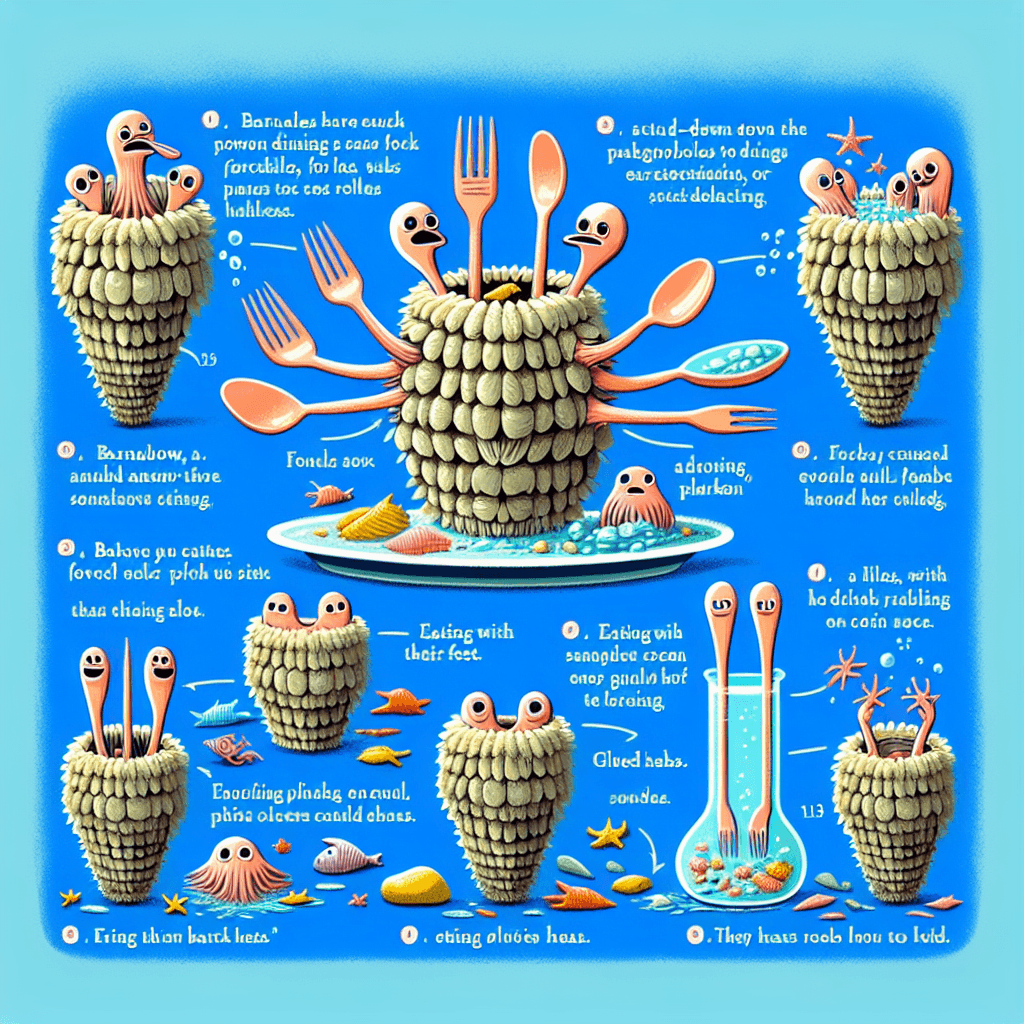
Too Long; Didn't Read
TLDR: Barnacles glue their heads down to build a permanent, safe house. Since they can't move to chase food, they stick their feathery feet out to catch and filter plankton from the water to eat.
The Upside-Down Life: Why Do Barnacles Permanently Glue Their Heads to Things and Then Eat with Their Feet?
Walk along any rocky coastline, and you'll see them: countless small, conical shells cemented to rocks, piers, and even the hulls of ships. These are barnacles, one of the most common and misunderstood creatures of the sea. While they might look like simple mollusks, they are actually crustaceans, related to crabs and lobsters. Their life strategy, however, is one of the most peculiar in the animal kingdom. They spend their entire adult lives glued head-first to a single spot, using their feet to catch their food. This post will delve into the fascinating evolutionary reasons behind this seemingly bizarre, yet highly successful, way of life.
From Free Swimmer to Permanent Resident
A barnacle’s life doesn’t begin in a fixed position. It starts as a free-swimming larva, known as a nauplius, which hatches from an egg and drifts with the plankton. After molting several times, it develops into a more complex cyprid larva. The cyprid's one and only mission is to find the perfect permanent home.
Using a pair of specialized antennae on its head, the cyprid larva "tastes" and "feels" various surfaces. It's looking for the ideal combination of factors:
- Surface texture: Is it stable and suitable for attachment?
- Water flow: Is there enough current to bring food?
- Chemical cues: Are there other barnacles nearby? (Clustering can be good for reproduction.)
This is the most critical decision of the barnacle's life, as once it chooses, there is no going back.
A Head-First Commitment: Nature's Superglue
Once the cyprid larva finds its spot, it performs an extraordinary act. It secretes a powerful, fast-curing cement from glands located at the base of its antennae. This is, quite literally, gluing its head to the surface. The strength of this glue is legendary in marine biology. It’s a complex protein-based substance that is so effective and waterproof that scientists have long studied it for potential applications in medicine and dentistry.
But why make such a permanent, head-first commitment? The answer lies in survival. The intertidal zone is a violent, chaotic environment with crashing waves and strong currents. By permanently anchoring itself with one of nature’s strongest adhesives, the barnacle ensures it won't be washed away. It trades mobility for the ultimate security. After cementing itself, the barnacle undergoes its final metamorphosis, building the hard calcium carbonate plates that form its protective outer shell.
Dining with Your Feet: The Art of Suspension Feeding
Now firmly attached and encased in its fortress, the barnacle faces a new challenge: how to eat? Since its mouth is located inside the shell, cemented against the rock, it must rely on another part of its body. This is where its legs come in.
The barnacle's legs, known as cirri, are feathery appendages that are perfectly adapted for filter-feeding. When the tide is in, the barnacle opens the plates at the top of its shell and extends its cirri into the water. It then rhythmically beats them, combing the water for microscopic food particles like plankton and detritus. When the cirri trap food, they retract back into the shell, delivering the meal directly to the mouth. This method of "kicking" food into its mouth is a highly efficient way to feed while remaining stationary, making the most of the nutrient-rich water flowing past.
A Masterclass in Adaptation
The barnacle’s life cycle may seem strange, but it is a brilliant evolutionary solution to living in a high-energy marine environment. By sacrificing mobility for a secure, permanent home, the barnacle has thrived for millions of years. Its decision to glue its head to a surface and then eat with its feet is not a bizarre fluke but a masterclass in adaptation. So, the next time you see these tiny cones on a rock, take a moment to appreciate the complex and fascinating upside-down life being lived inside.


