Why do cashews grow on the bottom of cashew apples inside a toxic shell that must be roasted off
Hidden beneath a vibrant fruit lies a nut encased in a caustic shell so toxic it requires a literal trial by fire before it’s safe to eat. Discover the bizarre, high-stakes biology that makes the cashew nature’s most dangerous snack.

Too Long; Didn't Read
Cashews grow outside the fruit in toxic shells as an evolutionary defense to protect the seeds from predators. The shells contain urushiol, the same caustic chemical found in poison ivy, which must be neutralized through high-heat roasting to make the nut safe for human consumption.
Nature’s Hidden Defense: Why Do Cashews Grow on the Bottom of Cashew Apples Inside a Toxic Shell?
Have you ever wondered why you can buy peanuts, walnuts, or sunflower seeds in their shells, but never cashews? The answer lies in a fascinating and somewhat hazardous botanical secret. Unlike most nuts, the cashew is a master of self-defense, encasing its prized seed in a chemical armor that can cause severe skin reactions. Every "raw" cashew you see at the grocery store has actually been meticulously processed and heat-treated to ensure it is safe for consumption.
But why does this plant go to such extreme lengths to protect its seed? Understanding why do cashews grow on the bottom of cashew apples inside a toxic shell that must be roasted off requires a look into evolutionary biology and the plant’s unique reproductive strategy. This blog post explores the anatomy, chemistry, and processing of the cashew to reveal the science behind one of the world's most peculiar snacks.
The Unusual Anatomy: Apple vs. Nut
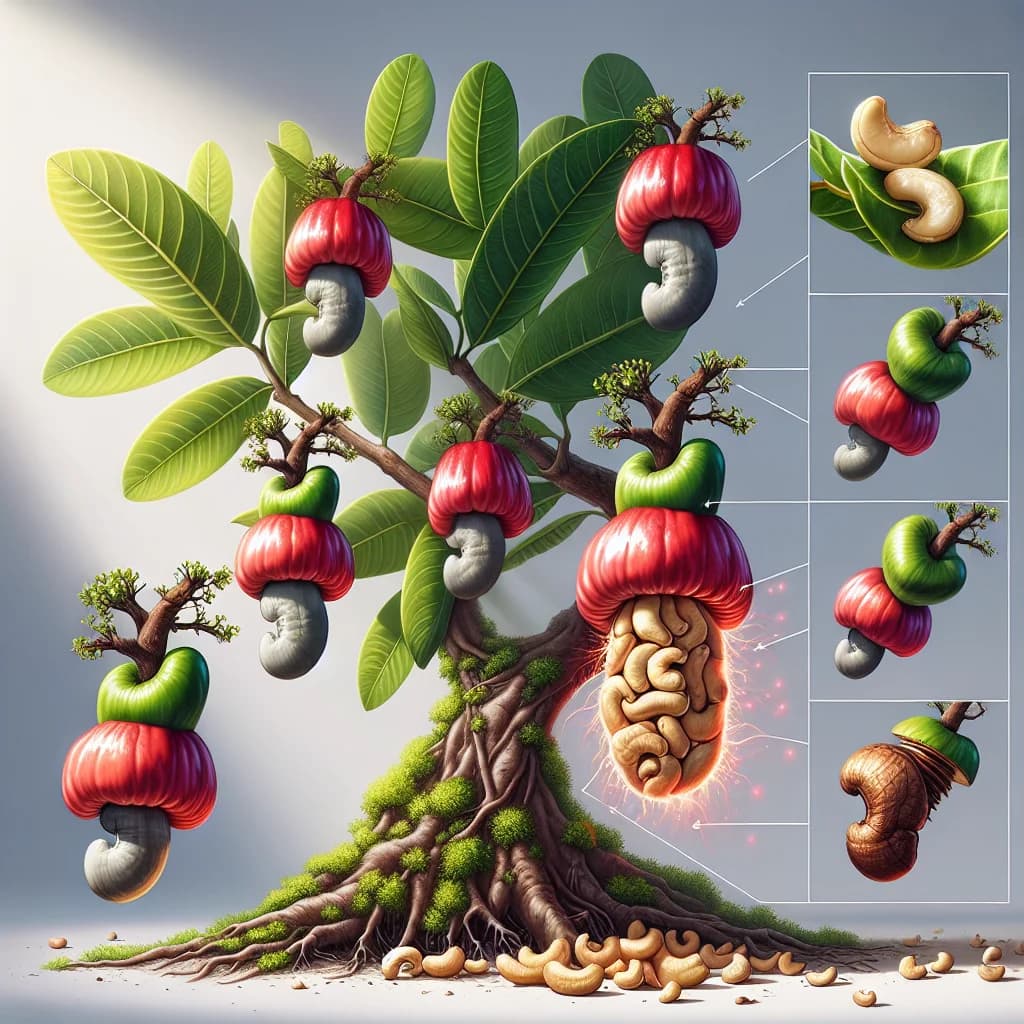
To understand the cashew, one must first distinguish between the two parts of the plant: the cashew apple and the cashew nut. Botanically known as Anacardium occidentale, the cashew tree produces a fleshy, pear-shaped structure called the "cashew apple." However, this is actually a "pseudofruit" or accessory fruit.
The true fruit of the tree is the kidney-shaped drupe that hangs from the bottom of the apple. Inside this drupe is the cashew seed—what we call the "nut." This growth pattern serves a dual evolutionary purpose:
- The Apple as an Attractant: The bright, fragrant cashew apple is designed to attract birds and monkeys. These animals eat the apple and often discard the hard, bitter nut, or they consume it and the seed passes through their system, aiding in dispersal.
- The Nut as a Survivor: By hanging outside the main fruit body, the seed remains distinct and protected by its own specialized casing.
The Toxic Barrier: Why the Shell is Dangerous
The most striking feature of the cashew is its protective shell. This shell consists of two layers with a potent phenolic resin between them known as Cashew Nut Shell Liquid (CNSL). This liquid contains urushiol, the same allergenic oil found in poison ivy, poison oak, and poison sumac.
According to botanical research, urushiol serves as a highly effective chemical deterrent against herbivores. If an animal attempts to gnaw through the shell, the toxic oil causes painful blistering and irritation in the mouth and digestive tract, teaching the predator to avoid the plant in the future. For humans, contact with the raw shell can cause severe contact dermatitis, which is why cashews are never sold in their shells to the public.
The Necessity of Roasting and Processing
Because of the presence of urushiol, the cashew must undergo a rigorous cleaning and heating process before it is edible. This is why the shell must be roasted off or treated with intense steam.
- Drying: After harvest, the drupes are sun-dried to reduce moisture.
- Roasting/Steaming: The nuts are subjected to high temperatures. This heat neutralizes the toxic urushiol, making the shell brittle and the internal nut safe to handle.
- Shelling: Once the toxins are neutralized, the outer shell is cracked open. This is often done by hand or specialized machinery, requiring extreme care to avoid contaminating the nut with any lingering oils.
- Peeling: A thin, papery skin (the testa) is removed from the nut after a second drying phase to ensure the final product is clean and palatable.
Why Evolution Chose This Path
Nature rarely invests energy into complex toxins without a reason. The cashew’s growth habit is a high-stakes survival strategy. By placing the seed inside a toxic fortress at the base of an edible lure, the plant maximizes its chances of being moved to new locations (via the apple) while minimizing the risk of the seed itself being destroyed by predators.
The toxic shell is an evolutionary "keep out" sign. While most nuts rely on a hard physical barrier alone, the cashew employs chemical warfare to ensure its next generation survives.
Conclusion
The journey of a cashew from the bottom of a tropical apple to your snack bowl is one of the most complex in the plant kingdom. The reason why do cashews grow on the bottom of cashew apples inside a toxic shell that must be roasted off is ultimately a matter of survival. Through a combination of botanical lures and chemical defenses, the cashew tree has successfully protected its seeds for millennia.
The next time you enjoy a handful of cashews, you can appreciate not just their flavor, but the intensive labor and fascinating science required to bring them safely to your table. If you are interested in sustainable agriculture or the chemistry of food, exploring the processing of "Anacardiaceae" family plants offers a wealth of insight into how we interact with nature’s most guarded treasures.