
Why do escalators have stiff brushes along the sides to keep your shoes from being sucked into the moving gaps
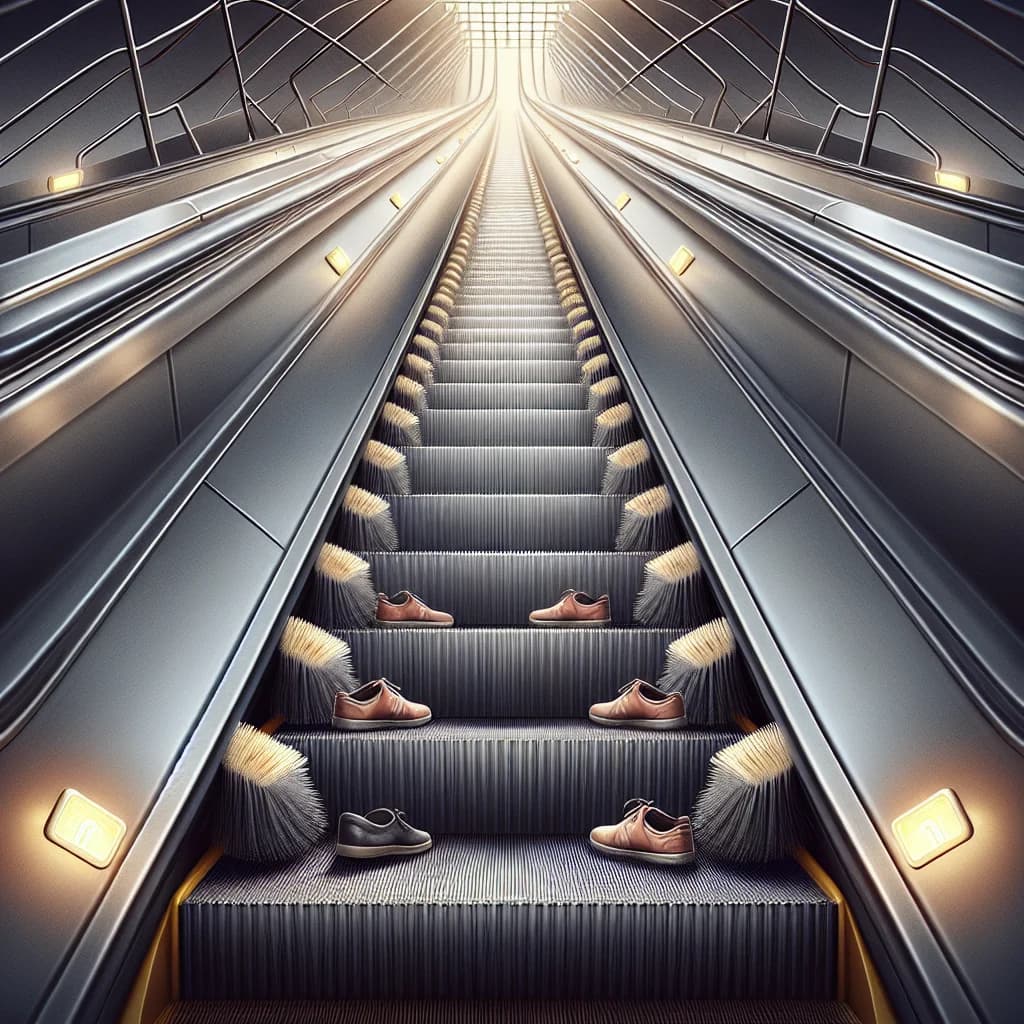
Think those escalator brushes are just there for a free shoe shine? Their real purpose is actually a life-saving engineering trick designed to prevent a terrifying mechanical mishap.

Too Long; Didn't Read
These brushes, known as skirt deflectors, are safety features designed to prevent shoes and loose clothing from getting caught in the gap between the moving steps and the side wall. They serve as a tactile warning to keep passengers away from the edges, significantly reducing the risk of entrapment.
Mind the Gap: Why Do Escalators Have Stiff Brushes Along the Sides to Keep Your Shoes from Being Sucked into the Moving Gaps?
You are standing on a moving staircase, gliding toward the next floor, when you notice them: two rows of stiff, black bristles lining the bottom of the side panels. While many commuters jokingly use them to buff their shoes, these "skirt brushes" serve a purpose far more critical than footwear maintenance. In fact, they are one of the most important safety features on modern transit systems. But why exactly are they there? Why do escalators have stiff brushes along the sides to keep your shoes from being sucked into the moving gaps? This post explores the engineering and safety logic behind these bristles, revealing how a simple design choice prevents thousands of potentially life-altering accidents every year. Understanding the "skirt brush" is essential for anyone who wants to navigate public spaces safely.
The Anatomy of an Escalator: The "Skirt" and the "Step"
To understand the brushes, one must first understand the "skirt." In escalator terminology, the skirt is the stationary side panel located next to the moving steps. Because the steps must move freely up and down the track, there is a necessary mechanical gap between the moving step and the stationary skirt.
This gap, though usually only a few millimeters wide, is the primary site of "entrapment." Entrapment occurs when an object—such as a shoelace, a loose hem of a dress, or the soft rubber of a sandal—gets caught in the narrow space where the step meets the side panel.
The Physics of Entrapment
When an object enters the gap, the friction between the moving step and the stationary wall can create a "pinching" effect. According to safety analysis from major elevator and escalator manufacturers, this friction can generate enough force to pull materials further into the machinery.
Specific materials and scenarios pose a higher risk:
- Soft Resins: Materials like the soft rubber used in flip-flops or "clog" style shoes are particularly vulnerable. They can deform easily under pressure, allowing them to be pulled into the narrow gap.
- Loose Clothing: Long skirts, scarves, or untied shoelaces can easily be drawn into the moving parts.
- Frictional Heat: As a shoe rubs against the stationary skirt, it generates heat, which can make rubber shoes even softer and more "sticky," increasing the likelihood of them being sucked into the mechanism.
Once a material is caught, the mechanical power of the escalator is often too strong for a passenger to pull their foot free, leading to serious injury.
How Brushes Act as "Skirt Deflectors"
The primary function of these stiff brushes, technically known as "skirt deflectors," is twofold: it is both a psychological deterrent and a physical barrier.
Tactile Warning
When your foot or clothing touches the stiff bristles, it provides immediate sensory feedback. Unlike the smooth metal of the skirt, which you might not notice yourself leaning against, the friction of the bristles is uncomfortable and noticeable. This alerts you that you are standing too close to the edge, prompting you to move your foot toward the center of the step.
Physical Obstruction
The stiffness of the bristles makes it difficult for soft objects to accidentally slide into the gap. They act as a physical barrier that keeps items away from the danger zone. By occupying the space just above the gap, the brushes ensure that objects are pushed back toward the safe area of the step.
Safety Standards and Global Implementation
The inclusion of these brushes isn't just a design trend; it is a requirement in many jurisdictions. For example, the American Society of Mechanical Engineers (ASME) and European safety standards (such as EN 115) have historically updated their codes to mandate or strongly recommend these deflectors to reduce injury rates and legal liability for building owners.
Before these brushes became standard in the late 20th and early 21st centuries, skirt-to-step entrapment was a much more frequent occurrence. Data from safety inspections suggest that the installation of skirt brushes has significantly reduced the incidence of side-gap accidents in major transit hubs and shopping centers worldwide.
Conclusion
The next time you step onto an escalator, remember that those stiff side brushes are there for your protection, not your fashion. By providing a physical and psychological barrier between your feet and the moving machinery, they prevent the "pinch point" accidents that once plagued escalator design. While they may seem like a minor detail, they are a triumph of simple, effective safety engineering. Staying mindful of the gap and keeping your feet away from the bristles ensures a safe ride for everyone. For those interested in urban safety, the lesson is clear: simple design changes can often be the most effective solutions to complex mechanical risks. Always remember to stand in the center of the step and keep your laces tied.


