Why do humans have a tiny pink fold in the inner corner of each eye
That tiny pink fold in the corner of your eye is actually a hidden relic of our evolutionary past. Discover the surprising secret of your "third eyelid" and what it reveals about your ancient ancestors.

Too Long; Didn't Read
The small pink fold in the corner of your eye is called the plica semilunaris. It is a vestigial remnant of a third eyelid, or nictitating membrane, which ancestors used to protect and moisten the eye. Today, it primarily functions to assist with tear drainage and allow for greater eye rotation.
Evolutionary Echoes: Why do humans have a tiny pink fold in the inner corner of each eye?
Have you ever looked closely in the mirror and wondered about the small, wedge-shaped bit of pink tissue tucked into the inner corner of your eye? While it may seem like a minor anatomical quirk, this feature—known as the plica semilunaris—is actually a fascinating link to our deep evolutionary past. It serves as a biological "living fossil" right on our faces. Understanding why do humans have a tiny pink fold in the inner corner of each eye requires looking beyond modern anatomy and into the history of vertebrate evolution. This blog post explores the origins, functions, and evolutionary significance of this curious ocular structure.
What is the Plica Semilunaris?
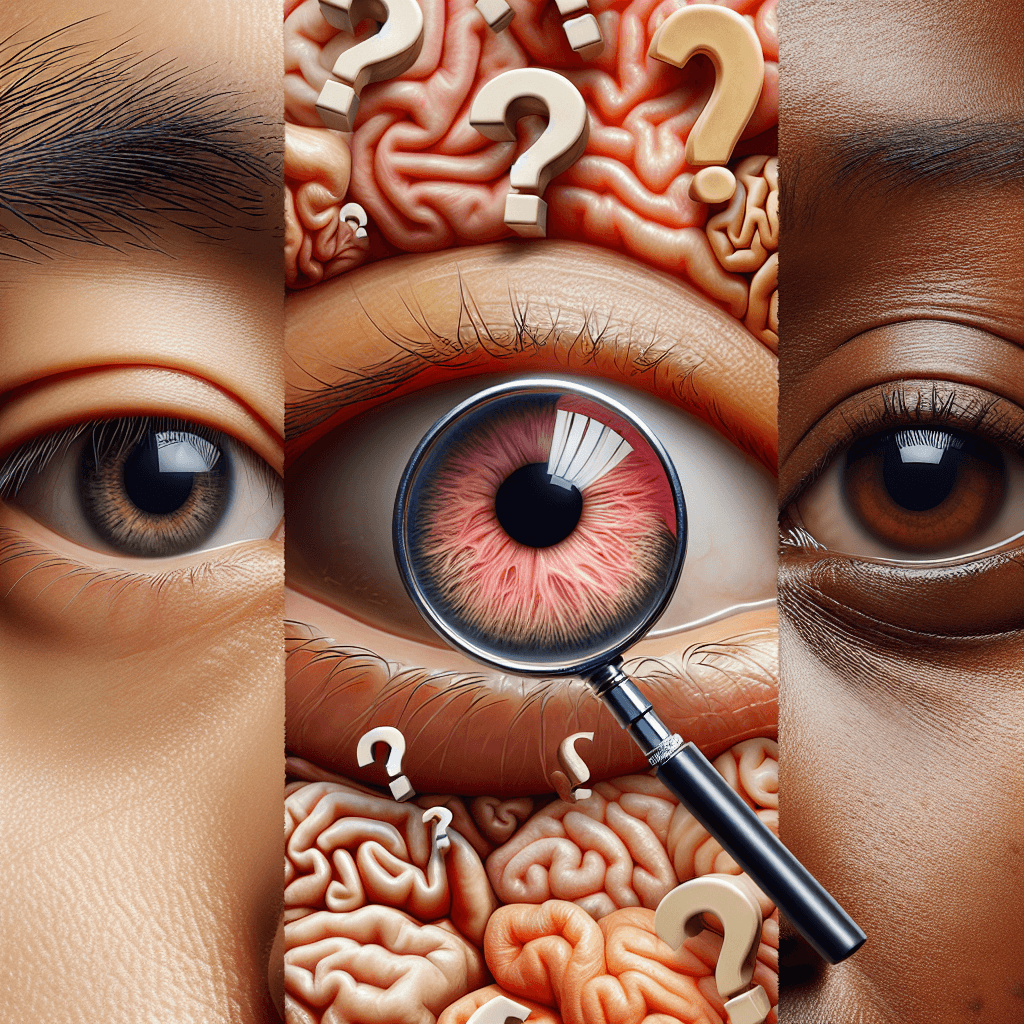
The plica semilunaris is a small fold of the conjunctiva (the thin, clear membrane covering the white of the eye) located at the inner canthus, or corner, of the eye. Its name is derived from Latin, meaning "half-moon fold," describing its characteristic crescent shape.
While it may appear to be just a bit of extra skin, it is composed of specialized tissue. According to anatomical research, the plica semilunaris contains fatty tissue, smooth muscle fibers, and even some glandular cells. Despite its complex composition, it is classified as a vestigial structure—an organ or part that has lost most or all of its original ancestral function through the process of evolution.
A Link to the "Third Eyelid"
The primary reason humans possess this fold is that it is a remnant of the nictitating membrane, commonly referred to as a "third eyelid."
In many other species, the nictitating membrane is a fully functional, translucent or transparent third eyelid that can be drawn horizontally across the eye. You can see this in action today in various animals:
- Birds and Birds of Prey: Use it to protect their eyes from wind and debris during high-speed flight.
- Sharks and Crocodiles: Use it to shield their eyes while hunting or moving through water.
- Cats and Dogs: Use it to keep the cornea moist and clear away dust while they sleep or blink.
In these animals, the membrane provides an extra layer of protection and lubrication without completely blocking vision. As human ancestors evolved and our environments changed, the need for a horizontal, sweeping eyelid diminished. Over millions of years, the structure shrank and became the immobile pink fold we see today.
Does the Plica Semilunaris Still Have a Function?
Although it is considered vestigial, the plica semilunaris is not entirely useless. Evolutionary biology suggests that when a structure persists, it often takes on secondary roles or maintains minor original functions. In humans, this tiny fold contributes to ocular health in several ways:
- Tear Drainage and Direction: The fold helps direct the flow of tears toward the lacrimal puncta—the tiny holes in the corners of your eyelids that drain fluid into the nasal cavity. This prevents tears from simply spilling over the cheeks.
- Debris Removal: It plays a role in sequestering foreign particles, such as dust or pollen. By helping to move these particles toward the inner corner, it facilitates the formation of "eye gunk" or "sleep," making it easier for us to remove debris from the eye.
- Maintaining Flexibility: The fold provides a bit of "slack" in the conjunctiva. This allows the eyeball to rotate more freely and extensively toward the nose without the tissue becoming too tight or restrictive.
Why Did We Lose the Third Eyelid?
Evolution is a process of "use it or lose it." Scientists believe that as primates evolved, our reliance on the nictitating membrane decreased due to our changing habitat and the development of other protective features. Humans developed highly sensitive, fringed eyelashes and an advanced blink reflex with the upper and lower eyelids that provided sufficient protection for our terrestrial lifestyle. Furthermore, as humans developed better manual dexterity, we gained the ability to manually remove irritants from our eyes, reducing the biological necessity for an automated "wiper" membrane.
Conclusion
The presence of the plica semilunaris serves as a compelling reminder of our place in the natural world. Why do humans have a tiny pink fold in the inner corner of each eye? Because we share a common ancestry with the birds, reptiles, and mammals that still use their third eyelids today. While it no longer sweeps across our vision to protect us from the elements, it remains a vital, albeit subtle, component of our tear-drainage system and eye mobility.
Understanding these small anatomical details helps us appreciate the complexity of human evolution. The next time you catch a glimpse of that pink fold in the mirror, remember that you are looking at a million-year-old piece of history that continues to support your vision every day.