Why do humans have chins when other primates do not
That bony point on your jaw is a feature unique to humans, separating us from every other primate—and scientists are still debating the surprising reason why.

Too Long; Didn't Read
TLDR: Humans are the only primates with chins, likely not for a specific purpose like chewing or speech, but as an accidental byproduct of our faces shrinking over evolutionary time, which left the bottom of the jaw protruding.
The Chin Enigma: Why Do Humans Have Chins When Other Primates Do Not?
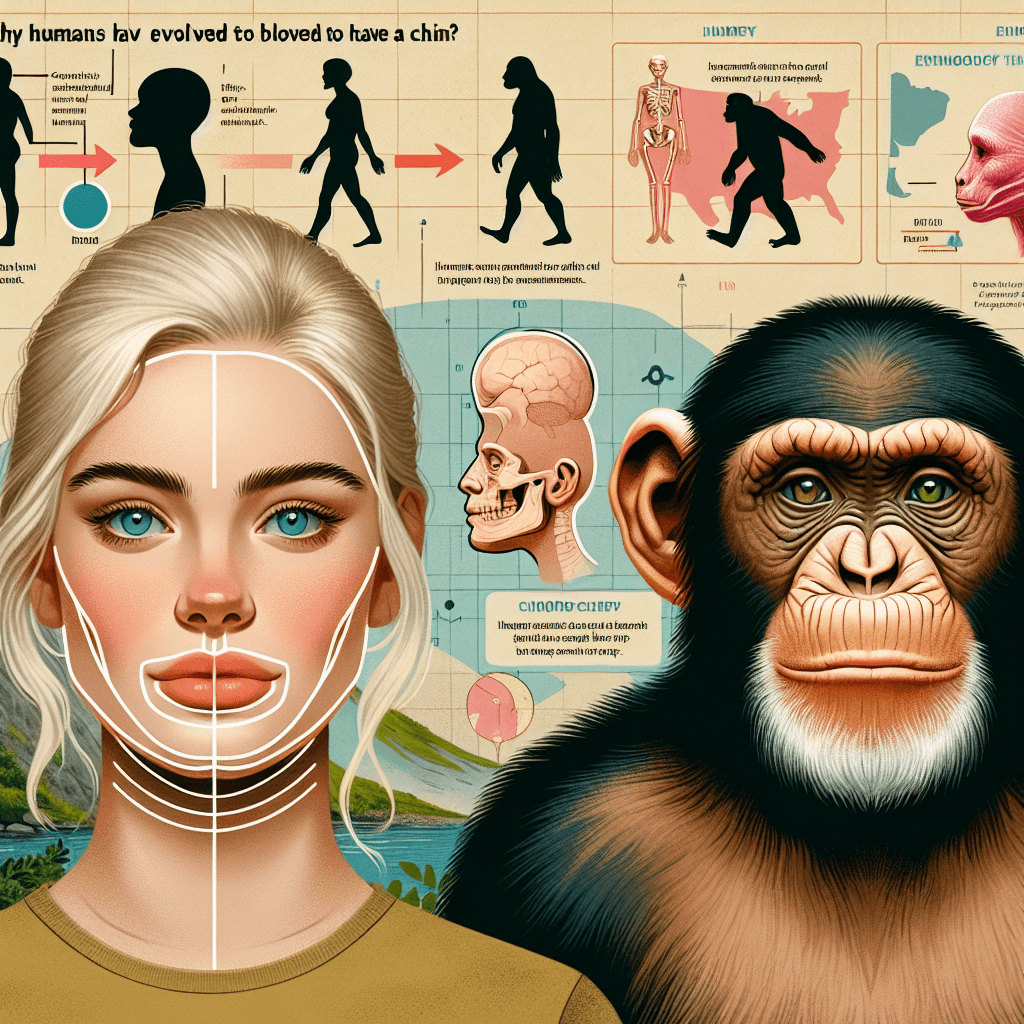
Look in the mirror. Below your lips is a feature you see every day but likely take for granted: your chin. Now, picture our closest living relatives—chimpanzees, gorillas, and orangutans. Despite our shared ancestry, you'll notice a key difference in their facial structure. They have a receding lower jaw, while we possess a prominent, jutting chin. This bony protrusion, known as the mental protuberance, is a uniquely human trait, not even present in our extinct relatives like Neanderthals. This raises a fascinating evolutionary question: why are Homo sapiens the only primates with a true chin? This post will explore the leading scientific theories that attempt to solve this curious facial mystery.
What Makes a Chin a Chin?
Before diving into the "why," it's important to understand the "what." A true chin isn't just the bottom of your face. It's the specific, forward-pointing bony bump on the lower part of the mandible (your jawbone). While other animals have lower jaws, none have this distinct structure. Even Neanderthals, our close evolutionary cousins, had a jaw that sloped backward from their teeth, lacking the forward projection that defines our chin. This anatomical feature appeared relatively recently in the human lineage, solidifying its place as a hallmark of our species.
The Leading Hypotheses: An Evolutionary Whodunit
For decades, scientists have proposed various explanations for the chin's existence. While some early ideas have fallen out of favor, they paved the way for our current understanding.
The Discarded Theories: Chewing and Speech
Two of the earliest hypotheses linked the chin to function.
- The Chewing Hypothesis: This idea suggested the chin evolved to reinforce the jaw against the mechanical stresses of chewing. However, biomechanical studies have largely debunked this. Research, including work from scientists at Duke University, has shown that the greatest stress during chewing occurs elsewhere in the jaw. The chin is in a surprisingly low-stress area, making it an inefficient buttress.
- The Speech Hypothesis: Another theory proposed that the chin developed to anchor the tongue muscles necessary for complex human speech. While plausible at first glance, this idea also lacks strong evidence. The critical muscles for speech attach higher up on the inside of the jaw, and there is no clear biomechanical need for a chin to support them.
The Current Front-Runner: An Accidental Byproduct
The most widely accepted explanation today suggests the chin is not an adaptation for a specific purpose at all. Instead, it’s likely an evolutionary accident—a byproduct of another major change in our skull: the shrinking of our faces.
As early humans evolved, several factors led to a smaller, flatter facial structure. The invention of cooking and the use of tools made food softer and easier to process, reducing the need for large, powerful teeth and jaws. Simultaneously, our brains were getting bigger, causing the skull to reshape.
The theory goes that as our dental arch and upper jaw shrank and pulled back, the lower portion of our mandible did not recede at the same rate. This differential reduction left a piece of bone jutting out. In essence, our chin is an anatomical "leftover" from our evolutionary past. It's what scientists call a "spandrel"—a feature that arises as a consequence of other evolutionary changes, not because it offers a direct survival advantage.
A Secondary Idea: Sexual Selection
Another compelling, though less supported, hypothesis is that the chin evolved through sexual selection. Just as a peacock's tail signals fitness to potential mates, a prominent chin might have served as an honest signal of health and hormonal fitness. The shape of the chin differs subtly between sexes, with males often having squarer, more robust chins, which could be linked to testosterone levels. While this theory is intriguing, it doesn't fully explain why both men and women have chins, unlike many other sexually selected traits that are exclusive to one sex. It's more likely that if sexual selection played a role, it was secondary to the primary cause of facial reduction.
Conclusion: A Mark of Modern Humanity
The mystery of the human chin highlights a crucial lesson in evolution: not every trait exists for a direct, functional purpose. While early theories sought a specific job for the chin, from aiding speech to strengthening our bite, the most compelling evidence points to it being a simple consequence of our shrinking face. As our diet, tools, and brains changed, our entire skull was remodeled, and the chin emerged as a byproduct of that grand architectural shift. So, the next time you see your reflection, remember that your chin is more than just a facial feature. It’s an evolutionary echo, a subtle yet profound clue that tells the story of our journey to becoming uniquely human.