Why do koalas have fingerprints so similar to humans that they can confuse crime scene investigators
Could an adorable marsupial pull off the perfect crime? Discover the mind-bending evolutionary fluke that makes koala fingerprints so indistinguishable from ours they’ve actually baffled forensic experts at real-world crime scenes.

Too Long; Didn't Read
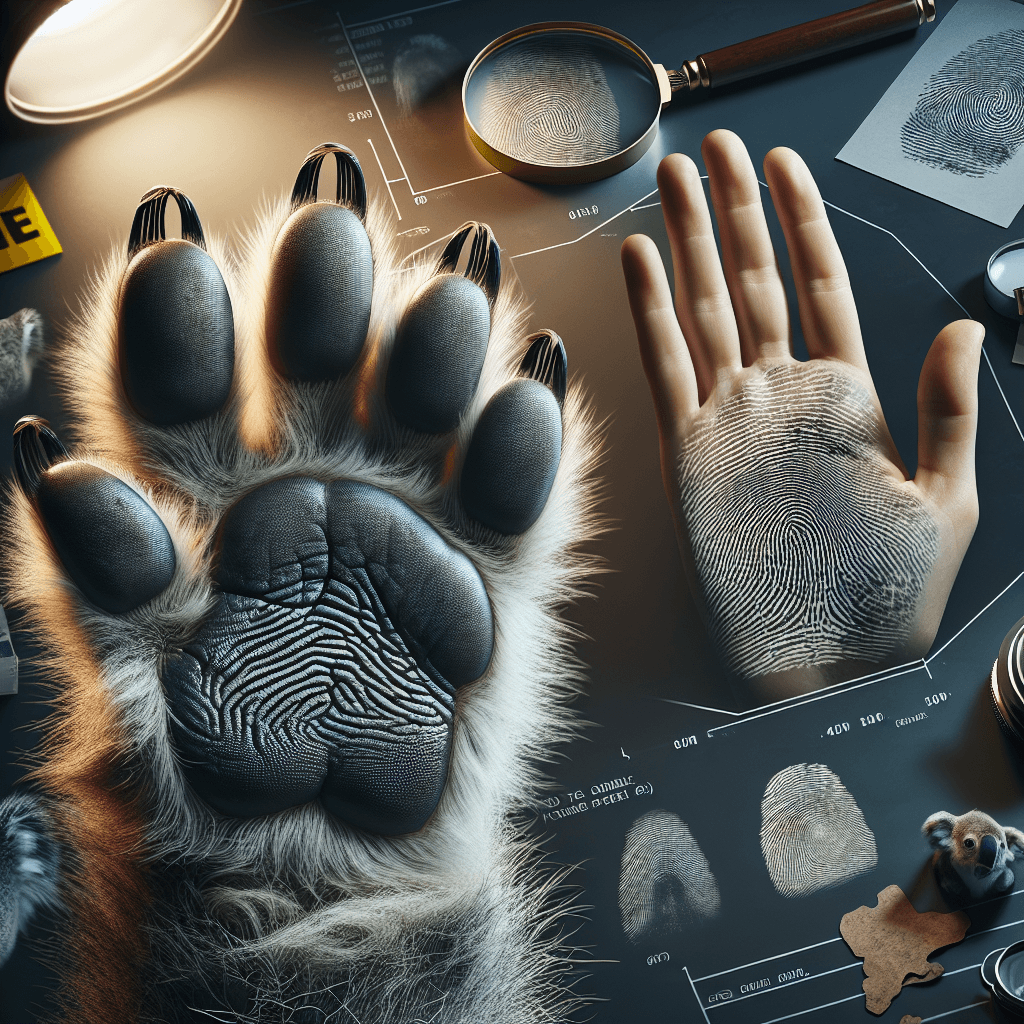
Koalas evolved fingerprints nearly identical to humans through convergent evolution, likely as an adaptation to improve their grip while climbing and handling food. These ridges are so similar in detail that they can be indistinguishable from human prints even under a microscope, potentially leading to forensic confusion at crime scenes.
The Marsupial Mystery: Why Do Koalas Have Fingerprints So Similar to Humans That They Can Confuse Crime Scene Investigators?
Imagine a forensic team meticulously scanning a crime scene for evidence, only to find a set of fingerprints that look perfectly human, yet belong to a fuzzy, eucalyptus-eating marsupial. While it sounds like the plot of a bizarre detective novel, it is a biological reality. Koalas are among the few non-primate animals in the world to possess unique, individual fingerprints.
The similarity is so profound that even under a high-powered microscope, trained experts find it difficult to distinguish between the ridges of a human finger and those of a koala. This phenomenon raises a fascinating scientific question: how did a creature separated from humans by 70 million years of evolution end up with nearly identical physical traits? This blog post will explore the science of convergent evolution and the functional reasons why koalas share this specialized characteristic with us.
The Science of Scrutiny: How Similar Are They?
Fingerprints, or dermatoglyphs, are the patterns of ridges and valleys on the tips of the fingers. In humans, these patterns are unique to every individual, making them a cornerstone of forensic science. Surprisingly, researchers at the University of Adelaide in Australia discovered that koala fingerprints possess the same loops, whorls, and arches found in human prints.
The complexity of these prints is what makes them so deceptive. According to biological studies, the ridge patterns on a koala’s paws are so intricate that even forensic investigators would struggle to differentiate them from human prints without a DNA sample. The primary difference lies not in the pattern itself, but in the fact that the entire koala palm is not covered in ridges—only the fingertips and certain pads of the paws.
Convergent Evolution: A Case of Identical Solutions
The reason for this striking similarity is a process known as convergent evolution. This occurs when two unrelated species independently evolve similar traits because they are adapting to similar environmental pressures or needs.
Humans and koalas last shared a common ancestor roughly 70 million years ago. Since then, our evolutionary paths have been vastly different—humans evolved as placental mammals and primates, while koalas evolved as marsupials. Despite this massive gap, both species developed fingerprints. This suggests that fingerprints are not a trait inherited from a shared ancestor, but rather a "biological tool" that both species needed to solve a specific problem.
The Practical Purpose: Why Koalas Need Prints
Why would a koala need fingerprints? Biologists believe the development of these ridges is closely tied to the koala’s unique lifestyle and diet.
- Enhanced Grip: Koalas spend the majority of their lives climbing slippery eucalyptus trees. The ridges on their fingertips increase friction, allowing them to grasp branches more securely.
- Tactile Sensitivity: Eucalyptus leaves are the primary food source for koalas, but they are picky eaters. They need to feel the texture and quality of the leaves before consuming them. The ridges in fingerprints are thought to enhance the sensitivity of the skin, allowing the brain to process fine textures and vibrations.
- Biomechanics of Grasping: Unlike many other climbing animals that use claws for traction, koalas use a "grasping" mechanism similar to primates. This specific mechanical action—reaching, feeling, and gripping—is likely what triggered the evolutionary development of dermatoglyphs.
The Forensic Headache: Could a Koala Frame a Human?
The idea that a koala could confuse a crime scene investigator is often cited as a quirk of nature, but it carries a grain of truth. While it is highly unlikely that a koala would be present at a suburban burglary, the theoretical risk exists in areas where humans and koalas coexist.
Police in Australia are aware of this biological oddity, though no major criminal case has been "thwarted" by a koala to date. The primary reason we aren't seeing koalas in lineups is simple geography and behavior; however, the fact remains that their prints are the only non-primate prints that could realistically be mistaken for our own in a laboratory setting. This serves as a humbling reminder to forensic scientists that nature is full of unexpected "look-alikes."
Conclusion
The fact that koalas have fingerprints so similar to humans that they can confuse crime scene investigators is more than just a fun piece of trivia; it is a masterclass in how evolution works. Through the process of convergent evolution, nature "invented" the fingerprint twice—once for primates and once for a specific group of tree-dwelling marsupials—to provide the same benefits of grip and sensitivity.
Understanding these similarities helps scientists better understand how physical traits are shaped by environment and behavior rather than just ancestry. The next time you see a koala, remember that beneath those claws are fingertips that are, quite literally, almost human. It is a remarkable testament to the efficiency of nature’s designs.