
Why do luxury perfumes contain a waxy substance called ambergris produced in the intestines of sperm whales
Your favorite luxury scent might contain a secret ingredient forged in the belly of a whale and aged by the ocean for decades. Discover why "floating gold" remains the most bizarrely beautiful paradox—and the most expensive secret—in the world of high-end perfumery.

Too Long; Didn't Read
Ambergris is a rare, waxy substance produced by sperm whales that serves as a high-end perfume fixative. It is prized for its ability to make fragrances last longer on the skin and its unique, complex aroma that enhances other scents.
Floating Gold: Why Do Luxury Perfumes Contain a Waxy Substance Called Ambergris Produced in the Intestines of Sperm Whales?
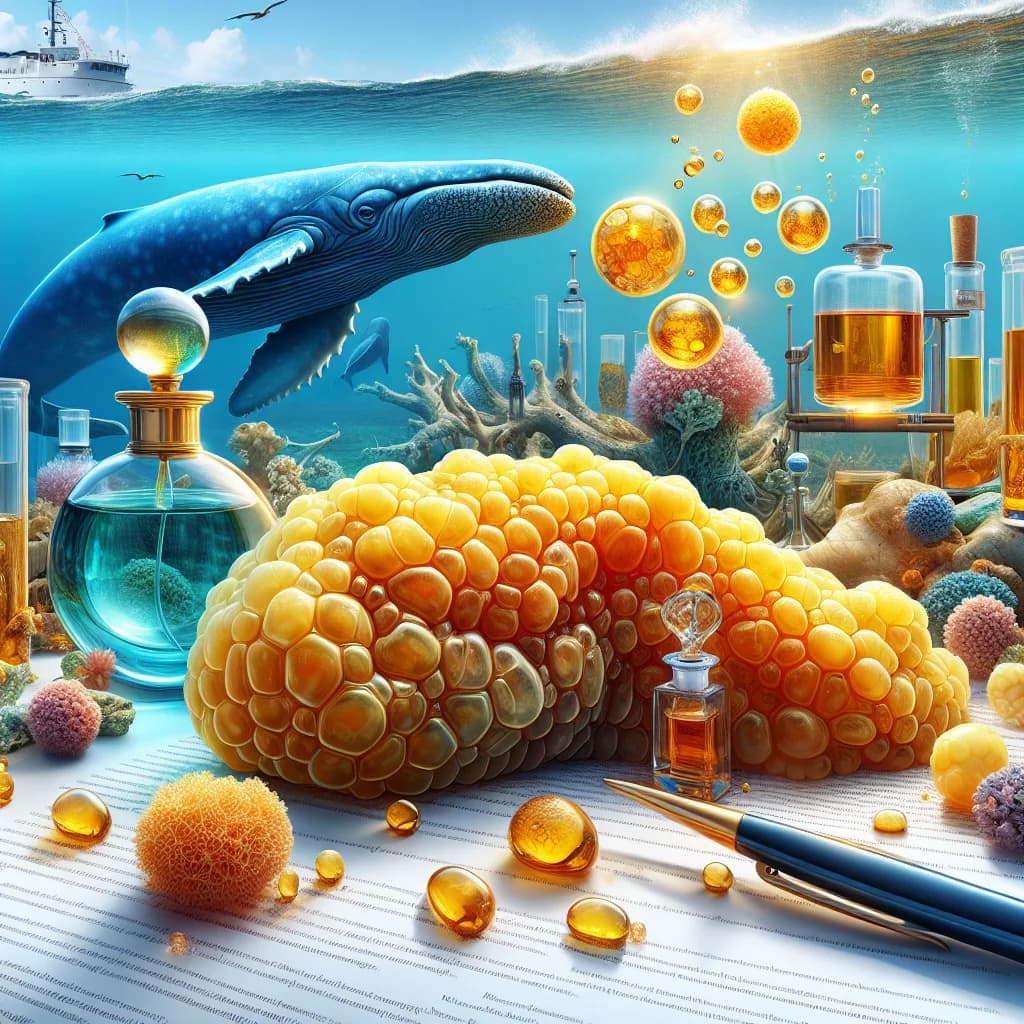
Imagine walking along a shoreline and stumbling upon a grey, waxy lump that smells faintly of the ocean and old wood. To the untrained eye, it looks like sea-washed waste; to a master perfumer, it is "floating gold." This substance is ambergris, one of the most expensive and mysterious ingredients in the world of high-end fragrance. Despite its unappealing origin within the digestive tract of a marine giant, it has remained a staple of luxury perfumery for centuries. But why do luxury perfumes contain a waxy substance called ambergris produced in the intestines of sperm whales? This post explores the biological necessity, the chemical transformation, and the unparalleled olfactory benefits that make this rare material so coveted by brands like Chanel and Creed.
The Biological Origin: From Irritant to Protection
The journey of ambergris begins deep in the ocean. Sperm whales primarily feed on cephalopods, such as giant squid. While the soft tissues of the squid are easily digested, their hard, sharp chitinous beaks are not. To protect its internal organs from these sharp objects, the whale’s bile ducts secrete a fatty, waxy substance that coats the beaks, easing their passage through the digestive system.
While most of this mixture is eventually expelled, in a small percentage of whales (estimated at only 1% to 5%), the mass remains in the distal or lower portion of the intestines. Over time, it becomes a solid, compacted mass. Contrary to popular myth, ambergris is rarely "vomited"; it is typically passed through the bowels or released when the whale dies and decomposes.
The Alchemy of the Ocean
Freshly expelled ambergris is dark, soft, and possesses a strong, unpleasant fecal odor. However, it does not become a perfume ingredient overnight. It must undergo a years-long chemical transformation involving:
- Photo-oxidation: Exposure to sunlight breaks down the chemical components.
- Saltwater Exposure: The ocean’s salinity cures the substance, hardening it.
- Time: As it floats for decades, the substance lightens in color—turning silver-grey or white—and its scent evolves into something complex and sweet.
According to marine biologists, this "aging" process is what creates ambrein, an odorless alcohol that, when oxidized, produces the characteristic "amber" scent profile that perfumers adore.
Why Perfumers Prize Ambergris
The inclusion of ambergris in luxury scents isn't just about tradition; it serves two vital functional roles that synthetic alternatives struggle to replicate perfectly.
1. The Ultimate Fixative
In perfumery, a "fixative" is a substance used to lower the evaporation rate of the other fragrance notes. Because ambergris is a heavy, lipophilic molecule, it anchors volatile scent particles to the skin. This ensures that a luxury perfume lasts for 12 to 24 hours rather than fading after three.
2. Olfactory Complexity
While ambergris has its own scent, it acts as an "exaltant." It rounds out a fragrance, making other notes—like jasmine or sandalwood—appear more vibrant and multidimensional. Its own scent profile is often described as:
- Marine and salty (like seaweed).
- Earthy and musky.
- Sweet and tobacco-like.
The Modern Landscape: Ethics and Synthetics
Because the sperm whale is an endangered species, the trade of ambergris is heavily regulated. In the United States, the Endangered Species Act makes the possession or trade of ambergris legally murky, while in the EU and UK, "found" ambergris (beach-collected) is generally legal to trade under CITES (Convention on International Trade in Endangered Species) because it is considered an animal byproduct rather than a product of hunting.
Due to its rarity and price—often exceeding $20 per gram—most modern perfumes use a synthetic substitute called Ambroxan. However, niche "haute" perfumery houses still seek out natural ambergris for its incomparable depth and prestige.
Conclusion
The presence of ambergris in luxury perfumes is a testament to the strange intersection of biology and art. It is a substance born of a whale's digestive struggle, refined by decades of ocean currents, and finally utilized to give a fragrance its soul and longevity. While modern chemistry has provided us with Ambroxan, natural ambergris remains the gold standard for its fixative properties and unique marine aroma. Understanding why luxury perfumes contain a waxy substance called ambergris produced in the intestines of sperm whales allows us to appreciate the incredible complexity and history bottled in every drop of high-end scent. For those who value the rare and the raw, ambergris remains the ultimate symbol of natural luxury.


