
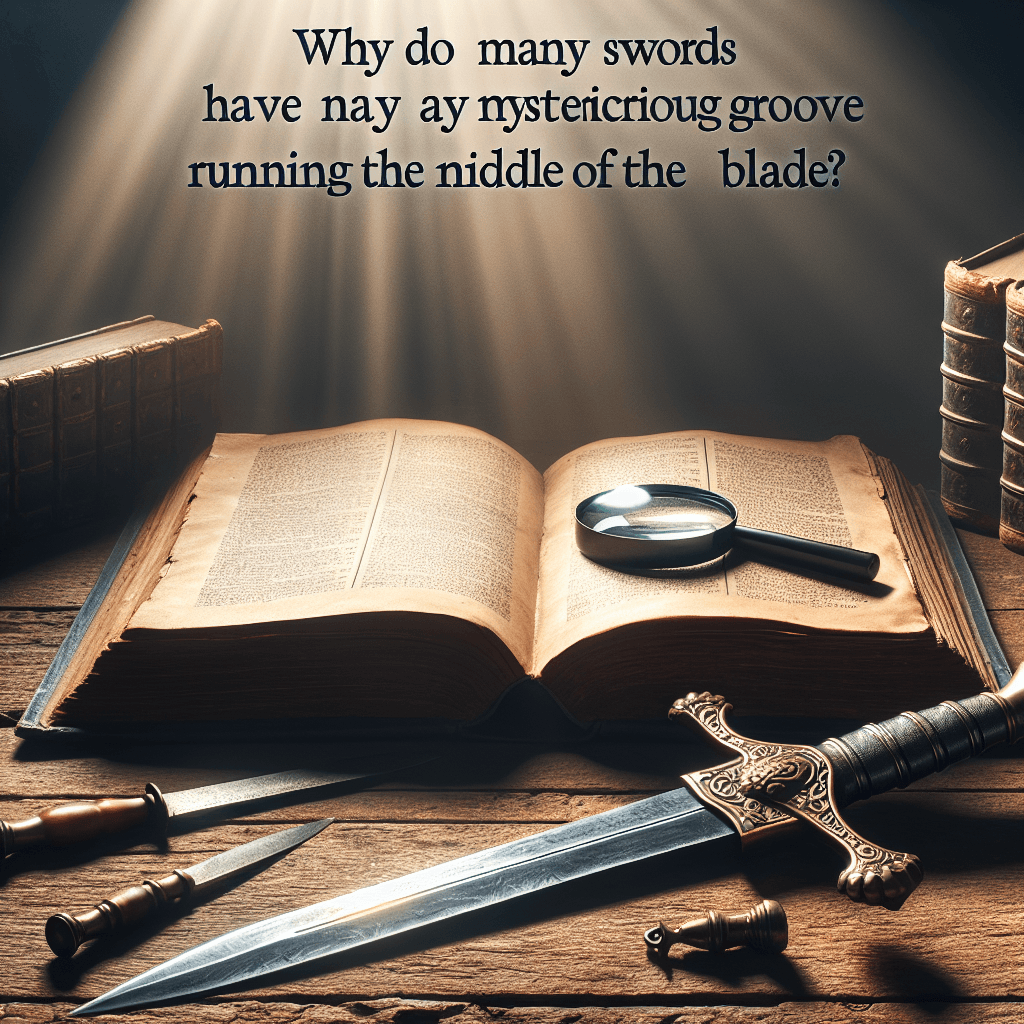
Why do many swords have a mysterious groove running down the middle of the blade
Often mistaken as a gruesome "blood groove," the real purpose of this channel is a brilliant secret of weapon design that made the blade both lighter and deadlier.

Too Long; Didn't Read
TLDR: The groove, called a fuller, is not a blood groove. It is an engineering feature designed to make the blade lighter and more maneuverable without sacrificing its strength, much like the I-beam used in construction.
The "Blood Groove" Myth: Why Do Many Swords Have a Mysterious Groove Running Down the Middle of the Blade?
Gaze upon the blade of a medieval longsword, a Roman gladius, or even a modern combat knife, and you'll often notice a distinct feature: a long, shallow channel running down the center. For decades, popular culture and sensationalist lore have given this feature a gruesome and misleading name—the "blood groove." The myth suggests this channel is designed to let blood flow out of a wound, breaking a suction effect and allowing for a quicker withdrawal of the blade. It’s a compelling, if grisly, image. However, the reality is far more an elegant feat of engineering than a macabre design. This post will unsheathe the truth, debunk the popular myth, and explore the real reasons behind this mysterious groove.
The Gory Myth: What the Groove Is NOT For
Before we delve into the science, let's put the "blood groove" myth to rest. The idea that a blade gets "stuck" in a body due to suction is a fundamental misunderstanding of physics and anatomy. There is no significant suction effect to overcome that a shallow groove would alleviate. Blades are removed through force, and the primary resistance comes from muscle, tissue, and bone, not a vacuum.
Historical bladesmiths and modern weapons experts agree that the bloodletting theory is pure fiction. The proper term for this groove is a fuller, and its purpose has everything to do with performance, balance, and craftsmanship—not gore.
The Fuller Truth: Engineering a Lighter, Stronger Blade
The real purpose of the fuller is a masterclass in material science and efficient design. Forging a fuller into a blade provides several critical advantages that transform a simple piece of steel into a nimble and effective weapon.
It's All About the I-Beam Principle
The most important function of the fuller is to lighten the blade without compromising its structural integrity. The best way to understand this is to think of an I-beam used in construction.
- An I-beam removes material from the center (the "web") where it contributes little to resisting bending forces.
- It leaves material concentrated at the outer edges (the "flanges"), which bear the most stress.
A sword with a fuller works on the exact same principle. The fuller hollows out the central part of the blade, removing significant weight. The thick, solid edges and spine remain, acting like the flanges of an I-beam. This design allows the blade to remain stiff and strong enough to withstand the stress of a parry or a powerful cut, all while being considerably lighter.
The Benefits of a Lighter Blade
Why is a lighter blade so important? The advantages are threefold:
- Speed and Agility: A lighter sword can be swung faster and stopped more quickly, allowing a warrior to react, attack, and defend with greater agility.
- Reduced Fatigue: Wielding a heavy sword for a prolonged period is exhausting. By reducing the blade's overall weight, a fuller helps conserve a fighter's stamina, a crucial factor in any real combat situation.
- Improved Balance: Removing mass from the blade shifts the sword's point of balance closer to the hilt. This makes the weapon feel less "blade-heavy" and more like an extension of the user's arm, granting them superior control and maneuverability.
More Than Just Function: A Mark of Craftsmanship
Creating a clean, symmetrical fuller was no easy task. It required immense skill from the blacksmith, who had to carefully forge or grind the channel into the blade. A well-executed fuller was a sign of a high-quality weapon and a testament to the smith's expertise. The shape and number of fullers also varied widely across cultures and time periods, from the wide, shallow fuller of a Viking sword to the multiple, narrow fullers on a rapier, adding to the blade's unique aesthetic and character.
Conclusion
The mysterious groove running down a sword's blade is not a grisly "blood groove" designed for gore but a sophisticated engineering feature known as a fuller. By removing unnecessary weight while preserving strength and stiffness—much like a modern I-beam—the fuller makes a sword lighter, faster, and better balanced. It stands as a testament to the incredible ingenuity of historical artisans who mastered the physics of their craft long before formal engineering disciplines existed. So, the next time you see a sword, look for the fuller and appreciate it not for the myth it inspired, but for the brilliant design principle it truly represents.


