
Why do many towns have a literal wrong side of the tracks
It wasn't just a metaphor—it was a literal line drawn by soot and steam, and the direction of the wind often determined who ended up on the "wrong" side.

Too Long; Didn't Read
TLDR: The side of the tracks downwind from the prevailing winds collected all the smoke and pollution from steam trains and factories. The wealthy lived on the cleaner upwind side, while poorer industrial workers and minority communities were concentrated on the polluted side, creating a socioeconomic divide that persists today.
The Dividing Line: Why Do Many Towns Have a Literal 'Wrong Side of the Tracks'?
The phrase "from the wrong side of the tracks" is a common idiom for someone from a poorer, less reputable part of town. But have you ever stopped to wonder about its literal origins? This isn't just a figure of speech; in countless towns and cities across the world, railroad tracks form a very real dividing line between wealth and poverty. This physical barrier, laid down over a century ago, became a powerful symbol and enforcer of social and economic segregation. This post will explore the historical, environmental, and economic factors that created these divisions, revealing how lines of steel permanently shaped the layout and legacy of our communities.
The Age of Steam and Prevailing Winds
The story begins in the 19th century with the explosion of the railroad. As tracks crisscrossed the landscape, they brought industry and opportunity, but they also brought noise, danger, and pollution. Early steam locomotives were powered by burning coal, which belched out thick clouds of smoke, soot, and ash. This created a significant environmental problem long before modern regulations existed.
The solution for the town's wealthier residents was simple: they built their homes upwind.
In the Northern Hemisphere, particularly in North America and Europe, the prevailing winds tend to blow from west to east. Consequently, the more affluent citizens established their neighborhoods on the west side of the tracks to avoid the constant barrage of industrial pollution. This left the land east of the tracks—the downwind side—for those with fewer options. This simple meteorological fact was a primary driver in establishing the initial divide. The "right" side of the tracks was literally the one with cleaner air.
Economic and Social Segregation
Once this initial pattern was set, economic forces reinforced it. The land downwind, plagued by soot and the noise of passing trains, was less desirable and therefore cheaper. This is where industries, factories, and warehouses were built, all needing proximity to the railway for shipping goods. Naturally, the working-class families who labored in these industries settled nearby in more affordable, densely packed housing.
The railroad tracks became more than just a path for trains; they evolved into a stark physical and psychological barrier.
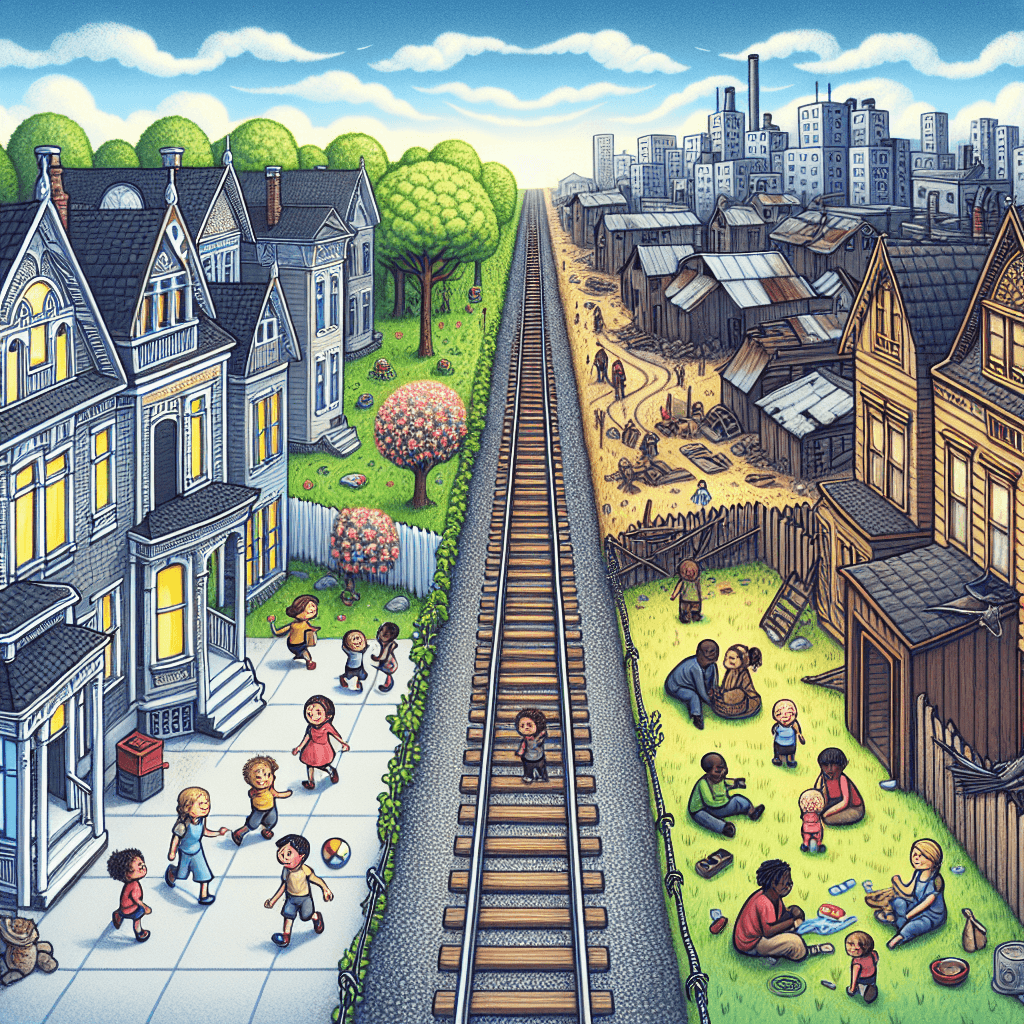
- The "Right" Side: Developed with larger homes, wider streets, more parks, and better-funded schools and public services. It was the home of business owners, managers, and professionals.
- The "Wrong" Side: Characterized by smaller houses on smaller lots, fewer amenities, and proximity to industrial zones. It became the enclave of factory workers, immigrants, and minority populations.
This physical separation limited social interaction between classes and created deeply entrenched social hierarchies that could last for generations.
A Legacy Cemented by Policy
The informal division created by the railroad was later solidified by official government policy in the 20th century. The practice of "redlining" is a key example. Beginning in the 1930s, the federal government created color-coded maps of cities to rate the investment risk of different neighborhoods. Areas on the "wrong side of the tracks," often home to minority and immigrant communities, were almost universally colored red, marking them as "hazardous." This designation made it nearly impossible for residents to get mortgages or loans for home improvement, starving these communities of capital and accelerating their decline. Zoning laws often further institutionalized the divide, designating the east side for industrial use while protecting the west side for single-family residential homes.
Conclusion
The "wrong side of the tracks" is far more than a simple metaphor. It’s a tangible piece of urban history rooted in the environmental realities of the Industrial Revolution. The direction of the wind dictated where the wealthy lived, and economic forces and discriminatory policies did the rest, cementing a pattern of segregation. This historical division helps explain the geographic inequality and concentrated poverty that persist in many towns and cities today. The steel rails that once promised connection and progress also became powerful instruments of division, leaving a legacy that modern communities are still working to overcome.


