
Why do most ceiling fans have a small switch to reverse the direction of the blades
That tiny, overlooked switch on your ceiling fan is the secret to slashing your energy bills and staying comfortable all year round. Discover why this one simple adjustment is the home hack you didn’t know you needed.

Too Long; Didn't Read
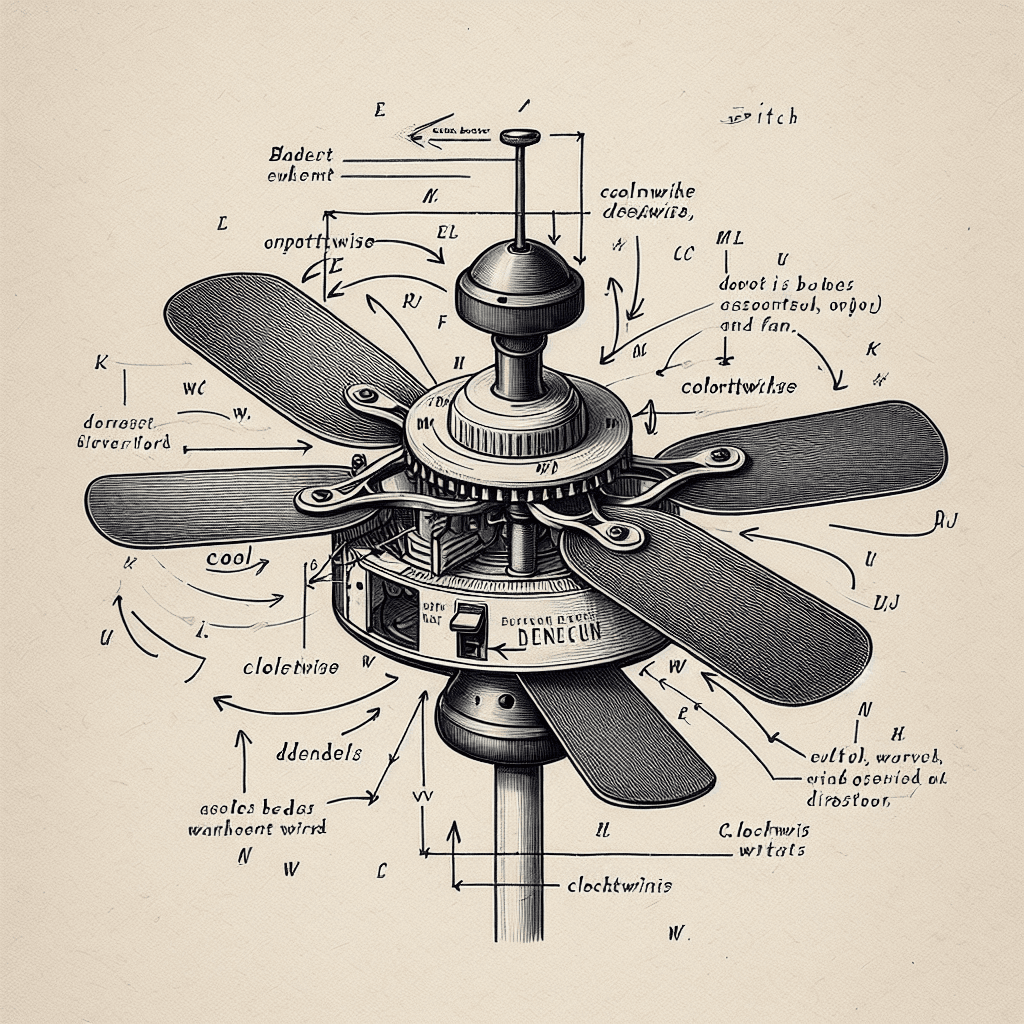
Ceiling fans include a reverse switch to optimize comfort and energy efficiency year-round. In the summer, blades rotate counter-clockwise to create a cooling downdraft. In the winter, reversing the direction to clockwise pulls cool air up and pushes warm air trapped at the ceiling back down into the room.
The Hidden Hack for Year-Round Comfort: Why Do Most Ceiling Fans Have a Small Switch to Reverse the Direction of the Blades?
Have you ever stood directly under a ceiling fan on a sweltering July afternoon, only to feel as though the air was barely moving? Or perhaps you’ve wondered why your fan seems to be a useless decorative piece during the winter months. Many homeowners are surprised to learn that their ceiling fan is not just a summer appliance, but a year-round climate control tool. The secret lies in a tiny, often overlooked component: the direction switch. But why do most ceiling fans have a small switch to reverse the direction of the blades? This small mechanical toggle is the key to managing household thermodynamics, allowing a single fixture to provide a cooling breeze in the summer and circulate trapped heat in the winter.
The Physics of Airflow: Summer vs. Winter
To understand the necessity of the reverse switch, one must first understand how blade pitch and rotation direction interact with physics. Ceiling fan blades are set at an angle. Depending on which way they spin, they either push air down or pull air up.
The Counter-Clockwise Downdraft (Summer Mode)
During the summer, most fans should rotate in a counter-clockwise direction (when looking up at the fan). This creates a direct, downward breeze known as the "wind chill effect."
- How it works: The angled blades slice through the air and push a column of air directly onto the occupants below.
- The Result: While the fan does not actually lower the room’s temperature, the moving air facilitates the evaporation of moisture on your skin, making you feel six to eight degrees cooler.
The Clockwise Updraft (Winter Mode)
When the temperature drops, the small switch on the motor housing becomes essential. By reversing the motor to rotate clockwise at a low speed, the fan creates an updraft.
- The Science of Stratification: Because heat rises, the warmest air in a room naturally settles near the ceiling, while the floor remains chilly.
- The Result: The upward-moving blades pull cool air from the floor toward the ceiling. This displaces the trapped warm air, forcing it out toward the walls and back down to the floor. This process, known as "destratification," ensures a more even temperature distribution throughout the room.
Energy Efficiency and Cost Savings
The inclusion of a reverse switch isn’t just about comfort; it is a significant factor in residential energy efficiency. According to data supported by the U.S. Department of Energy, using a ceiling fan properly can allow homeowners to adjust their thermostats by several degrees without sacrificing comfort.
- Summer Savings: By utilizing the downdraft effect, you can raise your air conditioner’s setting by about 4 degrees Fahrenheit, reducing energy bills by roughly 10% to 15% during peak cooling months.
- Winter Savings: In the winter, running a fan in the reverse (clockwise) direction can save up to 15% on heating costs. By circulating the warm air that would otherwise be wasted at the ceiling, the heating system cycles less frequently.
How to Locate and Operate the Switch
For most traditional fans, the reverse switch is a small slide toggle located on the side of the motor housing, just below the blades. However, technology is evolving:
- Manual Toggles: These require you to turn the fan off completely, wait for the blades to stop, and then manually flip the switch using a ladder or step stool.
- Remote Controls: Many modern or "smart" fans include a reverse button directly on the remote or a mobile app, eliminating the need for a ladder.
- Pull Chains: Some older models use a specific pull-chain sequence to reverse the motor, though this is less common.
Conclusion
Understanding why most ceiling fans have a small switch to reverse the direction of the blades is a simple way to take control of your home’s microclimate. This small mechanical feature bridges the gap between basic air movement and advanced thermal management. By simply flipping a switch as the seasons change, you can maximize your comfort, reduce your carbon footprint, and lower your utility bills. As you prepare for the next change in weather, take a moment to look up—your ceiling fan is ready to do much more than just spin; it is designed to keep you comfortable all year long. For the best results, remember: "Summer = Counter-Clockwise/Fast" and "Winter = Clockwise/Slow."


