
Why do nearly half of the world's zippers feature the letters YKK because of a single dominant Japanese company
Take a look at your jeans: there’s a high chance those three familiar letters are staring back at you. Discover how one Japanese company achieved a near-total global monopoly by perfecting the one tiny detail we all take for granted.

Too Long; Didn't Read
YKK, which stands for Yoshida Kogyo Kabushiki Kaisha, dominates nearly half the global zipper market due to its commitment to vertical integration. By manufacturing every component and machine in-house, the Japanese company ensures superior quality and reliability, making them the preferred choice for major fashion brands that cannot risk product failure.
The Secret Behind the Slide: Why Do Nearly Half of the World’s Zippers Feature the Letters YKK because of a Single Dominant Japanese Company?
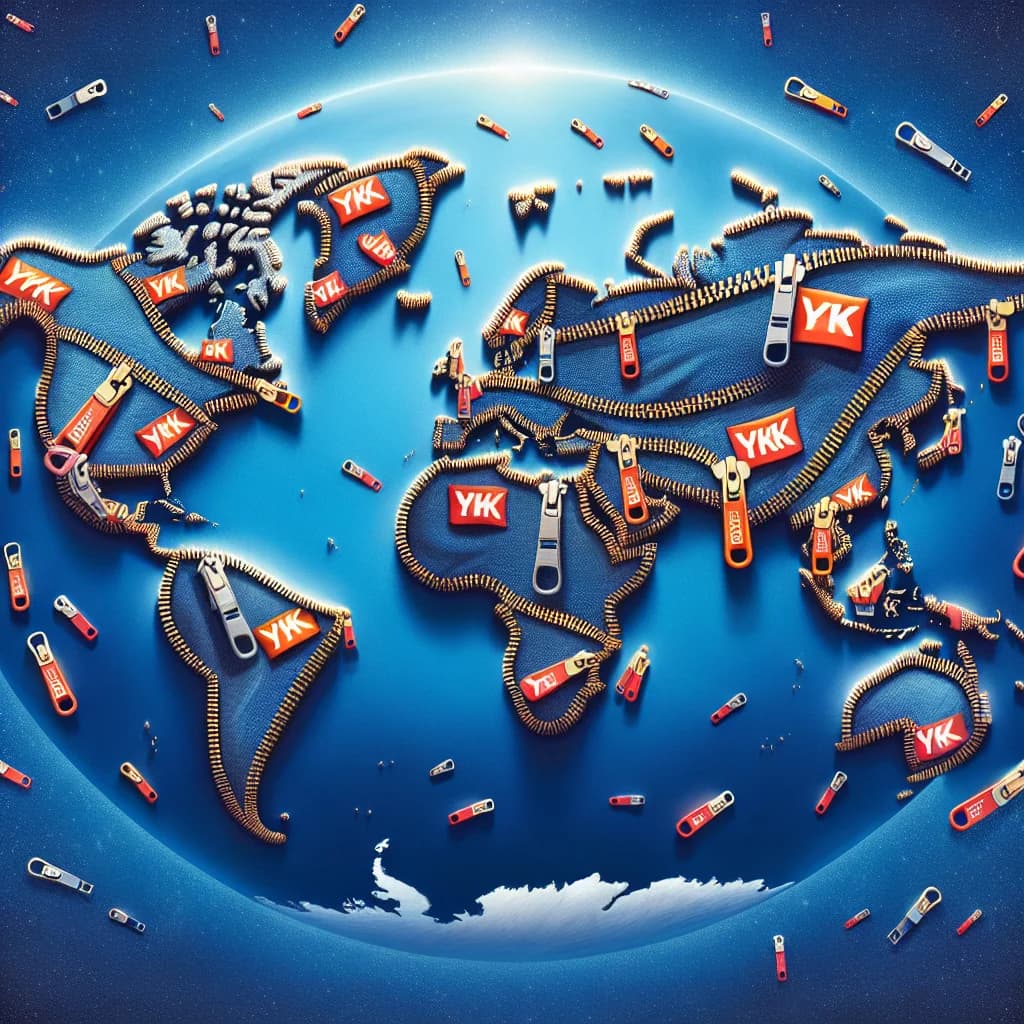
Take a quick look at your jacket, your backpack, or the jeans you are wearing right now. Chances are, the small metal tab on the zipper is embossed with three capital letters: YKK. This acronym is so ubiquitous that it has become a permanent fixture of the global wardrobe, yet few people know what it stands for or why it is there. YKK stands for Yoshida Kogyo Kabushiki Kaisha, a Japanese manufacturing giant that produces roughly half of the world’s zippers—estimated at over seven billion fasteners every year.
The dominance of this single company is a masterclass in manufacturing precision and corporate philosophy. This blog post explores the history, the radical production methods, and the obsession with quality that explain why nearly half of the world’s zippers feature the letters YKK because of a single dominant Japanese company.
The Origins of a Fastener Empire
The story began in 1934 when a young entrepreneur named Tadao Yoshida founded the company in Tokyo. At the time, zipper manufacturing was often a manual and inconsistent process. Yoshida was dissatisfied with existing production methods and sought to create a more reliable product.
Central to the company's success is Yoshida’s "Cycle of Goodness" philosophy. He believed that "no one prospers unless he renders benefit to others." In practical terms, this meant that by producing a high-quality, essential component at a fair price, YKK could support the success of clothing manufacturers, which would, in turn, fuel YKK’s growth. This long-term approach to value creation allowed the company to weather economic shifts and slowly edge out competitors.
The Power of Vertical Integration
The primary reason YKK maintains such a massive market share is its radical commitment to vertical integration. While most manufacturers outsource parts—buying brass from one supplier and polyester tape from another—YKK does everything in-house.
According to industry reports, YKK literally makes the machines that make the zippers. Their manufacturing process includes:
- Smelting their own brass: Ensuring the metal alloys meet exact durability standards.
- Spinning and dyeing their own yarn: Providing color consistency for fashion brands.
- Forging their own zipper teeth: Using proprietary molds to ensure a smooth "click."
- Manufacturing their own packaging: Controlling every step until the product reaches the client.
By controlling every variable, YKK eliminates the risk of third-party supply chain failures. This level of self-sufficiency ensures that a zipper produced in their Georgia plant is identical in quality to one produced in Tokyo or Italy.
Why Fashion Brands Refuse to Switch
You might wonder why a clothing brand wouldn't simply use a cheaper, generic zipper to save a few cents. The answer lies in the catastrophic cost of failure.
For a clothing designer, a zipper is a tiny fraction of the total cost of a garment—perhaps costing only 30 to 50 cents on a $100 jacket. However, if that zipper breaks, the entire garment becomes useless. A broken zipper is a primary reason consumers return clothing, which damages a brand's reputation and bottom line. Because YKK has spent decades proving its reliability, high-end designers and mass-market retailers alike view the YKK logo as a "safety insurance policy."
Global Reach and Innovation
While many associate "dominant Japanese companies" with centralized production, YKK operates in 72 countries. This geographic diversity allows them to be physically close to the garment factories in Southeast Asia while maintaining design centers in fashion hubs like New York and Paris.
They also lead the industry in innovation, developing specialized fasteners for unique environments, such as:
- Watertight zippers for deep-sea diving suits.
- Flame-retardant zippers for firefighter uniforms.
- Color-coordinated "invisible" zippers for evening gowns.
Conclusion
The reason why nearly half of the world’s zippers feature the letters YKK because of a single dominant Japanese company is a combination of meticulous vertical integration and a corporate philosophy that prioritizes long-term reliability over short-term profit. By controlling every stage of production—from the raw ore to the final shipping box—YKK has made itself indispensable to the global fashion industry.
The next time you pull up your zipper, take a moment to appreciate the decades of engineering and Japanese manufacturing prowess hidden in those three simple letters. It is a testament to the fact that even the smallest components can define the success of a global industry. To learn more about the fascinating world of industrial manufacturing, stay tuned for our upcoming deep dives into the everyday objects we often take for granted.


